Ornamental · Lamiaceae
Hummingbird Mint
Agastache foeniculum
Set it in full sun with soil that drains, and anise hyssop fills the season with the hum of bees and hummingbirds.
Full sun
Every 7–14 days
USDA 4–8
2–5 ft · 0.6–1.5 m
Overview
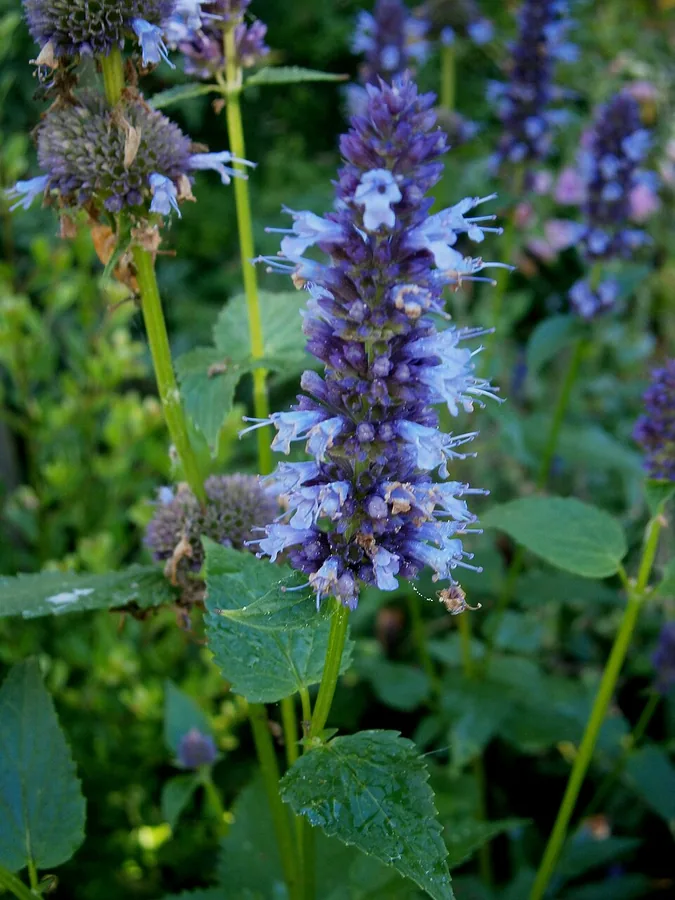
Anise hyssop wears its hummingbird mint name with ease, holding court for bees, butterflies, and hummingbirds from June into September. A member of the mint family that keeps a poised, unhurried habit, it lifts slender spikes of soft blue-lavender above foliage that releases a quiet breath of anise and licorice at the lightest touch.
In a sunlit border it is the picture of an effortless perennial, hardy from zone 4 to zone 8 and unbothered by cold to -29°F (-34°C). Settled in, it asks for next to nothing, weathering drought with composure and standing apart from the deer and rabbits that graze the tenderer plants around it.
Give it space and free-draining ground, and a single clump rises into a 2 to 5 foot (60 to 150 cm) spire of bloom that brings vertical line and movement to a planting. The flowers carry pollinators through summer, and the seed heads left to stand draw finches into winter, so its presence in the room of the garden lingers long after the flowers fade.
Care
The short version: full sun and free-draining soil are the heart of it, since this plant dreads sodden roots far more than a thirsty spell. Water deeply yet let the upper half of the soil dry between drinks, feed with a light hand if at all, and deadhead through summer to hold the bloom.
Light
Give anise hyssop full sun for the firmest stems and the most lavish bloom. It will accept a touch of afternoon shade, but thin light leaves it lax and shy of flower, and shade also opens the door to the mildew it would otherwise resist.
Water
Water deeply, then pause. Let the upper half of the soil dry before the next drink, which falls near every 7 to 14 days. Once established it bears drought with grace, while sodden ground is the single thing most likely to undo it.
Soil
Fertility scarcely concerns it, and it settles into loam, sand, or even stony ground so long as that ground sheds water freely. Aim for a pH of 6.0 to 7.5, and pass over any hollow where water lingers after rain.
Temperature
Hardy from zone 4 to zone 8, anise hyssop weathers cold to -29°F (-34°C) and heat to around 95°F (35°C). That broad compass is why it endures where many a perennial quietly surrenders.
Humidity
Ordinary outdoor air suits it, so there is no figure to chase. What truly matters is air in motion, since crowded, still, humid plantings are exactly the setting in which powdery mildew takes hold.
Feeding
This is a plant that prefers a spare table. Feed it seldom, with no more than a light dressing of balanced fertilizer or compost across the growing season. Overfeeding only yields soft, lax stems where flowers ought to be.
Pruning
Deadhead the spent spikes through August to keep fresh flower coming. Let the stalks stand through winter for the birds, then cut to new growth in spring; bringing the clump down to about 12 inches that spring coaxes a fuller, more branching form.
Size & spacing
Expect a clump of 2 to 5 feet (60 to 150 cm) in height and 1.5 to 3 feet (45 to 90 cm) across. Allow it the full spread so air drifts through the planting and mildew keeps its distance.
When to plant
Once planted, anise hyssop keeps the calm cadence of a perennial. Sow seed indoors in late winter, move the plants out after the last frost when the soil has warmed, and the display unfolds from June through September. Let the spent stalks stand through the cold months, then cut back to fresh growth in spring.
Northern hemisphere
Southern hemisphere
Typical months for a temperate climate: start earlier in warm zones, later where spring frosts linger.
- Sow: 8 to 10 weeks before the last spring frost
- Plant: after the last spring frost once soil has warmed
- Harvest: Blooms June to September
Hardiness
USDA hardiness zones: 4–8
Temperature: down to -34°C
Troubleshooting
Most quarrels with anise hyssop trace to a single source: soil that holds too much water. Set the drainage and airflow right and the plant rarely asks for your hand. Find the symptom that matches yours below, then act while the gesture still counts.
A faltering plant atop a dark, softened crown
The trouble is crown or root rot, a condition born of ground that stays sodden rather than any ailment a spray could address. The crown loses its firmness and color, the base sits sullen and waterlogged, and in time the plant simply gives way. The remedy is composed: sharpen the drainage, ease off the watering, retire the plants beyond rescue, and return strong divisions to a bed that lets water move on through.
Fix:
- Improve drainage and reduce watering
- Remove and discard severely affected plants
- Replant healthy divisions in well-drained soil
A pale, floury veil across the foliage
That chalky bloom across the leaves is powdery mildew, a fungus drawn to still air and to plantings grown close and humid. It spoils the look of the foliage far more than it troubles the plant's health. Open the planting with a little thinning and generous spacing so air can circulate, lift away the most marked leaves, and keep water clear of the foliage.
Fix:
- Improve air circulation by spacing and thinning
- Remove affected foliage
- Avoid overhead watering
Russet and brown blemishes flecking the leaves
Raised rust-toned pustules or darker mottling betray rust and fungal leaf spots, which travel wherever the foliage lingers wet. The blemish is cosmetic in most seasons and leaves the plant otherwise sound. Gather the marked leaves and dispose of them, ease the planting open for better airflow, and water at the base so the leaves dry without delay.
Fix:
- Remove and destroy infected leaves
- Improve air circulation
- Avoid wetting foliage
Toxicity
Here the news is gentle. Anise hyssop bears no toxins, so it sits easily among cats, dogs, horses, livestock, and children alike. The leaves serve double duty as a kitchen herb, lending teas and baked goods their anise flavor, while the strong fragrance turns most browsing animals away of its own accord.
Safe for
People · Cats · Dogs · Horses · Rabbits · Livestock · Birds
Cats None
A curious cat may sample a leaf and come to no harm, as the plant holds nothing toxic. A generous mouthful of almost any greenery can prompt a little drooling or a fleeting upset stomach, yet anise hyssop poses no true danger to a cat.
Dogs None
Dogs share the garden with it untroubled. The most a leaf-loving dog tends to suffer is a passing grumble in the stomach, no different from any harmless plant, and the bold anise perfume usually sees most off after a single taste.
Horses Safe
Horses may graze nearby in perfect ease, since no part of the plant is poisonous to them. The aromatic foliage holds little charm for an equine palate, so it is generally left standing in the pasture.
Rabbits Safe
Rabbits face no peril from it whatsoever. The plant carries a reputation for rabbit resistance, and they tend to drift past in search of sweeter greens rather than browse the scented leaves.
Livestock Safe
Cattle, goats, and sheep may share the ground in safety, with no toxin to give pause. Its minty, licorice fragrance steers most stock toward other forage, leaving the stand to stand undisturbed.
Birds Safe
Birds take no harm from anise hyssop, and the planting more than rewards their company. Finches glean the seed heads left to stand into winter, while hummingbirds and pollinators court the summer flowers.
People Safe
Far from merely harmless, the leaves earn a place in the kitchen, lending an anise or licorice note to teas, salads, and baked goods. Children come to no harm in the plant's company.
Varieties
A handful of distinguished anise hyssop cultivars deserve to be known by name. These are the faces you are likeliest to meet at the nursery bench.
Blue Fortune
A beloved hybrid admired for the way its full spikes of blue-lavender bloom hold the eye for weeks on end.
Golden Jubilee
As prized for the glow of its golden-yellow foliage as for the lavender spikes that rise above it.
Blue Blazes
A tall selection that commands attention with its striking spikes of violet-blue flower.
How to propagate
Anise hyssop increases with a quiet generosity, whether you divide a seasoned clump or simply let it sow its own successors through the beds.
DivisionEasy
Spring or fall · One growing season
Division is an unhurried, generous affair. Ease an established clump from the ground in spring or fall, part it into sound pieces, and set the divisions back into soil that drains freely. Grant each one a full growing season to find its feet and fill out before it returns to form.
SeedEasy
Spring; self-seeds readily in the garden · First season from transplanted seedlings
Anise hyssop is a willing self-seeder, and the most graceful approach is simply to lift its volunteer seedlings to wherever they are wanted in spring. To invite those volunteers, set the shears aside in late summer and let the spikes ripen their seed; the young transplants reach a handsome size within their first season.
Myths
Anise hyssop is a true mint that will take over the garden.
It does belong to the mint family, yet it carries none of the unruliness the true mints are known for. Its expansion is restrained, a matter of rhizome and self-seeding at a gentle pace, and more often than not it proves a short-lived perennial rather than a relentless spreader.
Anise hyssop is related to true hyssop and tastes like it.
The shared name flatters a kinship that is not there, for the plant sits in the genus Agastache, not the true Hyssopus. Bruise a leaf and a luminous anise or licorice scent rises, the very quality that earns it a place in teas, salads, and baked goods.