Ornamental · Lamiaceae
Woodland Sage
Salvia nemorosa
Plant woodland sage in a sunny, free-draining bed, and its violet spikes lend a border easy, sun-soaked rhythm from summer into fall.
Full sun
Every 7–14 days
USDA 4–8
2–3 ft · 0.5–0.9 m
Overview
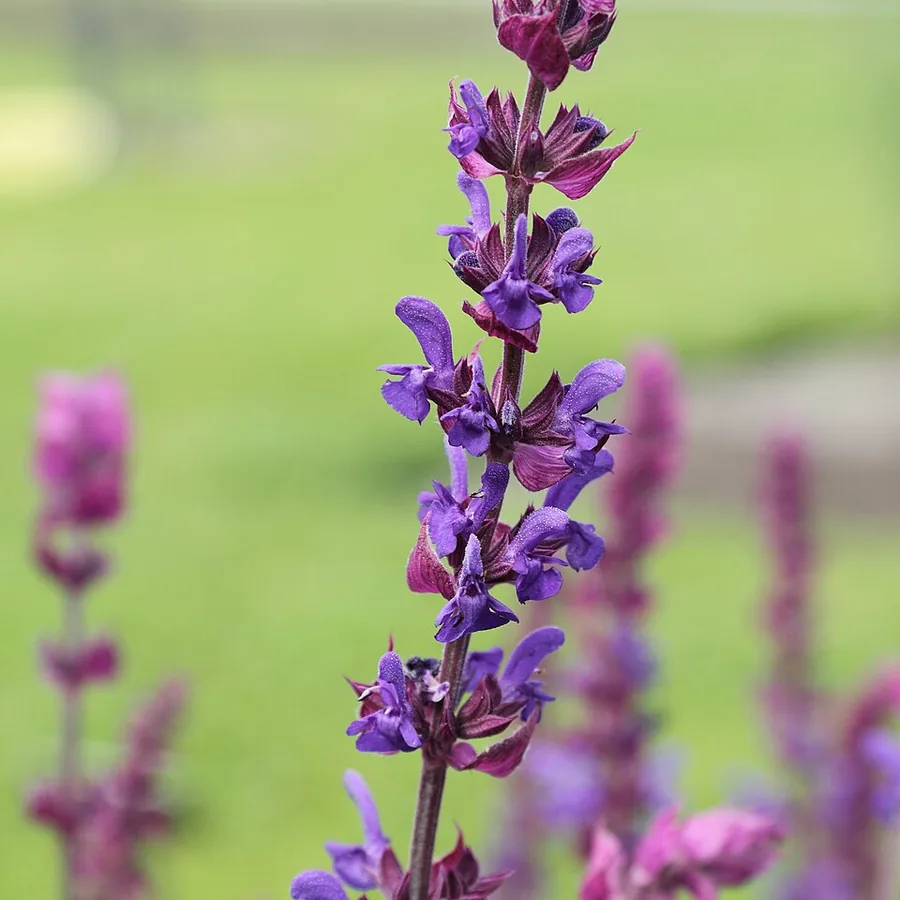
Woodland sage has a quiet confidence that suits a relaxed, sun-filled garden. Through the warm months its upright spikes of violet-blue flowers trace a soft vertical line above the border, drawing bees and hummingbirds into the scene. Clip the faded spikes and a fresh wave returns, keeping the planting looking cared-for with almost no effort.
As a companion in the garden, this is the plant for anyone who wants beauty without a demanding routine. It carries drought, heat, and cold to zone 4 in stride, so it fits gardens where watering is occasional and time is short. Its aromatic foliage even keeps deer and rabbits at a polite distance, one less worry in an open, naturalistic setting.
There is also a story worth telling guests: this graceful border salvia has nothing to do with the psychoactive Salvia divinorum that surfaces in the news. The two share only a genus and a name, and Salvia nemorosa is a refined, harmless ornamental at home in a family garden where children and pets wander.
Care
The short version: give it a sunny spot with lean, free-draining soil, keep watering light once it has settled, and shear it after the first flush, and the border keeps its polished, flowering look with very little of your time.
Light
Site woodland sage where the sun pours in, full sun for six hours a day or more, and it settles into the brightest part of a border with ease. A little afternoon shade is fine, but where the light thins the stems lengthen, bloom fades, and the tidy clump loses its shape.
Water
A newly set plant appreciates steady water while it roots, and after that the routine relaxes. Established clumps are drought-tolerant and prefer to dry between drinks, roughly every 7 to 14 days, a low-touch rhythm that suits a garden watered now and then, since constant moisture invites rot and disease.
Soil
Give it lean, well-drained soil rather than a rich bed, and it rewards the restraint. A slightly acidic to neutral pH of 6.0 to 7.0 works beautifully, and sandy or gravelly ground keeps the crown healthy where heavy, water-holding soil would not.
Temperature
This is an unfussy plant across the seasons, holding through cold to about -29°F (-34°C) and heat up to 90°F (32°C). That easy range is why it settles so reliably into gardens across zones 4 through 8.
Humidity
Ordinary outdoor air is all it asks, so humidity is nothing to plan around. What shapes a healthy planting is open air movement, since still, muggy air caught in a crowded border is what encourages powdery mildew.
Feeding
Restraint suits this plant, which looks its best on a lean diet. Set into decent soil with a little compost, it needs almost no feeding, and a heavy hand with fertilizer only softens the growth and spoils the neat, upright form.
Pruning
Deadheading the spent spikes back to the basal leaves through summer keeps the rebloom and the polished look going. Leave the stems standing over winter for a bit of quiet structure and crown protection, then cut them down in early spring as new growth appears.
Repotting
Salvia rarely needs lifting, but thinning bloom, a clump hollowing out at the center, or crowded stems signal it is time for a refresh. Divide the clump in early spring and the planting returns to full, even form.
Size & spacing
Plan for a plant that stands 1.5 to 3 feet (46 to 91 cm) tall and spreads 6 to 24 inches (15 to 61 cm) across, an easy mid-border scale. Set clumps with a little breathing room between them, which keeps both the airflow and the composition clean.
When to plant
Woodland sage returns year after year, an easy anchor for the seasonal rhythm of a garden. Start seed indoors in late winter, settle young plants into their spot in spring once frost has lifted, and the spikes carry the border from June to September, stretching into fall whenever you keep them clipped.
Northern hemisphere
Southern hemisphere
Typical months for a temperate climate: start earlier in warm zones, later where spring frosts linger.
- Sow: About 12 weeks before planting time
- Plant: Spring after last frost
- Harvest: June to September, repeating into fall with deadheading
Hardiness
USDA hardiness zones: 4–8
Temperature: down to -34°C
Troubleshooting
Part of the appeal of salvia is how little goes wrong, and what does usually comes down to too much water, thin light, or clumps set too close for comfort. Read the setting rather than the symptom below, and adjusting the conditions restores the look without any spraying.
The whole plant wilting and going down in the heat
When a salvia collapses fast in hot, humid weather, the cause is usually Southern bacterial wilt or Southern blight, sometimes a rot at the roots or stem from soggy ground. There is no recovery, so lift the plant and dispose of it rather than composting. Sharp drainage, full sun, and a light touch with water are what protect the rest of the border.
Fix:
- Remove and destroy affected plants
- Improve soil drainage
- Avoid overwatering and overhead irrigation
A pale, powdery haze settling over the leaves
That dusty film is powdery mildew, and it takes hold when air stalls around damp, closely set clumps. Ease the crowding by thinning and dividing, direct water to the base instead of over the foliage, and clear away the worst leaves. A sunny, open, well-drained position keeps the planting clean and returns it to good looks.
Fix:
- Improve air circulation by thinning and dividing clumps
- Avoid overhead watering
- Remove and discard affected foliage
The clump loosening and sprawling by high summer
Flopping is a sign of comfort more than trouble, brought on by rich soil, too much shade, or generous feeding that softens the stems. Cut the spent stems back to the basal leaves and the plant returns tighter and more composed. Give it full sun and lean, well-drained ground and it keeps its upright poise on its own.
Fix:
- Cut back spent stems to basal leaves to promote compact rebloom
- Grow in full sun and lean, well-drained soil
- Avoid over-fertilizing
Toxicity
For a home that welcomes pets and children, salvia is an easy yes: this ornamental is non-toxic through and through. The ASPCA lists sage as safe for cats, dogs, and horses, and its bitter, aromatic leaves discourage curious nibbling all on their own. This is the garden ornamental, not the unrelated psychoactive species.
Safe for
People · Cats · Dogs · Horses · Rabbits · Livestock · Birds
Cats None
An easy plant to live with around cats. The strong, minty scent of the leaves usually keeps a curious cat from paying it any attention.
Dogs None
No concern for a dog-friendly garden. A dog that samples a leaf might feel briefly off from the sheer amount, yet the plant holds no toxin.
Horses None
Listed as non-toxic to horses, so a run of salvia along a paddock or grazing area fits without worry.
Rabbits Safe
Harmless to rabbits, which tend to pass it by regardless. That aromatic foliage is the reason salvia earns its place on rabbit-resistant plant lists.
Livestock Safe
Safe near cattle, goats, or sheep. The pungent leaves are unappealing, so grazing animals rarely touch it even when it grows within reach.
Birds Safe
No risk to birds, and a genuine draw for them: the tubular flowers bring hummingbirds and other pollinators in to feed.
People Safe
Safe to handle and to grow where children play. This is the ornamental garden salvia, not the psychoactive Salvia divinorum, an entirely separate species.
Aromatic foliage is generally unpalatable; not a known toxicity hazard. Distinct from the psychoactive Salvia divinorum.
Varieties
Most named salvias are refined selections and hybrids of Salvia nemorosa, chosen for deeper color and a more tailored silhouette in the border. A few appear again and again in good garden centers, and these are the ones that shape a planting.
Caradonna
Caradonna makes a striking statement with dark purple-black stems lifting bright violet-blue spikes to about 30 inches.
May Night (Mainacht)
A refined, compact choice honored as Perennial Plant of the Year in 1997, dressed in deep violet-blue flowers.
Ostfriesland (East Friesland)
Ostfriesland keeps a neat, compact profile around 18 inches, its deep purple flowers a tidy fit for the front of a border.
Companions
Woodland sage pairs best with other sun-loving, drought-tolerant perennials that want the same lean, well-drained soil, filling out a pollinator or cottage border alongside them.
Plant near
Coreopsis: Shares full-sun, well-drained, drought-tolerant conditions in perennial and pollinator borders
Echinacea (coneflower): Similar sun and soil needs; complements salvia in butterfly and cottage gardens
How to propagate
Salvia is generous when it comes to making more, though the right approach depends on whether the garden holds the plain species or a named cultivar.
DivisionEasy
Early spring when new growth begins · One growing season
Dividing is the simplest way to spread salvia through a garden. Lift the clump in early spring as new growth stirs, part it into sections, and each one settles into its place and fills out across a single growing season.
Stem cuttingsModerate
Late spring to summer · Several weeks to root
Softwood cuttings offer another route, taken from non-flowering shoots in late spring or summer. Trim a healthy shoot, set it into moist mix, and it roots over the following several weeks, ready to join the planting.
SeedModerate
Sow indoors about 12 weeks before planting time · One growing season to flowering
The species grows readily from seed sown indoors about 12 weeks before planting time, reaching bloom in its first season. Named cultivars such as Caradonna will not come true this way, so cuttings or division keep their look intact.
Myths
Garden salvia is the same as the hallucinogenic salvia listed as a controlled substance.
The salvia that graces a border, Salvia nemorosa, is an ordinary garden perennial with no psychoactive effect. The plant behind the headlines is a separate species, Salvia divinorum from Oaxaca, Mexico, and its compound salvinorin A acts on the brain's kappa-opioid receptors. A shared genus name is the only thread between them.