Ornamental · Lamiaceae
Lamb's Ear
Stachys byzantina
A carpet of soft, silvery leaves that cools a sunny border and asks almost nothing of you.
Full sun
USDA 4–8
6–18 in · 15–46 cm
Overview
Lamb's ear brings a soft, silver calm to the edge of a border, the kind of restful tone a planting scheme leans on to settle everything around it. It gathers into a low silvery mat that reads beautifully against gravel paths, weathered stone, and the deeper greens of a summer bed. A member of the mint family from the dry hills of the Middle East, it suits the pared-back, sun-loving garden made for easy afternoons rather than fussy upkeep.
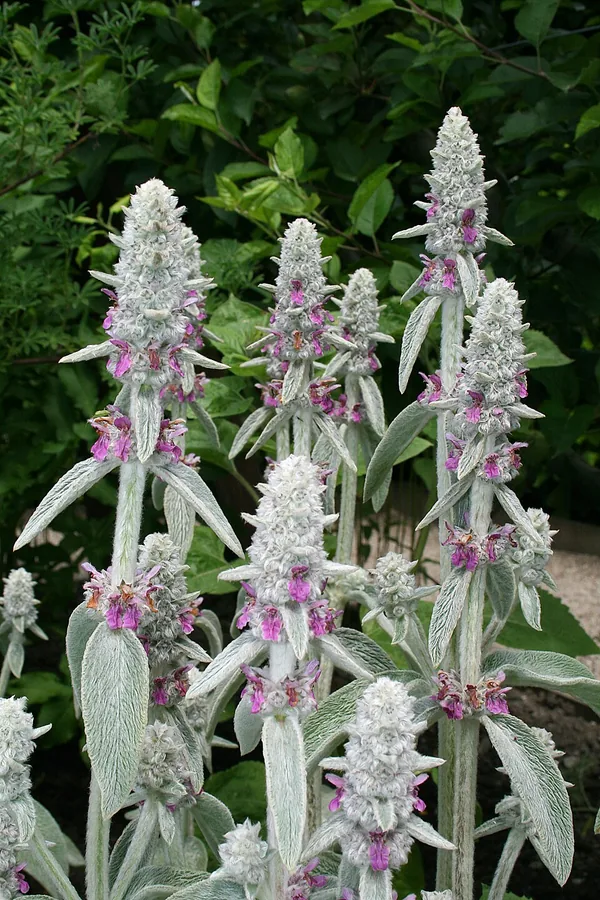
As a design piece it earns its place by covering ground with grace and very little demand. It settles happily in full sun and dry, lean soil, spreading outward to soften hard edges and knit a border together. Many gardeners keep it strictly to its silver foliage and trim away the purplish-pink flower spikes, while those who want a little life for the bees simply leave them to stand.
The single thing it will not abide is a wet situation, and that shapes where it belongs in a garden. The soft, woolly leaves hold moisture, and a humid summer turns a poorly placed planting toward rot. Give it a sunny, freely draining spot with air moving around it, and it holds its quiet, put-together look through the season with barely a hand from you.
Care
The short version: full sun, dry and very well-drained soil, and a light touch with water. Feed it rarely, water at the base rather than overhead, and divide the clump every few years to keep it looking its best.
Light
Set lamb's ear in full sun for the fullest, most silvered carpet, which is where it earns its keep in a bright border. It accepts partial shade too, a real asset in hot-summer regions where afternoon cover eases the heat, though too little light leaves the planting thin and floppy.
Water
Once it has settled in, this is a drought-tolerant plant that prefers the soil to dry between drinks, which suits a low-maintenance garden. Water at the base and keep it off the leaves, since wet, woolly foliage is the quick path to leaf rot and disease through a humid summer.
Soil
Give it average, dry to medium soil that drains fast, and it will even settle into sandy or rocky ground where little else obliges. It is relaxed about pH, content anywhere from 6.0 to 8.0, but sharp drainage is the one condition the planting truly depends on.
Humidity
There is no humidity figure to meet, yet muggy summers are this plant's real adversary. Damp, still air lodges in the felted leaves and turns to rot, so open the planting up and let the air move freely through it.
Feeding
Feed it rarely, if at all. Rich ground only pushes soft, floppy growth that splays open and rots, so set the heavy fertilizer aside and offer nothing more than a thin spring topdressing of compost.
Pruning
Where the silver foliage is the point, remove the flower stems as they rise. Each spring, shear away the matted, dead, or rotting leaves so the planting opens up and fresh growth comes through clean.
Size & spacing
It keeps low, at 6 to 18 inches (15 to 46 cm) tall, with each clump spreading 12 to 18 inches (30 to 46 cm) across. Set them about that far apart and they knit into one continuous run of groundcover.
When to plant
Lamb's ear is a hardy perennial that returns each year, so the calendar is about placing it well, not chasing a harvest. Start seed indoors in late winter or set divisions out in spring once the frost has passed. The purplish-pink spikes follow from May to July, and whether they stay is a matter of taste, since many gardeners cut them to keep the border resting on that silver foliage.
Northern hemisphere
Southern hemisphere
Typical months for a temperate climate: start earlier in warm zones, later where spring frosts linger.
- Sow: Late winter, about 8 to 10 weeks before the last frost, if growing from seed.
- Plant: Spring after the last frost; space plants 12 to 18 inches apart for groundcover.
- Harvest: Purplish-pink flower spikes from May to July, though many gardeners remove them.
Hardiness
USDA hardiness zones: 4–8
Temperature: down to -34°C
Troubleshooting
Nearly every issue with lamb's ear comes down to one thing: moisture lingering where it should not. Catch the early signs of rot on the leaves and crown, and you can act before a damp spell unsettles the whole planting. Match what you see below, then move without delay.
A once-tidy planting sinking away at a softened base
The graver concern is crown and root rot, which sets in where the soil stays sodden around the base of the planting. Its signature is a plant that droops even while the ground reads plainly moist, since the failing roots can no longer draw water up. Lift out and discard the softened crowns, reset healthy divisions in fast-draining soil, and pull back on watering.
Fix:
- Dig and discard severely affected crowns
- Replant healthy divisions in well-drained soil
- Reduce watering
Softened leaves browning and sinking at the center of the planting
The trouble here is leaf rot, which arrives when moisture settles on the woolly foliage through a humid spell or a run of heavy rain. The velvety surface that makes the plant such a quiet luxury underfoot also cradles water against the leaf, and that is where fungus takes hold. Clear away the spoiled leaves, thin the planting so air can circulate, and keep water at the base.
Fix:
- Remove and discard affected leaves
- Improve air circulation by thinning and dividing
- Water only at the base of the plant
A hollow, woody heart with life only along the border
This is simply an aging clump, the natural arc of the planting rather than any ailment. As the carpet drifts outward season on season, its original heart loses vigor and turns woody and bare while the outer ring keeps gaining ground. Lift the whole planting, reset the lively outer pieces, and let the weary center go.
Fix:
- Lift and divide the clump
- Replant vigorous outer sections
- Discard the old center
Toxicity
Reassuring news for a household with pets and children: lamb's ear is non-toxic across the board. Nothing in the plant threatens cats, dogs, horses, rabbits, livestock, birds, or people, and those soft, fuzzy leaves are part of its gentle appeal rather than any hazard. At worst, a pet that swallows a large mouthful of any greenery might feel a brief, mild stomach upset.
Safe for
People · Cats · Dogs · Horses · Rabbits · Livestock · Birds
Cats None
A welcome plant for homes with cats. Should one investigate the foliage, no harm follows, and the woolly feel tends to end the interest just as quickly.
Dogs None
An easy companion where a dog shares the garden. It carries no poison, and only a greedy mouthful of any planting is likely to bring a brief, mild upset.
Horses Safe
Untroubling for horses. The soft, hairy foliage holds little appeal for grazing, so it is generally passed over in a pasture setting.
Rabbits Safe
A safe choice around rabbits. A sampled leaf does no harm, and the woolly texture keeps most from making a habit of it.
Livestock Safe
Cattle, goats, and sheep may graze nearby without concern. The plant holds no toxin, and its felted leaves rank low as forage.
Birds Safe
No threat to birds, and a charming detail follows: some gather the soft fibers from the leaves to line their nests.
People Safe
Harmless to the whole household, children included. The soft leaves carry a long folk tradition as a gentle dressing for small scrapes, offered as heritage rather than remedy.
Varieties
A few named selections carry lamb's ear in different directions, from oversized leaves to strictly foliar mats. These are the ones worth having on the shortlist.
Big Ears (Helene von Stein)
With leaves reaching up to a foot long, a steadier tolerance of heat and humidity than the species, and only the rarest bloom, it is the elegant answer for warm, muggy gardens.
Silver Carpet
A low, non-flowering selection prized for one purpose alone, its dense silver mat of foliage.
Primrose Heron
Its woolly leaves open a soft chartreuse-yellow in spring before easing into silvery green as the season warms.
Cotton Boll (Sheila Macqueen)
In place of the familiar spikes, its flower stems carry curious cottony, ball-like clusters.
How to propagate
Lamb's ear ranks among the easiest perennials to increase, whether you divide an established clump or begin a fresh batch from seed.
DivisionEasy
Spring or fall · A few weeks for rooted divisions to take hold
Division is the simplest route to more of it, and spring or fall is the moment to act. Because the stems root as they creep, the shallow outer sections lift away with roots already in place. Reset those lively pieces and they settle in within a few weeks.
SeedEasy
Start indoors in late winter or sow outdoors in spring · One season to form a usable groundcover mat
Seed is an option too, started indoors in late winter or sown straight outdoors in spring, and a single season is enough to weave a usable groundcover mat. The plain species comes true this way, though many named cultivars do not, so turn to divisions when an exact copy is the aim.
Myths
Lamb's ear is poisonous to cats and dogs.
It appears nowhere on the ASPCA toxic plant lists and is regarded as non-toxic to both cats and dogs. A curious pet may sniff or sample it without danger, and only an outsized helping of any plant tends to bring a passing upset.
Lamb's ear needs frequent watering to keep its soft leaves looking good.
Once settled, the plant is drought tolerant and quietly resents a heavy hand with the hose. Wet, woolly foliage is precisely what invites rot and leaf disease, so a dry interval flatters it rather than harming it.