Ornamental · Lamiaceae
Salvia (Annual)
Salvia splendens
Set in a sunny border or patio pot, scarlet sage carries a run of upright color from summer to frost.
Full sun
Every 3–7 days
50–90°F · 10–32°C
USDA 10–11
Overview
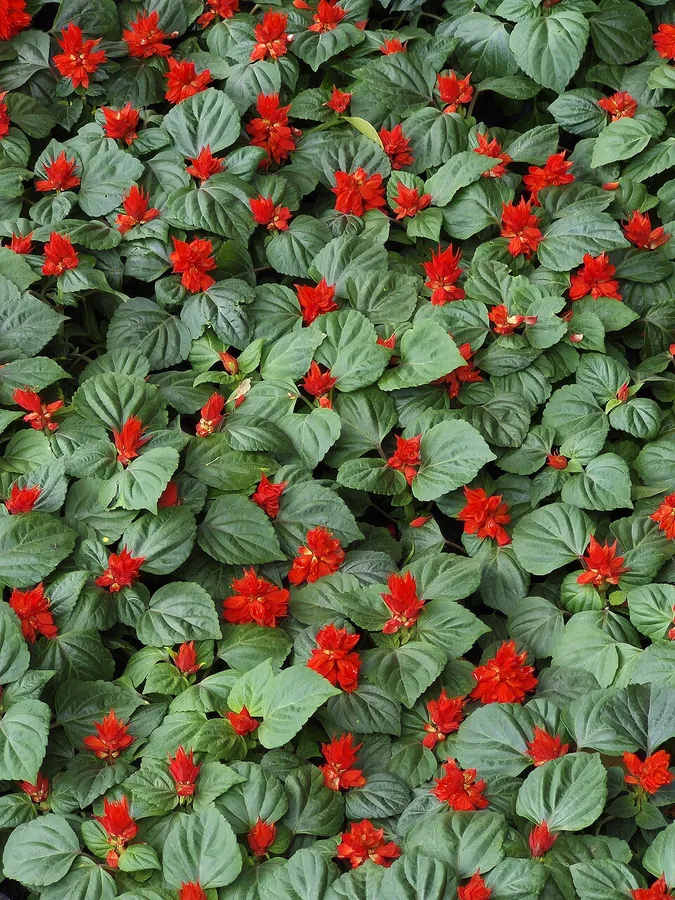
Few bedding plants set a summer scene quite like scarlet sage. Its upright, fire-red spikes give a border its vertical rhythm and a garden its warmth, and the plant belongs to the mint family as a tender perennial. Because it survives winter only in zones 10 and 11, most gardens treat it as a warm-season annual, replanted each spring as part of the year's fresh palette.
The appeal lies in its staying power. Color arrives in early summer and holds until the first frost, and the flowers keep a border alive with the movement of hummingbirds and bees. At 8 to 36 inches (20 to 91 cm) depending on the variety, it slots as easily into a formal bed as into a grouping of pots by the door, lending height where a scheme needs lifting.
As a companion to outdoor living, salvia asks for little beyond a sunny spot and steady watering, which makes it an easy fixture of the summer routine. A quick pass with the shears to remove spent spikes is all the upkeep the display asks, folding neatly into an evening stroll through the garden. The reward is a bed that looks considered from planting until the season turns.
Care
The short version: a sunny position with perhaps a little afternoon shade, soil kept evenly moist rather than dry, a slow-release feed at planting, and the occasional deadheading that keeps a border looking its best.
Light
Salvia gives its fullest display in full sun, with a little afternoon shade welcome where summers run hot. In too much shade the plants lengthen and lean, and the spikes grow sparse, so a bright, open position keeps the planting looking its best.
Water
This is a plant that likes to be kept evenly moist, never left to go dry. Water once the top inch of soil begins to dry, and reach for the can more often for pots and through a hot spell. Let it want for water and the flowers are quick to show it.
Soil
A well-drained loam enriched with organic matter suits it best, though it settles happily into ordinary garden soil. It asks nothing exacting of pH, sitting comfortably between 6.0 to 8.0.
Temperature
Warmth is its element, a range of 50°F to 90°F (10°C to 32°C), and frost brings the season to an abrupt end. Wait until both soil and air have warmed before setting plants out.
Humidity
Ordinary outdoor air is all it requires, so there is no figure to chase. Air movement does the real work, since crowded, still plantings are the ones that invite powdery mildew, a good reason to give each plant its space.
Feeding
Work a slow-release feed for annuals into the soil at planting, then follow with a light supplement as summer wears on. That measured feeding sustains the flowers without coaxing the soft, floppy growth a heavier hand encourages.
Pruning
Deadheading the faded spikes through summer keeps fresh color rising and the planting looking cared for. When a plant runs leggy after a flush, a shear back restores its compact, tidy shape.
Size & spacing
Depending on the selection, plants reach 8 to 36 inches (20 to 91 cm) tall with an 8 to 18 inch (20 to 46 cm) spread. Setting them with a little room between keeps air moving through the planting and mildew at bay.
When to plant
Salvia keeps to the warm months and will not abide frost, so its season is one of anticipation. Seed goes in indoors through late winter and early spring, the young plants join the garden only once frost has passed and the soil has warmed, and from early summer the spikes hold the scene until cold draws the year to a close. Timing rewards the patient gardener.
Northern hemisphere
Southern hemisphere
Typical months for a temperate climate: start earlier in warm zones, later where spring frosts linger.
- Sow: 6 to 8 weeks before the last spring frost; do not cover seed as light aids germination
- Plant: After the last frost when soil and air have warmed
- Harvest: Summer to frost (roughly June until first fall frost)
Hardiness
USDA hardiness zones: 10–11
Temperature: down to -1°C
Troubleshooting
Even an easy plant has its off days, and salvia's tend to arrive early, among crowded seedlings or in the still air of a packed bed. A watchful eye settles most of it before the display suffers. Read the signs below, find the match, and act while the fix still counts.
Seedlings collapse and rot at the soil line
A sudden collapse of young seedlings is damping-off, a soilborne fungus that finds its opening in cold, wet starting mix and severs the stems at the surface. Clear away those that have gone down, let the mix dry a little between waterings, and open the air around the tray. A fresh sowing in sterile mix and clean pots, kept warm, sets things right.
Fix:
- Discard affected seedlings
- Improve air circulation and let the surface dry between waterings
- Use sterile mix and clean containers for resowing
A sudden wilt and rot at the base in hot, wet soil
When a plant wilts while its soil stays wet and the base turns to rot, the trouble is southern blight or southern bacterial wilt, both at home in hot, waterlogged ground. There is no recovering an affected plant, so lift and destroy it. Improving the drainage, and resting susceptible annuals from that spot next year, prevents a repeat.
Fix:
- Remove and destroy affected plants
- Improve drainage
- Avoid replanting susceptible annuals in the same spot
A powdery white bloom over the foliage
That chalky white cast is powdery mildew, drawn in by crowding and the stillness of packed air. Ease the spacing, take off the worst of the affected leaves, and keep water off the foliage in the late afternoon. A sunny position with room to breathe keeps it from returning.
Fix:
- Increase spacing and airflow
- Remove badly affected foliage
- Avoid overhead watering late in the day
Distorted shoots, a sticky sheen, and small insects
Twisted new growth and a sticky residue mark the work of aphids, whiteflies, or spider mites on the tender shoots. A firm jet of water clears the worst, and insecticidal soap handles what remains. Even watering and a few beneficial insects keep the next generation from taking hold.
Fix:
- Rinse plants with a strong spray of water
- Apply insecticidal soap to affected areas
- Encourage beneficial insects
Toxicity
For a household that shares its garden with animals and children, scarlet sage is a reassuring choice: it is non-toxic. The ASPCA lists it safe for cats and dogs, with nothing in the plant to trouble other animals, livestock, or a curious child. It can hold a place in beds and borders wherever the family gathers.
Safe for
People · Cats · Dogs · Horses · Rabbits · Livestock · Birds
Cats None
Scarlet sage sits on the ASPCA's safe list for cats, so a curious nibble does no harm. A cat that overindulges in any greenery may bring it back up, but nothing here is poisonous.
Dogs None
Dogs share the garden with this salvia in complete safety, listed by the ASPCA as non-toxic to them. A dog that overdoes the foliage might feel a passing unsettledness, as with any plant.
Horses Safe
Horses come to no harm from it, and the plant offers no grazing hazard among the beds or along a pasture edge.
Rabbits Safe
Rabbits may browse leaf and flower without risk. As with any new green, let them take it up slowly so the gut adjusts.
Livestock Safe
Cattle, goats, and sheep face no toxic risk should they graze on this salvia.
Birds Safe
Birds are untroubled by the plant, and its flowers keep pollinators moving through the border. Backyard fowl may peck at it without concern.
People Safe
Scarlet sage is not poisonous to people, grown as it is for its flowers rather than the table. A child who handles or tastes it has nothing to fear.
Varieties
The named selections are many, yet a few reappear on garden center benches year after year and earn their place in most planting schemes. These are the ones worth seeking out.
Bonfire
Bonfire carries even scarlet spikes on an upright frame that stands near 26 inches, a natural for the middle of a border.
Salsa Series
The Salsa Series keeps to a compact 12 to 14 inches in scarlet and mixed shades, holding its looks through the heat of a Southern summer.
Vista Group
The Vista Group flowers early on low, dwarf plants across a broad palette, an easy choice for edging and bedding.
Salvia farinacea (mealycup sage)
Salvia farinacea, the mealycup sage, lends cooler blue-to-violet or white spikes on 1 to 2 foot clumps and often takes an annual's place in a scheme.
How to propagate
Bringing on more salvia is an unhurried pleasure. A fresh crop rises from a packet of seed, while a handful of cuttings preserves a favorite plant through the winter for next year's beds.
SeedModerate
Start indoors 6 to 8 weeks before the last frost; surface sow because light aids germination · Several weeks to germinate and grow on before transplanting after frost
Most borders begin from seed, started indoors some 6 to 8 weeks ahead of the last frost. The seed rests on the surface, left uncovered, since light is what calls it into growth. Kept warm and brightly lit, the seedlings take several weeks to rise and fill out before they join the garden once frost has passed.
Stem cuttingsModerate
Take softwood cuttings in late summer to overwinter plants indoors · A few weeks to root
Cuttings carry a cherished plant across the winter. Softwood cuttings taken in late summer root within a few weeks, giving young plants to hold in a bright, cool spot until spring calls them back to the beds.
Myths
The scarlet sage of the summer border is the same plant as the psychoactive Salvia divinorum.
The connection ends at the shared genus. The ornamental annuals, Salvia splendens and Salvia farinacea, are grown for their flowers and nothing else, and carry none of the effects associated with Salvia divinorum.
Salvia shrugs off drought and can be left dry once it has settled in.
Not so for the annual scarlet sage, which is not drought tolerant. Its best flowering comes from warm, well-drained soil kept evenly moist, and a border allowed to dry sees its spikes fade in short order.