Ornamental · Lamiaceae
Russian Sage
Perovskia atriplicifolia
Set in full sun and dry, sharp-draining soil, Russian sage lifts a soft blue haze over the garden from midsummer to fall.
Full sun
Every 10–21 days
USDA 4–9
2–4 ft · 0.6–1.2 m
Overview
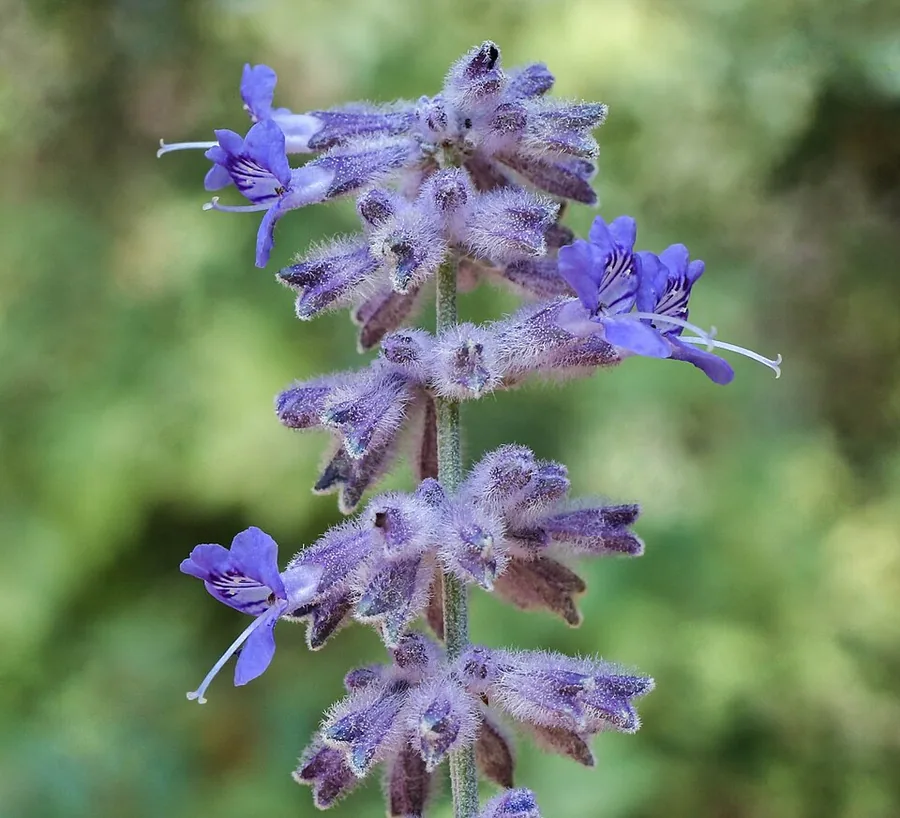
Few perennials set a mood as effortlessly as Russian sage. Its silvery stems and drifts of small blue flowers read as a soft, hazy screen, the kind of loose, atmospheric planting that makes a border feel unhurried. The name is a charming misnomer, since the plant belongs to central Asia rather than Russia and has nothing to do with the sage of the kitchen, but what it lends a garden is a long season of cool, dreamy color.
It comes into its own in the sunniest, driest corners of a plot, exactly the spots a designer reaches for when the rest of the border struggles. Paired with gravel paths, warm stone, or a sun-baked terrace, it settles a space into a relaxed, Mediterranean sort of calm, and its scented foliage quietly keeps deer and rabbits at bay. That ease is why it turns up so often in water-wise, low-maintenance schemes.
The look holds only when the plant is kept a little spare. Too much richness, shade, or water and it sprawls, breaking the clean vertical line that gives the planting its poise. Kept lean and sunny and cut back hard each spring, it stays composed, threading a haze of blue through the garden for months and pairing beautifully with grasses, late daisies, and a slow evening walk past the border.
Care
The short version: full sun and sharp drainage set the stage, and everything else follows. Keep the soil lean and dry once the plant has established, hold off on fertilizer, and cut every stem almost to the ground in late winter to reset that elegant upright shape.
Light
Give it the sunniest position you have, and the planting stays crisp and upright. In part shade the stems lengthen and lean, softening the clean lines that make it such a graceful screen, and the flowering fades. Full sun keeps the whole effect poised.
Water
Once settled, this is one of the most drought-tolerant perennials for a low-water garden, which suits a relaxed watering routine. Water it through the first season to establish deep roots, then step back and let the soil dry between drinks. Damp ground undoes it far faster than dry ground ever will.
Soil
Sharp drainage is the foundation the whole look rests on. It takes poor, dry, clay, and even alkaline ground with ease, content across a wide pH of 6.0 to 8.0, which makes it a natural fit for gravel gardens and lean, sun-baked beds. Wet, heavy soil is the one setting to avoid, since it rots the roots.
Temperature
This is a hardy plant that anchors a garden through the seasons, taking winter cold down to -29°F (-34°C) and summer heat up to 100°F (38°C) without losing its composure. That range is what lets it hold a place in gardens across zones 4 to 9.
Humidity
Dry air suits it perfectly, in keeping with its love of hot, open, sun-filled spaces. Still, humid air is more of a concern than dry air, so an open position with good airflow keeps the planting fresh and healthy.
Feeding
Restraint is the whole approach here. Russian sage thrives on lean soil with little or no fertilizer, a light spring feed at most, which keeps the display upright and refined. Overfeed it and the elegant line collapses into a tall, floppy tangle.
Pruning
The one seasonal ritual that matters is the spring cut. Take every stem back almost to the ground in late winter or early spring as new growth appears, and the plant rebuilds a strong, upright frame. That hard cut is what preserves the clean, composed shape through the flowering months.
Repotting
Left in the ground, it rarely needs lifting and prefers to stay settled in place. Grown in a container on a terrace, it will signal a move when roots circle the pot or water runs straight through, both cues that it has outgrown its setting.
Size & spacing
Plan for a mature plant of 2 to 4 feet (60 to 120 cm) tall and about as wide, 2 to 4 feet (60 to 120 cm), and give each one that room in the design. The generous spacing lets air move through the planting and lets the stems stand as the airy, see-through screen they do best.
When to plant
Hardy through zones 4 to 9, Russian sage keeps to a leisurely schedule, waking late in spring while the garden fills in around it. Set young plants out after the last frost, cut the old stems back as new shoots rise, and the blue haze arrives in July and lingers gracefully through October.
Northern hemisphere
Southern hemisphere
Typical months for a temperate climate: start earlier in warm zones, later where spring frosts linger.
- Sow: late winter to early spring; seed germinates in 1-4 months at 60-65 degrees F
- Plant: spring after last frost
- Harvest: July to October
Hardiness
USDA hardiness zones: 4–9
Temperature: down to -34°C
Troubleshooting
Russian sage asks very little, and the two issues that surface both come down to the same excess: too much water or soil that is too rich. Notice the early signs and the remedy is a simple one, a drier, sunnier position that keeps the planting looking its best.
A plant fading and wilting in soggy ground
When Russian sage wilts even in moist soil, the trouble is almost always root rot from heavy, poorly drained ground. That lingering wetness invites pythium and phytophthora, which brown and soften the roots below. Move it to a raised, sharply drained position, water far less, and clear away any plant too far gone to recover.
Fix:
- Improve drainage or move to a raised, sharply drained site
- Reduce irrigation and let soil dry between waterings
- Remove and discard severely rotted plants
The upright line collapses into a sprawl
The graceful shape gives way to the familiar flop when the plant sits in too much shade or ground that is too rich and damp, both of which draw out weak, leggy stems. Left standing through winter, it opens the same way once the flowers fade. Restoring the composed look means full sun on lean, dry ground, a lighter hand with water and feed, and a hard cut each spring.
Fix:
- Cut stems back almost to the ground in late winter to early spring
- Move or site in full sun with lean, well-drained soil
- Reduce watering and fertilizer
Toxicity
For a garden shared with pets and children, this is a reassuring choice. The ASPCA lists Russian sage as non-toxic, so a curious cat, a passing dog, or a small hand can meet it with nothing worse than a strong taste. The one thing to remember is that it belongs in the border, not in the kitchen.
Safe for
People · Cats · Dogs · Horses · Rabbits · Livestock · Birds
Cats None
An easy companion for a home with cats. The ASPCA lists it as non-toxic, so a curious nibble of the aromatic leaves is nothing to worry over.
Dogs None
Equally untroubling for dogs, with no toxicity on record. A dog that samples a stem may balk at the strong scent, yet comes away unharmed.
Horses Safe
Horses can share the space without concern. Nothing in the plant is poisonous, and its bitter, aromatic foliage tends to keep them grazing elsewhere in the paddock.
Rabbits Safe
Rabbits generally pass it by, a welcome bonus in a garden rather than any hazard. The pungent leaves stay entirely safe, if rarely tempting.
Livestock Safe
Cattle, goats, and sheep have nothing to fear from it. The plant holds no known toxins, and its sharp scent usually steers grazing animals toward other plants.
Birds Safe
A gracious neighbor for birds as well. The summer flowers draw pollinators to the border, and the plant poses no danger to any visitor.
People Safe
Safe to live and garden around, children included. Despite the name it is not a culinary sage, so enjoy the fragrance in passing but keep it out of the kitchen.
Aromatic foliage; despite the common name it is not a true culinary sage and should not be eaten.
Varieties
Most named Russian sages were chosen to hold a taller, tidier line than the wild plant, which makes them the more polished pick for a designed bed. These are the ones that turn up most often.
Little Spire
Little Spire is the compact, well-mannered choice at around 18 to 24 inches (2 feet), holding a more upright line that keeps small beds and edges looking tidy.
Blue Spire
Blue Spire brings a bolder presence near 3 feet tall, with deeply cut leaves and generous panicles of violet-blue flowers for a fuller display.
Longin
Longin is the architectural pick, a tall, narrow form reaching about 4 feet in height and width with a strikingly stiff, upright bearing.
Filigran
Filigran offers a softer, more feathery effect at 2 to 3 feet tall, its finely dissected foliage lending a lacy texture to the border.
How to propagate
Russian sage is easy enough to multiply from cuttings or seed, a low-cost way to repeat a favorite drift across a border. The method matters only if a particular cultivar needs to look exactly like its parent.
Stem cuttingsModerate
Summer · Several weeks to a few months
Cuttings are the dependable way to repeat a named cultivar across a planting, since seedlings will not come true. Take 3 to 4 inch softwood cuttings in summer, and over several weeks to a few months they root into plants that echo the parent exactly.
SeedModerate
Any time of year, just covering the seed · Germinates in 1-4 months at 60-65 degrees F
Seed can go in at almost any time under the lightest covering, though it calls for patience, since germination takes 1 to 4 months at 60°F to 65°F (16°C to 18°C). A cold spell can improve the odds, and because species seedlings vary, a sown drift carries a pleasing, natural unevenness.
DivisionDemanding
Spring · Slow
Division is the least rewarding route for this plant. A woody-based subshrub resents being split, is slow to settle again in spring, and rarely needs it, so cuttings or seed are the graceful way to make more.
Myths
Russian sage is a culinary sage you can bring into the kitchen like garden sage.
In truth it is Perovskia, now reclassified as Salvia yangii, and it earns its place purely as an ornamental. The crushed foliage carries a sage-like scent and nothing more, with no role at the table. It is neither Russian nor a true sage, but a native of central Asia grown for the mood it sets.