Vegetable · Brassicaceae
Brussels Sprouts
Brassica oleracea Gemmifera Group
Plant them for fall and let a light frost do the quiet work, and the sprouts arrive firm and sweet for the autumn table.
Full sun
Every 3–7 days
41–77°F · 5–25°C
80–110 days
Overview
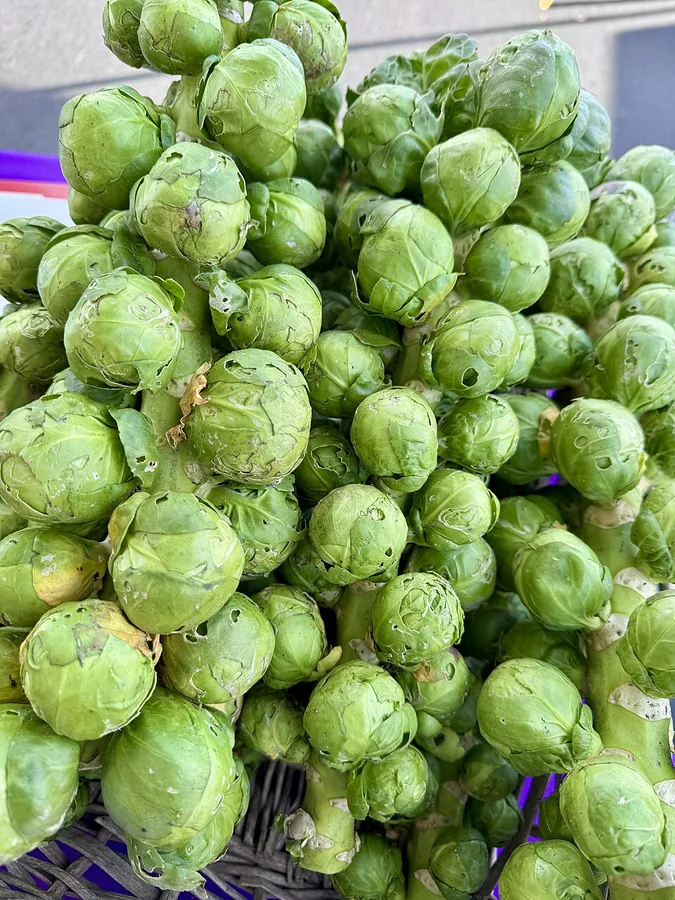
Brussels sprouts belong to the cool-season cabbage family, the same species as broccoli, kale, and cauliflower, each shaped by generations of growers into its own form. The plant rises as a tall, upright stalk lined with dozens of small cabbage-like buds, and those buds are the sprouts that reach the kitchen. It is a biennial grown as an annual, brought in during its first season well before it would ever think to flower.
This is a crop for the patient gardener and the slow rhythm of the back half of the year. Brussels sprouts take their time and want a long run of cool weather to come into their own, so the planting is set to finish in fall rather than the heat of summer. Cold is the secret ingredient, turning starch to sugar so the sprouts sweeten after the first light frosts.
They suit a kitchen-garden plot that someone tends through the season: rich soil, even moisture, and a watchful eye for the cabbage pests drawn to every brassica. Get the timing right and feed them well, and one stalk of tall, architectural stems gives weeks of harvest from the bottom up, a striking presence in the fall bed and a steady supply for the autumn kitchen.
Care
The short version: give them full sun and rich, evenly moist soil, plant so the sprouts ripen in cool fall weather, feed steadily across a long season, and keep a watchful eye for cabbage pests.
Light
Brussels sprouts ask for full sun, ideally 6 or more hours a day, to raise the strong stalk that carries a heavy crop. They put up with a little partial sun, but true shade leaves you with weak plants and loose, underwhelming sprouts that never earn their place in the bed.
Water
Hold the soil evenly moist across the whole long season, around 1 to 1.5 inches (2.5 to 4 cm) of water a week. Swinging between parched and saturated stresses the plant, so lay down mulch to steady the moisture and keep the roots cool.
Soil
Set them in rich, well-drained loam full of organic matter, since these are hungry plants that hold the ground for months. Aim for a pH between 6.0 and 7.0, leaning toward the higher end, which also helps keep clubroot in check.
Temperature
This is a cool-weather crop, most at ease from about 41°F to 77°F (5°C to 25°C). Hardened plants take frost in stride and stand in the garden until temperatures slide toward 20°F (-7°C), and it is that very cold that sweetens the sprouts for the table.
Humidity
Ordinary outdoor humidity suits them, so there is no number to chase. Good airflow counts for more than moisture in the air, since crowded, damp foliage opens the door to the diseases that trouble brassicas.
Feeding
These are heavy nitrogen feeders. Work a balanced fertilizer into the bed at planting, guided by a soil test, then begin side-dressing with nitrogen about 3 to 4 weeks after transplanting and keep feeding through the season to keep the sprouts coming.
Pruning
Strip away the lower leaves as they yellow and the sprouts beneath them firm up, moving steadily up the stalk. About 3 to 4 weeks before you plan to harvest, you can pinch out the growing tip to steer energy into the remaining sprouts so they finish evenly.
Size & spacing
A mature plant stands 2 to 4 feet (60 to 120 cm) tall and spreads about as wide, a tall, sculptural fixture in the fall bed. Set transplants 18 to 24 inches (45 to 60 cm) apart so air moves freely between the broad leaves and disease stays down.
When to plant
Brussels sprouts are made for the closing months of the gardening year. Sow the seeds in late spring, move the plants out in early to midsummer, and harvest from early fall into winter, working up the stalk from the bottom as the cold sweetens the firm sprouts.
Northern hemisphere
Southern hemisphere
Typical months for a temperate climate: start earlier in warm zones, later where spring frosts linger.
- Sow: Sow indoors 6-8 weeks before transplanting; in cold-winter regions sow in late spring (May-June) so plants mature as a fall crop, or 4-6 weeks before the last spring frost for an early planting
- Plant: Transplant hardened seedlings in early to mid summer (late June-early July in northern gardens) for fall harvest; in mild-winter regions plant in late summer for winter harvest
- Harvest: Harvest from early fall into winter, picking firm 2.5-4 cm sprouts from the bottom of the stalk upward; flavor sweetens after light frosts and plants can stand in the garden until temperatures drop toward 20°F
Hardiness
USDA hardiness zones: 2–9
Temperature: down to -46°C
Troubleshooting
Most trouble with Brussels sprouts comes down to timing, feeding, or the steady visits of cabbage-family pests. Notice the early signs on the leaves and roots and you can usually stop a problem before it climbs the stalk. Find what matches below, then act while there is still time to turn it around.
Plants flagging in the heat with swollen roots below
Clubroot is a soilborne disease of cole crops that takes hold in acidic, wet ground, announcing itself through wilting on warm afternoons and growth that simply stalls. Lift a struggling plant and the roots tell the story: swollen, club-shaped galls in place of healthy feeder roots. Once it settles in there is no cure, so remove infected plants roots and all, lime the bed toward pH 7.0, and shift your brassicas to clean ground for the next season.
Fix:
- Remove and destroy infected plants including roots; do not compost them
- Lime soil toward pH 7.0 or slightly above to suppress the pathogen
- Move brassicas to a clean bed
When sprouts stay loose and leafy instead of tight
Blown, open sprouts are usually a story about timing, not about your soil. Buds that form in the warmth of summer come in loose and leafy, and a late feeding of nitrogen only pushes them further open. The fix sits in the calendar: arrange the planting so the sprouts mature in the cool quiet of fall, and top the plant 3 to 4 weeks before harvest to settle the rest into firm little heads.
Fix:
- Time plantings so sprouts develop in cool fall weather
- Harvest loose sprouts promptly and use them; they remain edible
- Top the plant 3-4 weeks before harvest to firm up remaining sprouts
Powdery gray aphids settling into the sprouts
Cabbage aphids move in quickly when the weather stays warm, hiding deep between the sprout leaves where they are easy to miss. Lift a leaf and look for the dense, mealy gray colonies underneath, along with curling foliage and a sticky film of honeydew. A firm jet of water dislodges the bulk of them; follow with insecticidal soap or horticultural oil across the leaf undersides, and clear away any lower leaves that have taken the worst of it.
Fix:
- Knock colonies off with a strong spray of water
- Apply insecticidal soap or horticultural oil with thorough coverage of leaf undersides
- Remove and destroy heavily infested lower leaves
Ragged holes in the foliage with droppings beneath
Three caterpillars share this work, often on the same plant: the imported cabbageworm, the back-arching cabbage looper, and the small, restless diamondback moth larva. Turn the leaves to find the green caterpillars and their frass, and keep an eye out for the white butterflies that lay the cabbageworm eggs. Handpicking clears the obvious ones; a spray of Bt or spinosad while the caterpillars are still small handles the rest, and a floating row cover keeps the moths from ever reaching the bed.
Fix:
- Handpick caterpillars
- Apply Bacillus thuringiensis (Bt) or spinosad while caterpillars are small
- Cover plants with floating row cover to exclude egg-laying moths and butterflies
Toxicity
Reassuring news for households with animals: Brussels sprouts are a food crop and safe to grow around cats, dogs, and other animals. The plant carries no toxins, and the worst an inquisitive nibble brings on is a little gas. Cook the sprouts before they reach the table, since a steady diet of large raw amounts is the single thing to keep in mind.
Safe for
People · Cats · Dogs · Horses · Rabbits · Livestock · Birds
Cats None
Welcome company in the garden. A cat that samples a leaf out of curiosity might turn a touch gassy, but nothing in the plant poses any real risk.
Dogs None
Nothing to worry about here. A dog that wolfs down a big helping of raw sprouts may go flatulent or feel briefly off, and that is as far as it goes.
Horses None
Not toxic to horses. The greens can prove gassy in quantity, so let them stay an occasional nibble rather than part of the regular feed.
Rabbits None
Suitable for rabbits in modest amounts. Bring the leaves in gradually, since a sudden serving of any cabbage-family green can upset their digestion.
Livestock None
Cattle, goats, and sheep graze brassica foliage comfortably at ordinary levels. Only steady, heavy raw feeding gives any reason for caution.
Birds None
Backyard hens take cheerfully to the leaves and trimmings with no trouble at all.
People Safe
Grown for the table and genuinely good for you. The sprouts shine when cooked, and only a steady diet of large raw amounts would weigh on thyroid health.
No special handling precautions; wash before eating as with any garden produce.
Varieties
Brussels sprouts come in a handful of dependable varieties, from old heirlooms to colorful modern hybrids. These are the ones worth knowing by name when you plan the plot.
Long Island Improved
The open-pollinated heirloom that anchored home gardens for generations, carried on a tidy, fairly compact plant well suited to a modest plot.
Jade Cross E
An early hybrid that takes heat in stride and produces generously, a reassuring choice where the fall window stays short.
Falstaff
A late variety whose red-purple sprouts hold much of their color on the plate, a quiet bit of drama for the autumn table.
Companions
Brussels sprouts do best beside plants that mask their scent from cabbage pests, and worst beside a few crops that simply don't get along with the cabbage family.
Plant near
onions: WVU Extension lists the onion family as compatible with cabbage-family crops; alliums' strong scent helps mask brassicas from common pests
aromatic herbs (sage, rosemary, peppermint): WVU Extension lists aromatic herbs such as sage, peppermint, and rosemary as compatible with the cabbage family; their scents help confuse and deter cabbage pests
beets: WVU Extension lists beets as compatible with cabbage-family crops; the low-growing roots share space well beneath tall brassicas
Keep apart
strawberries: WVU Extension lists strawberries as incompatible with cabbage-family crops and recommends keeping them apart
How to propagate
Brussels sprouts begin from seed, started indoors and carried out as transplants once they are sturdy enough to stand on their own.
SeedEasy
Sow indoors 6-8 weeks before transplanting (late spring in cold-winter regions for a fall crop); seeds can also be direct-sown about 4 months before the expected first fall frost · Germinates in about 5-10 days; seedlings reach transplant size in 4-6 weeks
Starting Brussels sprouts from seed is one of the easier rituals of the late-spring garden. Drop the seed about a quarter to half an inch (0.6 to 1.3 cm) deep into sterile starting mix 6 to 8 weeks before you mean to transplant; the seedlings surface in 5 to 10 days and reach planting size in 4 to 6 weeks. Harden them off, then set the young plants out 18 to 24 inches (45 to 60 cm) apart at the depth they grew in their pots.
Myths
Brussels sprouts must be hit by a hard freeze before they are worth harvesting.
A freeze is never the requirement, and any firm sprout is ready for the kitchen. What cool fall weather and light frosts do is round out the flavor by building sugars, which is exactly why the crop is timed to ripen in fall. You can still gather fine, tight sprouts well ahead of the first frost.
Cutting the top off a Brussels sprouts plant ruins the crop.
Topping is a deliberate technique, not a slip of the knife. Pinching out the growing tip 3 to 4 weeks before harvest halts the upward climb and redirects the plant's energy into the sprouts already set on the stalk, so they finish more evenly.