Ornamental · Asteraceae
Chrysanthemum
Chrysanthemum × morifolium
Pinch through summer, set them in full sun with steady water, and a row of mums turns the front step into autumn itself.
Full sun
Every 2–4 days
USDA 5–9
1–3 ft · 0.3–0.9 m
Overview
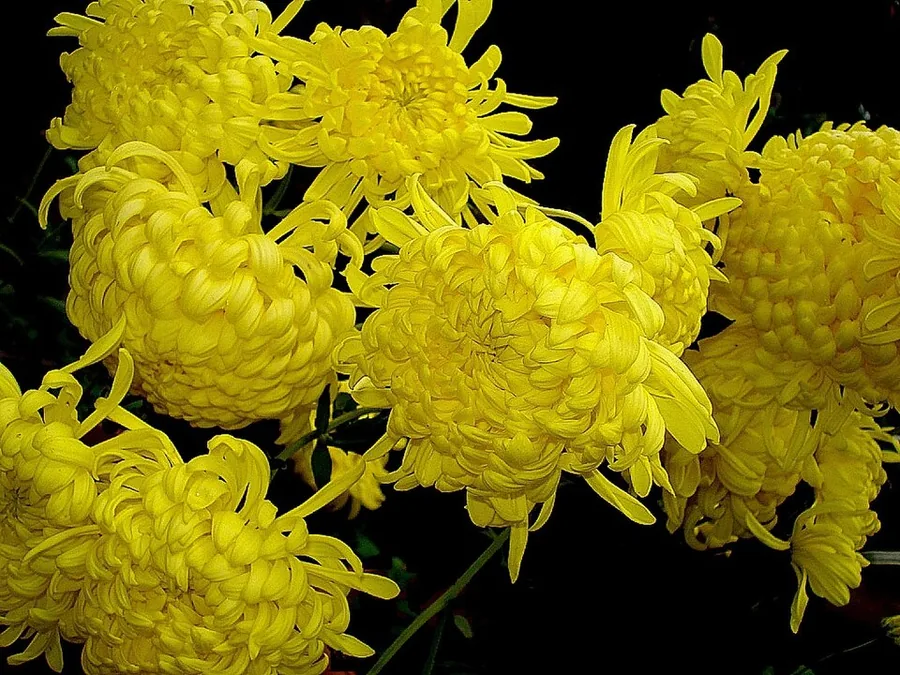
No flower sets the autumn scene quite like the chrysanthemum, heaped beside a front door, spilling from a window box, lining the walk to the steps. A member of the daisy family, it arrives in cushions of warm color, rust and gold giving way to pink and deep red, the exact palette that sits so easily beside pumpkins, gourds, and a dressed autumn table. The bulk of what sells are garden mums, low and rounded, smothering themselves in flower as the daylight wanes.
That easygoing name they carry holds up, provided two routines are honored. The plants ask for full sun and steady moisture to read their fullest, and they ask for pinching across spring and summer so the form stays tight and domed rather than open and lanky. Neglect the pinching and what you get is a thin, drawn-out plant flowering only at its ends, never the plush cushion that makes a step look styled.
There is a single trap that catches many an autumn arrangement. Mums offered in full bloom in fall are raised for one quick, lavish show, not for the long haul, and plenty of them never see another spring. Put them in the ground in spring over good drainage and they return fuller the next fall; buy them already flowering and the wiser plan may be to enjoy them as the season's annuals.
Care
The short version: a position in full sun, fertile ground that drains freely yet never dries out, fertilizer once a week while the season runs, and a steady pinching routine that winds down about 100 days ahead of bloom.
Light
A daily 6 or more hours of direct sun is the ask, and an open, bright position pleases them more still, so reserve the sunniest doorstep or the bed that drinks the afternoon. Where shade crowds in, the plant leans toward the light, splays open, and flowers far less, surrendering the trim domed shape that made it worth placing.
Water
Count these among the thirsty, wanting steady, even moisture, never more so than through budding and bloom, the same stretch you most want them looking lush at the door. Allow them to parch and the growth idles or quits. Aim the water low at the base, leave the leaves dry, and let the soil drain so the roots are never left standing in wet.
Soil
Give them fertile, well-drained soil worked through with organic matter and held evenly moist, be it a border tracing the path or a generous pot on the step. A broad pH suits them, anything between 6.0 and 8.0, which means most beds and a decent potting mix will do once drainage is seen to.
Temperature
Toughness sits across a wide band: in open ground they take it down to roughly -20°F (-29°C) and shrug off heat to about 90°F (32°C) in high summer, so a planting can hold its spot from one year to the next. The graver winter threat is sodden, heaving soil, not the chill on its own.
Humidity
Whatever the air outdoors offers is plenty, so no figure needs chasing. What truly shapes how a planting carries itself is airflow, since stagnant, damp air pooling among packed-in plants is the very thing that invites mildew to settle and tarnish the look.
Feeding
Set down as heavy feeders, mums accept a weekly serving of soluble balanced fertilizer right through the growing season, the very habit that fills a plant out enough to anchor a porch. Once the flower buds set, ease off, because anything fed beyond that drives leaf at the cost of bloom.
Pruning
It is pinching that coaxes a mum into the rounded cushion a doorway calls for. Make the first nip when the plant stands about 6 inches tall, lifting off fresh growth by half-inch to inch, then return on a rhythm of every 4 weeks right up to about 100 days before bloom. Once a hard frost has come and gone, shorten the stems to 3 to 4 inches over the soil.
Size & spacing
Expect a finished height of 1 to 3 feet (30 to 91 cm) and a width of 12 to 24 inches (30 to 61 cm), a tidy scale that flatters a low edging, a window box, or a cluster massed on the steps. Allow 18 to 30 inches between plants so air slips through and mildew gains no easy hold.
When to plant
Cued by the season's lengthening shadows, mums hold their color from fall straight through to a hard freeze, the very weeks a porch, a doorway, or a seasonal table looks bare without them. For the fullest, sturdiest mounds, set young plants out in early spring; for color the moment guests arrive, drop fresh ones into pots and beds come fall. Either way, what really shapes the autumn look is the pinching done all summer.
Northern hemisphere
Southern hemisphere
Typical months for a temperate climate: start earlier in warm zones, later where spring frosts linger.
- Sow: Not typically started from seed; propagated from spring cuttings or division.
- Plant: Fall or early spring; spring planting yields fuller plants for fall display.
- Harvest: Fall until freezing temperatures.
Hardiness
USDA hardiness zones: 5–9
Temperature: down to -29°C
Troubleshooting
When a mum lets a display down, the reason almost always sits in how it was raised rather than in any bad luck. A few recurring looks cover nearly the whole story: a stretched habit, a planting that never wakes in spring, a film of mildew, a quiet pest. Match the look you see to one below, then correct what caused it instead of chasing the symptom.
A healthy autumn planting gone missing come spring
A planting lost over winter is usually undone by heaving frost and waterlogged ground, which either pries the crown up or leaves it to rot in place, so the porch picture you loved simply fails to reappear. Those set out late in fall fare worst, their roots never given time to take. After a hard frost, cut back to 3 to 4 inches under a light, airy mulch, set the drainage right, and wherever it suits, hold off and plant in early spring so the roots claim a whole season.
Fix:
- After hard frost, cut stems to 3-4 in and apply a light, airy mulch
- Improve drainage to reduce standing winter moisture
- Plant in early spring to allow full root establishment
Foliage wearing a pale, chalky coating
That powdery cast is powdery mildew, taking hold wherever leaves linger wet and the air hangs motionless over a packed planting, fading the look well ahead of any flowers. Loosen the grouping for airflow and aim each watering low so the leaves stay dry. Pull the worst-hit foliage and put it in the bin, never the compost heap.
Fix:
- Improve spacing and air circulation
- Water at the base and keep foliage dry
- Remove and discard affected leaves
Twisted, finely dotted leaves with a sticky sheen
Leaves that twist, freckle with fine specks, and turn tacky give away aphids, thrips, or spider mites at work beneath, the slow tarnish that dims a container before its season opens. Sweep them off under a firm jet of water and pass an eye over fresh growth often, ahead of the next surge. Kept healthy and unbothered, with a predator or two in residence, a plant rarely sees an outbreak run away.
Fix:
- Spray foliage with a strong stream of water
- Inspect undersides regularly and treat infestations early
- Encourage beneficial insects
Lanky, leaning stems with barely a bloom to show
When a plant shoots up gangly and offers next to no bloom, the culprit is nearly always a plant never pinched, with thin light dragging the look down further until nothing about it suits a step. Take the first inch off the tips once it stands roughly 6 inches tall, then stay with it every 4 weeks. Shift it where 6 or more hours of direct sun reach, and leave 18 to 30 inches between neighbors.
Fix:
- Pinch off the top 1/2 to 1 in of growth starting at about 6 in tall, repeating roughly every 4 weeks until the regional cutoff
- Relocate to a site with 6 or more hours of direct sun
- Space plants 18 to 30 in apart
Toxicity
Because chrysanthemums are toxic, placement deserves a thought before they go anywhere near pets or small children. Held in leaf and flower are pyrethrins and sesquiterpene lactones, which turn cats, dogs, and horses queasy and leave them drooling and unsteady on their feet. Those same compounds nettle human skin, so glove up whenever you arrange a pot or cut one back.
Toxic to
Cats · Dogs · Horses · Rabbits · Livestock · Birds · People
Cats Mild
Let a cat sample a leaf or a petal and drooling tends to follow, then a brought-up meal and loose stools after. A heavier helping can leave it unsteady on its paws, with the sap reddening skin about the mouth, so keep any pots well beyond a curious reach.
Dogs Mild
Those same pyrethrins greet a dog with drool, a turned stomach, and diarrhea. Should one get through a sizable helping, expect it off-kilter and unlike itself for the better part of a day, reason enough to lift a doorstep grouping up off the floor.
Horses Mild
Where a horse browses mums, drool and a sour stomach usually result. Keep an eye out for a listless, off-balance animal once it has cleared a wider patch, and site any planting well away from where horses range.
Rabbits Caution
The irritant oils that unsettle a cat or dog make a mum a poor neighbor for rabbits too, so set the plants clear of the hutch or its run. Should one break in, watch for loose droppings and a subdued animal gone off its feed.
Livestock Caution
By and large, cattle, sheep, and goats steer past the bitter leaves, yet a famished one may tuck in and wind up drooling and scouring. Run a fence between the planting and any pasture so a fall display stays well out of their path.
Birds Caution
Hard as pyrethrins are on birds, hold the pots well above any caged companion and clear of where backyard poultry scratch about. A single peck at leaf or flower is the cue to relocate the planting.
People Caution
Eating is not the point with this plant, and for people the genuine hazard stays at the skin. Handling foliage and stalks can leave a sensitive pair of hands flushed and itching, so pull on gloves to arrange or trim, and rinse off after.
Contact with foliage can cause dermatitis in sensitive individuals; wash hands after handling.
Helpline numbers

United States
ASPCA Animal Poison Control: (888) 426-4435 (fee applies)
Poison Control: (800) 222-1222



Canada
Poison Centres: 1-844-764-7669
Varieties
Behind the single word on the label sit a few genuine groups, and knowing which is which tells you at a glance whether a plant means to settle into the bed or simply carry one bright season. Here are the distinctions worth making before anything comes home.
Florist's chrysanthemum
Forced under glass for outsized, glamorous heads and for the cut-flower trade, a plant chosen for the vase and the arrangement rather than for holding its own out in the bed.
Hardy garden mum
Trim, dome-forming plants raised for a broad sweep of fall color on the step and a stronger likelihood of greeting the next season.
Rubellum Group (old-fashioned mum)
Sturdier heritage selections kept on for the way they reappear season upon season even where winters bite, a calmer and more permanent fixture in the garden scene.
How to propagate
Seed is not the route with mums; you divide what is already growing or root the soft shoots of spring. Each method is easy, and each returns a true copy of a plant whose shape and color have already earned their place.
DivisionEasy
Early spring as new growth appears, about 3-4 weeks after the last killing frost. · One growing season
Come early spring, once fresh shoots break the surface roughly 3 to 4 weeks beyond the last killing frost, ease the entire clump up. Keep the strong outer shoots, roots and all, and discard the spent, woody heart that no longer earns its keep. Dividing every year or two holds the planting vigorous, and each fresh piece wants a whole season to bed in before it dresses a step or border.
Stem cuttingsEasy
Spring, from healthy new shoots. · A few weeks to root
Come spring, slip a few tender shoots off a vigorous plant into a moist medium set somewhere shaded from direct light. A few weeks on they will have rooted and grown true to their parent, ideal for stocking a matched run of containers.
Myths
A blooming mum picked up in autumn will settle in and return season after season, no matter where it lands.
A mum carried home in full bloom this time of year rarely greets the spring, having spent itself on flowers and skimped on roots. Settle one over keen drainage when warm weather returns and the survival rate climbs sharply. Many gardeners simply treat fall mums as annuals, refreshing the display each season the way they would any other seasonal piece.
A mum needs no cutting back at all to deliver a full show of flowers.
Leave a mum to its own devices and it runs up lanky and flowers thinly, nothing like the domed cushion that dresses a doorway. That dense, mounded form crowded with autumn color comes only from nipping the growing tips across spring into early summer. Call a halt about 100 days ahead of the flowers you are after, then leave the buds to form.