Ornamental · Asteraceae
Gazania
Gazania rigens
Give it full sun and dry feet, and the treasure flower opens bold, daisy-bright color across a season.
Full sun
Every 7–14 days
USDA 8–11
6–12 in · 15–30 cm
Overview
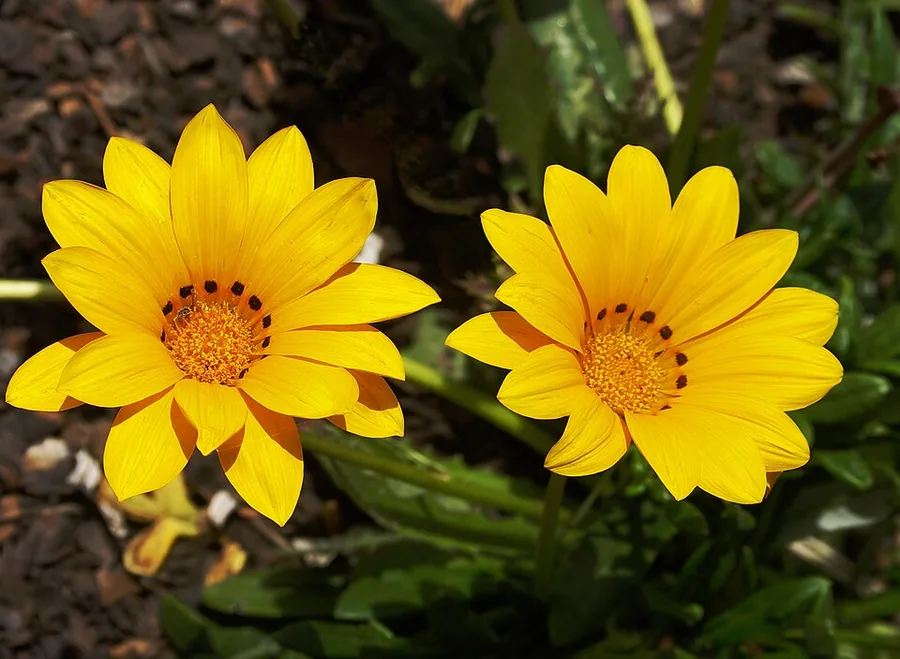
Gazania, the treasure flower, is a low, spreading daisy relative from southern Africa that belongs wherever a sunny outdoor space wants color close to the ground. Its bold blooms in hot oranges, yellows, reds, and stripes ride on short stems above a neat mat of leaves, an easy anchor for a sunlit terrace, a warm border, or a run of containers along a bright wall. Where winters stay mild it returns as a tender perennial, and everywhere colder it plays the part of a season-long annual.
Its real appeal for a home is how lightly it lives. Content in poor, sandy soil and unbothered by drought once it roots in, it holds its color from spring into fall without asking much of a busy routine. The one thing worth planning around is its habit of following the sun, opening in bright light and closing at night or under gray skies, which makes a sun-drenched spot the natural home for it.
Set it where heat and light collect and the drainage runs fast, and gazania nearly keeps itself. The one indulgence to resist is the watering can, because standing water is the single thing it will not tolerate in an otherwise carefree corner of the garden.
Care
The short version: a sun-drenched spot, light well-drained soil, and a restrained touch with water. Let the soil dry between drinks, deadhead the spent flowers, and feed lightly through the growing season.
Light
Gazania asks for full sun, at least six hours a day, and that single choice shapes the whole display. In shade the flowers stay shut, opening wide only in bright, direct light, so give it the sunniest place a space can offer.
Water
A light hand serves it best. Let the top half of the soil dry out between waterings, roughly every 7 to 14 days once it is established, and ease off further in cool or wet spells. Drought it takes in stride, while sodden soil rots the roots and crown.
Soil
Plant it in light, well-drained ground, and it will settle happily into even poor sandy soil. A pH from 5.5 to 7.5 suits it, and sharp drainage matters far more to it than rich earth.
Temperature
Gazania holds across a wide band, from about 19°F to 90°F (-7°C to 32°C). It carries summer heat with ease and rides out a light chill, though a hard frost ends a plant grown out in the open.
Humidity
Ordinary outdoor air is all it needs, so there is no figure to meet. Damp, stagnant air is the thing to avoid, since it opens the way for powdery mildew on the leaves.
Feeding
Feed lightly with a balanced general fertilizer through the growing season, about once a month. Content in lean soil, it responds best to a gentle hand rather than a heavy one, keeping the color coming instead of running to leaf.
Pruning
There is no real cutting back to schedule. Simply deadhead the spent flowers as they fade, which keeps fresh buds arriving and steers the plant away from setting seed.
Size & spacing
Plants keep low and neat, about 6 to 12 inches (15 to 30 cm) tall and roughly as wide. Give each one that much room to spread so air moves freely and the mat fills the space without crowding.
When to plant
Gazania keeps to a warm-season rhythm and will not sit through a hard frost. Start seed indoors 6 to 8 weeks before your last spring frost, move the young plants out once the cold has passed and the soil has warmed, and the color follows from spring through fall until frost closes the season.
Northern hemisphere
Southern hemisphere
Typical months for a temperate climate: start earlier in warm zones, later where spring frosts linger.
- Sow: 6 to 8 weeks before the last spring frost date
- Plant: After the last spring frost date once soil has warmed
- Harvest: Blooms spring through fall, often until first frost; flowering may pause during the hottest part of summer
Hardiness
USDA hardiness zones: 8–11
Temperature: down to -12°C
Troubleshooting
Nearly every setback with gazania traces to one of two things: too much water or too little sun. Watch the roots, leaves, and flowers for the first signs and a small change usually restores the display. Match what you see below, then act before it takes hold.
Browning, softening stems and crown before the planting slumps
A collapsing, browned base is root and stem rot, the near-inevitable outcome of standing water or a bed that drains poorly. There is no styling around a soft crown, so lift the plant and let it go. Ease off the watering, cut grit into the soil, and let the bed dry between waterings before the next planting takes its place.
Fix:
- Reduce watering
- Improve soil drainage
- Remove and discard affected plants
A pale, powdery haze settling across the planting
That washed-out film is powdery mildew, a fungus that arrives where the air hangs damp and still. Clear away the most marked leaves and open the planting so the air can circulate through it. Watering low, at the base rather than over the top, keeps the foliage dry and takes the momentum out of it.
Fix:
- Improve air circulation
- Avoid overhead watering
- Remove affected foliage
Cottony flecks and a sticky sheen on plants moved inside
A plant carried indoors for the winter tends to collect mealybugs or aphids, which announce themselves with cottony patches and a sticky honeydew along the stems. Rinse the pests away and follow with insecticidal soap, repeating until the planting is clean. Set the affected plant apart from the rest while you work, so the problem stays where it started.
Fix:
- Wash off pests
- Apply insecticidal soap
- Isolate infested plants
Blooms that keep to themselves or open only halfway
A planting that looks closed is no flaw in the display, only the plant keeping its own hours. Gazania folds its flowers at night and under overcast skies and unfurls them fully only in bright, direct sun. Give the bed a place with at least six hours of light and the show opens on cue.
Fix:
- Site in full sun (6+ hours direct light)
Toxicity
Gazania is among the easiest plants to bring into a home and garden. It is not listed as toxic, so cats, dogs, and grazing animals are all safe in its company, and a curious taste from a child or pet is nothing to worry about. It can take its place wherever you like.
Safe for
People · Cats · Dogs · Horses · Rabbits · Livestock · Birds
Cats None
It sits comfortably in a home with cats. A leaf or petal taken in passing does a curious cat no harm.
Dogs None
A dog in the garden is no reason for caution. Gazania holds no poison for them, so a mouthful from the bed passes without incident.
Horses Safe
Horses grazing nearby remain untroubled, since the plant carries nothing that would harm them.
Rabbits Safe
Rabbits may browse the foliage freely, with no risk to them.
Livestock Safe
Cattle, goats, and sheep can share the setting without concern, as the plant holds nothing toxic to them.
Birds Safe
Birds drawn to the seeds or petals face no danger from it.
People Safe
It belongs easily in a home with children. It is not raised for the table, yet a stray taste brings no harm.
Varieties
The gazanias worth knowing come from a handful of breeding lines, set apart by how early they bloom, how they are colored, and how the foliage reads in a planting. These are the ones to seek out by name.
Daybreak series (e.g. Daybreak Bright Yellow)
A compact bedding line whose flowers greet the morning earlier and stay open longer than the older kinds, extending the hours of color in a bed.
New Day Tiger Mix
An early-flowering F1 mix of bold striped, two-toned blooms, one that leans more than most toward Phytophthora root and stem rot.
Talent series (e.g. Talent Orange)
Prized as much for its silvery-gray foliage as for its flowers, which keep opening even as the light softens.
How to propagate
Gazania is easy to keep in a scheme, whether you raise a fresh batch from seed each spring or hold a favorite plant over by division.
SeedEasy
Start indoors 6 to 8 weeks before the last frost; transplant outdoors after frost · Several weeks to form an established plant after transplanting
Seed is the usual way to bring gazania into a bedding scheme. Sow indoors 6 to 8 weeks before the last frost, move the seedlings out once the cold has passed, and allow them a few weeks in the ground to settle into established plants that carry the display.
DivisionEasy
Take basal offsets in late summer to early fall and root them · A few weeks to root and establish
Division keeps a favorite plant or a named cultivar in the scheme from one year to the next. Lift the basal offsets in late summer or early fall, root them indoors, and within a few weeks they take hold, ready to return the same plant to its place next season.
Myths
Gazania needs frequent watering like most annuals.
Settled into its place, gazania calls for far less water than the usual annual and takes a dry spell in stride. The true hazard is overwatering, since sodden soil rots the roots and crown from below.
Gazania flowers stay open around the clock.
The blooms keep the sun's hours, closing at night and under dull, cloudy skies. They open fully only in bright light, so a shaded corner or a run of gray days will leave the planting looking shut for long stretches.