Ornamental · Asteraceae
Goldenrod
Solidago canadensis
Set it in full sun and lean soil, and goldenrod carries the late-summer garden with warm color and a steady hum of pollinators.
Full sun
Every 7–14 days
USDA 4–9
2–6 ft · 0.6–1.8 m
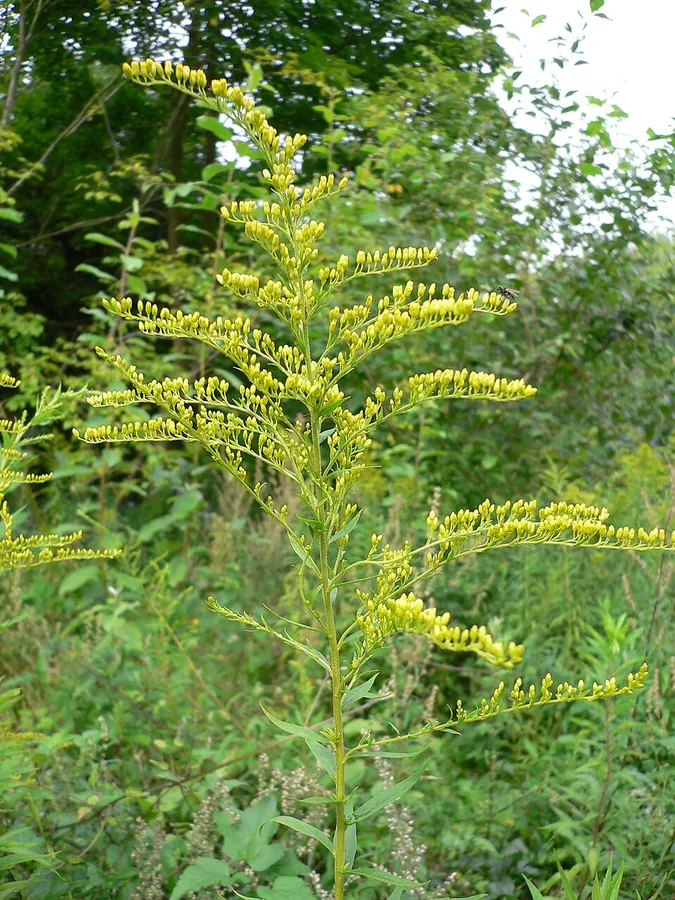
Overview
Goldenrod is the flower that brings a warm, golden close to the summer garden, lifting plumes of tiny blooms on tall, leafy stems just as the season turns. A member of the aster family, it grows wild across most of North America as a tough, long-lived perennial, which is exactly why it slips so easily into a relaxed, low-effort border. Give it a sunny stretch and it holds the scene for weeks after the earlier flowers have gone.
Its real gift to a garden is atmosphere, and to the pollinators that give a late border its life. The flowers open when little else does, drawing bees and butterflies into view right outside a window or beside a path, and the seedheads keep birds moving through the quiet months. A planting built around it feels alive well past the point most gardens fall still.
The one thing to plan for is its reach. Tall goldenrod travels through a bed by rhizome and self-seeds with ease, so it can overtake the more delicate company you place it with. For a composed, tailored look, choose a clump-forming species, or divide the vigorous types every few years to keep the picture in balance.
Care
The short version: give it full sun and ordinary to poor, well-drained soil for the easiest, most graceful planting. Water only through long dry spells and let the rain carry the rest, skip the fertilizer, and divide vigorous clumps every few years to keep the border composed.
Light
Goldenrod belongs in full sun, where it flowers freely and holds itself upright as a border deserves. It will accept some partial shade, but expect the stems to stretch and lean and the bloom to thin, softening the effect the darker its position.
Water
Goldenrod favors soil that stays evenly moist yet never waterlogged, and an established planting takes short dry spells in stride. In most temperate gardens the rain does the work, so plan to water only through a prolonged drought.
Soil
It settles into clay or loam wherever drainage is sound, and it forgives the poor ground that stalls fussier company. A pH from 5.5 to 7.5 suits it, and lean soil keeps the stand sturdy and self-supporting.
Temperature
Goldenrod is uncommonly hardy, weathering cold to -29°F (-34°C) and heat past 95°F (35°C). That wide tolerance is why it settles so easily into gardens across so much of the continent.
Humidity
Ordinary outdoor humidity is all it asks, so there is no figure to mind. Air movement matters more, since still, muggy air is what lets rust and powdery mildew dull the leaves.
Feeding
Leave the fertilizer aside in all but the poorest ground. Goldenrod is at its best on lean soil, and too much nitrogen only brings soft, floppy stems, so offer at most a light spring topdressing of compost.
Pruning
Cut the spent flower stems after bloom, or leave the seedheads standing to feed birds and hold winter interest. Take all the stems to the ground in late winter before growth returns, and a pinch in early summer keeps the tall types from leaning into their neighbors.
Size & spacing
Plants stand 2 to 6 feet (61 to 183 cm) tall and spread 4 to 6 feet (122 to 183 cm) wide, so give each clump generous room in the composition. That wide reach is also why the vigorous species need dividing to keep a planting in proportion.
When to plant
Goldenrod moves with the year in a way that shapes the season. Start seed in late winter or sow outdoors in fall, set young plants out in spring once frost has passed, and let the flowers build the mood from late summer into the heart of fall.
Northern hemisphere
Southern hemisphere
Typical months for a temperate climate: start earlier in warm zones, later where spring frosts linger.
- Sow: Late winter, 8 to 10 weeks before last frost; seeds benefit from cold-moist stratification and need light to germinate
- Plant: Spring after the last frost, or in early fall
- Harvest: Late summer through fall (August to October)
Hardiness
USDA hardiness zones: 4–9
Temperature: down to -34°C
Troubleshooting
Goldenrod rarely brings any real trouble to a planting, and most of what appears is only skin deep. Crowding and damp foliage cause the worst of it, so open, airy placement keeps a border looking its best more surely than any spray. Find the symptom below and act only when the look calls for it.
Rusty flecks scattered across the leaf undersides
When the undersides of the leaves show orange or brown blisters that lift off as a colored dust, the culprit is rust, a fungus that dulls an otherwise handsome planting. It rarely does lasting damage, but it settles into clumps grown too close and too damp for the look to hold. Strip the worst leaves, give the planting more space and air by thinning or dividing, and keep water at the base.
Fix:
- Remove and destroy heavily infected leaves
- Improve air circulation by thinning or dividing crowded clumps
- Avoid overhead watering and water at the base
A chalky bloom veiling the stems and leaves
A gray-white veil over the leaves is powdery mildew, most often a late-season visitor when humid nights arrive or a planting sits in too much shade. It reads worse than it is and rarely troubles an established stand. Clip back the coated growth, move the planting toward more sun and open air, and tidy away the debris before winter to keep the display clean.
Fix:
- Cut back affected foliage
- Increase spacing and sun exposure to improve air movement
- Remove infected debris at season end
Small insects gathered along the stem tips, faintly sticky
Soft-bodied aphids gather at the stem tips and buds, leaving a sticky honeydew that often draws a train of ants. Since goldenrod feeds so many welcome insects, a light gathering is easy to live with in a naturalistic planting. Rinse the heavier clusters away with a firm jet of water, and keep insecticidal soap in reserve for the rare stubborn case.
Fix:
- Spray off with a strong jet of water
- Tolerate where possible since goldenrod supports many beneficial insects
- Use insecticidal soap only if infestation is heavy
Rounded knobs punctuating the stems
Rounded or spindle-shaped bumps along the stems are galls, left where the goldenrod gall fly laid an egg and a larva grew inside. They do the planting no harm and quietly carry birds and wildlife through winter. Prune the marked stems away where a polished look matters, though there is no cost to letting them stay.
Fix:
- Prune out and discard galled stems if appearance is a concern
- Otherwise leave in place as galls rarely harm the plant and feed wildlife
Toxicity
Goldenrod belongs anywhere in a garden without a second thought, since no part of it is toxic to people, pets, or livestock. It has long worn the blame for hay fever, but that story belongs to ragweed. Set it freely along the paths children and animals travel, and even bring the leaves indoors for a herbal tea.
Safe for
People · Cats · Dogs · Horses · Rabbits · Livestock · Birds
Cats None
A household cat can share the garden with goldenrod in complete safety, since nothing in its leaves or flowers will harm them. A stray nibble might bring a brief, mild stomach upset, no different from any plant a cat was never meant to eat.
Dogs None
Goldenrod sits easily in a garden shared with dogs, carrying no toxic compounds to worry over. A dog that makes a meal of the foliage may drool or pass it loosely, a passing thing that settles on its own.
Horses Safe
True goldenrod belongs comfortably in a pasture setting and is safe for horses grazing nearby. It should not be confused with the toxic lookalike it is sometimes mistaken for, so its presence poses no danger.
Rabbits Safe
Rabbits can browse goldenrod safely, as their wild cousins already do among the meadows. Its leaves and flowers hold no toxins, though any new green is best offered in small amounts at first.
Livestock Safe
Cattle, goats, and sheep can share pasture with goldenrod without harm. It is not toxic to them, and they usually leave it standing in favor of more tender forage.
Birds Safe
Birds are entirely safe around goldenrod and richer for it, drawn to the seeds and to the insects its flowers gather. Nothing about the plant works against them.
People Safe
Goldenrod is safe for people, its leaves and flowers long steeped into a herbal tea worth a place in a slow afternoon. It does not bring on hay fever, despite the old story, because its heavy pollen never carries on the wind.
Varieties
Goldenrod is a whole genus rather than a single plant, and the species differ widely in scale and bearing, which gives you real range in how a planting reads. These are the ones most worth knowing before you choose.
Solidago rugosa 'Fireworks'
A refined 3 to 3.5 foot selection whose arching sprays of tiny flowers scatter like a burst of fireworks, spreading by rhizomes at a mannerly, non-invasive pace.
Solidago canadensis
The bold, tall species that climbs to 2 to 6 feet with broad pyramidal flower heads, moving quickly through a bed by both seed and rhizome.
Solidago speciosa (Showy goldenrod)
An upright clump-former at home in poor, dry ground that keeps its place far more gracefully than the tall goldenrod.
Solidago caesia (Bluestem/wreath goldenrod)
A woodland goldenrod with bluish arching stems that carries its flowers in the leaf axils and takes to a shaded corner with ease.
How to propagate
Goldenrod multiplies with little effort, whether you part an established clump or begin fresh from seed.
DivisionEasy
Spring or early fall; divide established clumps every 2 to 3 years to control spread and maintain vigor · One growing season
Division is the graceful way to expand a planting and to keep a spreading clump within its lines. In spring or early fall, lift the plant, part it into sections that each hold roots and shoots, and set them back at once. Repeated every 2 to 3 years, it keeps the stand vigorous, and each piece finds its footing within a single growing season.
SeedEasy
Sow in fall outdoors or stratify and start indoors in late winter · Blooms typically in the second year from seed
Goldenrod comes easily from seed, asking only for patience and a touch of light. Surface sow outdoors in fall, or chill the seed and start it indoors in late winter, but leave it uncovered, since it needs light to wake. The first flowers usually arrive in the second year, and the plant self-seeds freely once it has settled in.
Myths
Goldenrod is the bloom behind everyone's late-summer allergies.
Goldenrod pollen is large, sticky, and heavy, so insects ferry it from bloom to bloom and it almost never lifts onto the wind. The true source of late-summer sniffles is ragweed, a plain plant that flowers on the same calendar and casts off clouds of light, airborne pollen. Goldenrod simply happens to be the striking figure in the frame when the sneezing begins.