Houseplant · Gesneriaceae
Goldfish Plant
Nematanthus gregarius
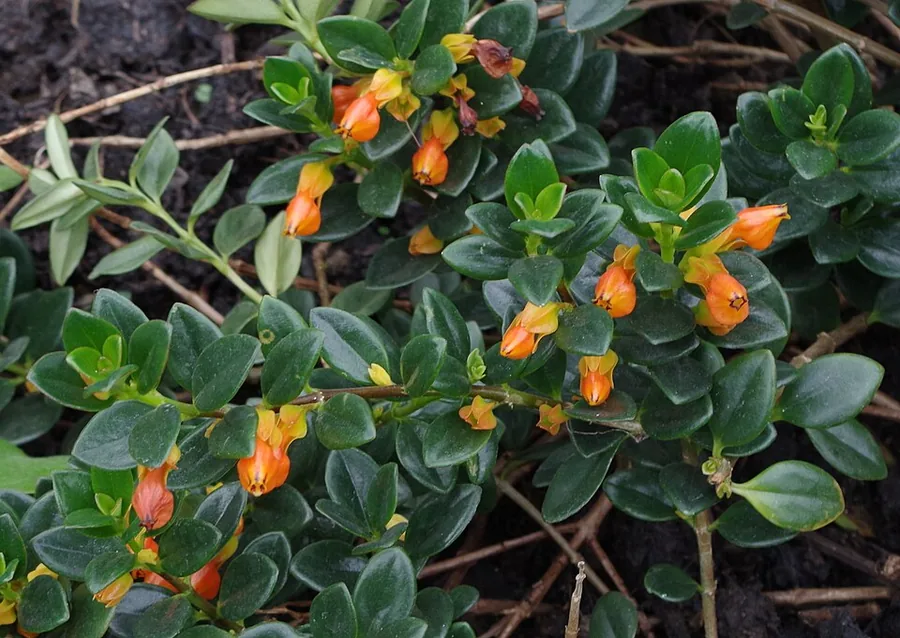
Give it bright filtered light and steady warmth, and the goldfish plant drapes arching stems of little orange blooms across a room.
Bright indirect
50–81°F · 10–27°C
USDA 10–11
4–20 in · 10–50 cm
Overview
The goldfish plant takes its name from its pouched orange flowers, each curved and puffed like a small fish, a warm note of color for an interior. Its story begins in the rainforests of southeast Brazil, where it grows as an evergreen that drapes over branches rather than reaching upward. That same draping habit makes it a natural indoors, at ease in a hanging basket by a window or along the edge of a high shelf.
Set against arching, trailing stems, its summer flowers bring a quiet season of color to a corner without demanding much floor space. The plant keeps a modest scale, around 4 to 20 inches (10 to 50 cm) tall and spreading wider as the stems lengthen. Because the appeal lives in the way those stems fall, it belongs somewhere they can spill over an edge and soften a hard line in the room.
It also fits easily into a daily routine, asking little in return for its display. Bright indirect light, warmth, and humid air keep it looking its best, and a pinch after flowering keeps the shape full rather than sparse. A home with pets can welcome it without hesitation, since every part of the plant is safe around cats, dogs, and other animals.
Care
The short version: it likes bright filtered light out of harsh sun, warmth, and humid air. Keep the peat-free mix moist while letting the surface dry a touch between waterings, feed monthly through the growing season, and pinch the stems back once the flowers fade.
Light
Place it in bright, filtered light near a window but out of harsh direct sun, which scorches the leaves. An east- or west-facing spot suits it, and a south window works behind a sheer curtain that also softens the room. In too little light it keeps trailing but stops flowering, and the display goes quiet.
Water
Keep the mix moist but well drained, letting the top inch or so dry before you water again. Soft water suits it best, since it dislikes the salts in hard tap water. Ease off in winter, when growth slows.
Soil
Pot it in a loam or sand-based, peat-free mix that holds moisture yet drains freely. It sits happily across a wide pH band of 5.5 to 7.5, so slightly acidic to neutral all work.
Temperature
Steady warmth keeps it at its best, ideally between 50°F and 81°F (10°C to 27°C). It cannot take a chill, so keep it well above 50°F (10°C) and clear of cold drafts and frosty windowpanes.
Humidity
This rainforest plant favors high humidity, and dry indoor air dulls the foliage and holds back the buds. Group it with other plants, set it on a pebble tray, or run a humidifier nearby to keep the corner it lives in comfortable.
Feeding
Feed it monthly through spring and summer while it is in active growth, using a balanced dilute liquid houseplant fertilizer. Pause feeding over the cooler months, when growth rests.
Pruning
Pinch the stems back after flowering to keep the plant full and stop it going bare and leggy at the base, which keeps the display looking considered. It is low maintenance otherwise, and the trimmings root easily into new plants for elsewhere in the home.
Repotting
Move it up a pot size every 2 to 3 years, or once it outgrows its container. This slow to moderate grower takes about 2 to 5 years to reach full size, so it rarely needs disturbing. Roots circling the drainage holes or soil that dries out fast are the cue.
Size & spacing
Plan for a compact plant, 4 to 20 inches (10 to 50 cm) tall, with stems trailing to a spread of 1.5 to 3 feet (50 to 100 cm). Hang it or set it high so the stems can cascade and frame the space below.
Troubleshooting
For all its charm, the goldfish plant rarely asks much of you. The occasional issue shows on the foliage or in a lull of flowers, and a small adjustment usually restores the display before it slips.
A sticky sheen and small insects gathering at the tips
When the display loses its shine and the tips feel tacky, aphids are usually the culprit, and that sticky sheen is the honeydew they leave. Rinse the colony away under a stream of water, then treat with insecticidal soap and repeat until the plant looks itself again. Move it out of the arrangement and away from other plants while it recovers, so the problem stays contained.
Fix:
- Rinse plant with a stream of water to dislodge aphids
- Apply insecticidal soap to affected areas, repeating as needed
- Isolate the plant from other houseplants until controlled
Handsome foliage that never quite blooms
A goldfish plant that stays all greenery and no color is usually just placed too far from the light. Give it a brighter corner with bright, filtered light near a south, east, or west window, set back from the glare of midday sun. A pinch after each round of bloom encourages the fuller, more flower-rich shape that carries a room.
Fix:
- Move to a brighter spot with bright, filtered light (e.g., near a south-, east-, or west-facing window out of harsh direct sun)
- Pinch after flowering to encourage bushier, flowering growth
Toxicity
For a home shared with animals, the answer is a calm one: the goldfish plant is safe. Both the ASPCA and NC State Extension list it as non-toxic, so a curious nibble will not poison a pet. At most there is a little mild stomach upset from eating any houseplant, and it settles on its own.
Safe for
People · Cats · Dogs · Horses · Rabbits · Livestock · Birds
Cats None
A cat can share the room with this one, since the ASPCA lists it as non-toxic to cats. Should a curious one sample the foliage, expect nothing beyond a brief, passing spell of stomach upset.
Dogs None
A household dog is equally welcome nearby, with the ASPCA rating the goldfish plant non-toxic to dogs. The most a large mouthful brings is some mild, short-lived digestive upset.
Horses None
There is no concern where horses are involved, as NC State Extension records the plant as non-toxic to horses, so a grazed leaf leaves nothing to worry about.
Rabbits None
A rabbit faces no toxic risk from this plant. As with any new green in the diet, an unhurried introduction in small amounts lets the gut settle comfortably.
Livestock None
This is a tender indoor plant that livestock seldom encounter, and it holds no compounds known to harm grazing animals.
Birds None
A pet bird can perch and nibble in complete safety, since the plant carries no toxic parts.
People None
For the household at large there is no poisoning risk. It is not grown for the table, yet a child who tastes a leaf comes to no harm.
Varieties
The plain species is what most rooms host, though a couple of variegated forms exist for a display with a little more pattern.
'Golden West' (variegated)
An RHS-recognized variegated selection whose dark leaves are marked with cream, a two-toned choice for a more decorative display.
'Variegatus'
A second RHS-listed variegated form, chosen for patterned leaves that read softer in a room than the plain green of the species.
How to propagate
The goldfish plant is easy to increase, and stem cuttings hand you fresh trailing plants to style another corner, given a little patience.
Stem cuttingsEasy
Spring · Several weeks to root; reaches full size in about 2-5 years
To furnish another room, take softwood stem-tip cuttings in spring, the approach favored by both the RHS and NC State Extension. Rooting runs to several weeks, and the young plant then settles into its display slowly, reaching full size in about 2 to 5 years.
Myths
The goldfish plant is poisonous to cats and dogs and belongs well out of a pet's reach.
The reassurance holds up. The ASPCA lists it as non-toxic to cats and dogs, and NC State Extension adds horses to the safe list. It suits a home with pets, and the worst a nibble tends to bring is the mild stomach upset that eating any houseplant can cause.