Vegetable · Brassicaceae
Horseradish
Armoracia rusticana
Give it deep, loose soil in a corner of its own, and this steadfast perennial returns fiery roots each fall.
Full sun
Every 7–10 days
140–180 days
USDA 3–9
Overview
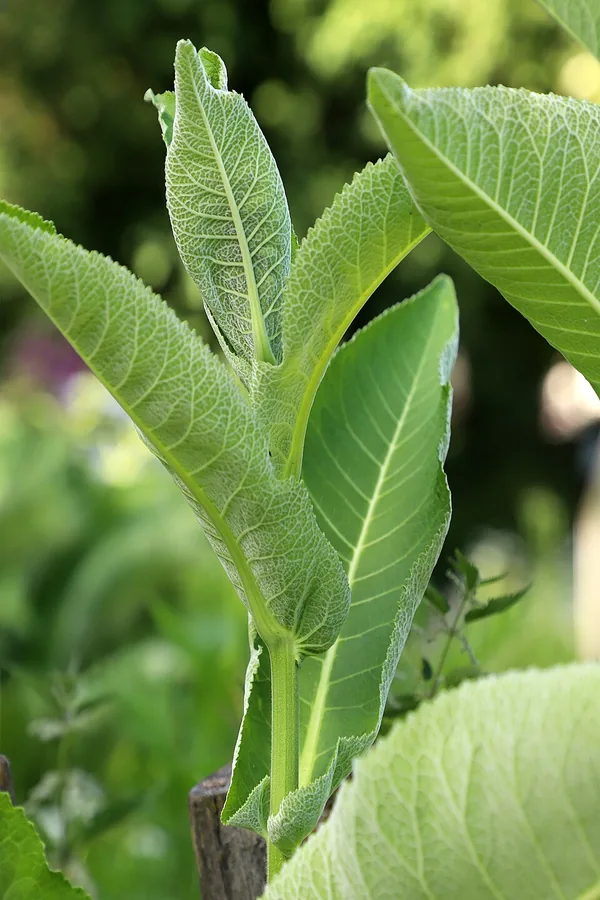
Horseradish earns its keep for a single, well-loved offering: the pungent root grated into the sauces and dressings that lift a winter table. A member of the mustard family beside cabbage and kale, it brings the same bright, warming character to the plate. Planted once, it stays on as a hardy perennial, holding its ground through cold that closes the season on most of the kitchen garden.
As a fixture in the plot, it asks remarkably little of a household. A piece of root pressed into good soil in spring, given sun and water, grows away fast and slips easily into the rhythm of the gardening year. The one point of attention is keeping it to its patch, since horseradish will roam if a border lets it.
The reward arrives with the first cold snap and carries the season indoors. The root holds its heat in reserve until it is grated at the counter, which is why a sauce made fresh from the garden brings a sharper, livelier note to the table than any jar ever could.
Care
The short version: a sunny spot with deep, loose, fertile soil and about an inch of water a week gives the smoothest roots. Keep the nitrogen light, take off the flower stalks, and set the plant in a bed of its own so it stays where it belongs.
Light
Horseradish settles best into a spot in full sun, the exposure that builds the strongest roots. It will accept a little afternoon shade and still earn its place, though the root comes in milder and smaller for it.
Water
About 1 inch of water a week yields the larger, smoother roots that make the best of a harvest. Once established the plant takes dry spells in stride, so steady watering is simply the path to a finer crop.
Soil
The root runs straightest through deep, loose, fertile loam with plenty of organic matter. Aim for a pH between 6.0 and 7.5, and loosen the bed deeply before planting so the taproot has an open path down.
Temperature
Few garden plants are so at ease with cold, taking winter lows near -31°F (-35°C) and weathering frost without complaint. It grows on through the warm months up to about 86°F (30°C), and a hard autumn freeze only refines the flavor.
Humidity
Ordinary outdoor air around 40% to 70% humidity suits it, with nothing to tend on that front. Horseradish is far too hardy to concern itself with moisture in the air.
Feeding
A balanced fertilizer or a little compost worked into the bed at planting is generally all it asks. A restrained hand serves best, since too much nitrogen drives leafy top growth and leaves forked, branchy roots behind.
Pruning
Take off the flower stalks as they rise so the plant pours its energy into the root rather than the bloom. In late spring some growers also rub away the upper side shoots, a practice called suckering that coaxes a single generous taproot instead of a cluster of thin ones.
Repotting
Horseradish is not one for pots. Kept to a confined bed, it is lifted and replanted from fresh root sets each year to hold its vigor and stay neatly within its lines.
Size & spacing
Plants stand 24 to 35 inches (60 to 90 cm) tall with a leafy spread of 12 to 24 inches (30 to 60 cm). Allow each one its room and a bed of its own so it grows on without leaning into its neighbors.
When to plant
Horseradish keeps time with the cold, and it slips neatly into the garden's calendar. Set the root sets out in early spring as soon as the ground can be worked, let them fill out across the season, and lift the roots in late fall after the first frosts, when the flavor comes into its own.
Northern hemisphere
Southern hemisphere
Typical months for a temperate climate: start earlier in warm zones, later where spring frosts linger.
- Plant: Plant root cuttings (sets) at a 45-degree angle in early spring, 4 to 6 weeks before the last frost as soon as soil can be worked.
- Harvest: Harvest roots in late fall after the first frosts; flavor is sharpest after cold weather. Roots can also be dug in early spring before new growth.
Hardiness
USDA hardiness zones: 3–9
Temperature: down to -40°C
Troubleshooting
Horseradish asks for little and repays it well, and the few issues that surface tend to appear in the root or in where the plant chooses to settle. Match what you see below and respond early. A well-prepared bed at the start quietly spares you most of the rest.
Fresh growth rising from ground you thought was cleared
Horseradish returns from the slightest scrap of root, so one season's harvest can quietly become a corner-claiming colony. Lift every fragment within reach, then keep clearing the regrowth until the buried reserves are spent. The most graceful solution is to set the plant within a buried barrier from the beginning.
Fix:
- Dig out as much root as possible
- Repeatedly remove regrowth to exhaust the root reserves
- Confine plantings to a contained bed or buried barrier
Roots that fork and knob rather than run straight
A root that forks usually traces back to a bed that was compacted, rocky, or shallow, since the taproot splits wherever it meets resistance. An overgenerous hand with nitrogen has the same effect, as does skipping the mid-season pass of rubbing off side shoots. Prepare a deeply loosened bed, keep the feeding modest, and strip those upper side roots once in early summer for a cleaner harvest.
Fix:
- Loosen and deeply till soil before planting
- Remove side shoots from the upper portion of the root in early summer
- Reduce high-nitrogen feeding
Leaves stippled with small shot-holes
The fine peppering across the foliage is the signature of flea beetles, with cabbageworms and diamondback caterpillars accounting for the larger bites. A floating row cover over young plants, a quick round of handpicking, and a touch of Bt when needed keep them in check. Reassuringly, a battered leaf canopy does little to diminish what the bed delivers below ground.
Fix:
- Use floating row covers on young plants
- Handpick caterpillars
- Apply Bacillus thuringiensis for caterpillars if needed
Toxicity
At the table the grated root is eaten with pleasure and no worry, and that character is the whole reason it earns a place in the garden. For the household's animals the picture shifts: the very mustard oils that give horseradish its edge irritate the mouth and gut of cats, dogs, horses, and other pets. It stops short of poisoning them, yet a mouthful brings genuine discomfort, so keep roots and trimmings well out of their way.
Toxic to
Cats · Dogs · Horses · Rabbits · Livestock · Birds
Safe for
People
Cats Mild
A cat that samples the pungent root tends to drool, paw at its mouth, and drift away from the food bowl for a while. The sharp mustard oils sting the mouth and leave the stomach unsettled.
Dogs Mild
Of all the household animals, dogs are the ones apt to unearth a root and chew it, and the mustard-oil burn brings on drooling, vomiting, or loose stools. It usually settles on its own, though a large helping merits a call to the vet.
Horses Mild
Horses rarely bother with the harsh foliage, but a curious bite irritates the mouth and gut and can leave one off its feed. Siting the planting beyond the reach of grazing animals keeps them clear of it.
Rabbits Mild
The fiery isothiocyanates are far too harsh for a rabbit's delicate digestion, so even a modest nibble can upset its gut. This is simply not a green to set before them.
Livestock Mild
Cattle, sheep, and goats almost always graze around the peppery foliage, yet any that do partake may show mouth and stomach irritation. Fencing horseradish off from pasture is the prudent course.
Birds Mild
Backyard poultry generally pass over the sharp leaves, and a stray peck mostly irritates the crop and gut. Trimmings are best kept away from where birds forage.
People Edible root safe
At the table the grated root is a celebrated staple, entirely safe to eat and prized for its bite. The fumes can sting the eyes and nose during preparation, so grate in a well-aired spot and keep it clear of the face.
Grating or processing the fresh root releases sharp volatile mustard oils that irritate the eyes, skin, nose, and mouth; work in a ventilated area and avoid touching the face. The plant is not on ASPCA headline toxic lists but is an irritant.
Helpline numbers

United States
ASPCA Animal Poison Control: (888) 426-4435 (fee applies)

United Kingdom
Animal PoisonLine: 01202 509000 (fee applies)

Australia
Animal Poisons Helpline: 1300 869 738
Varieties
The choice comes down to only a few horseradish types, some destined for the kitchen and one kept purely for the look of its leaves. These are the names to know as you plan the plot.
Common (Bohemian)
The narrow, smooth-leaved standard, prized for its easy disease resistance even as it yields a little less than the broad-leaved types.
Maliner Kren (Big Top)
Broad, dark, crinkled foliage crowns vigorous, high-quality roots, and this dependable type stands up well to disease.
Variegata
The decorative choice, carrying white-marbled, variegated leaves that suit a border far better than the kitchen.
How to propagate
Seed plays no part in horseradish. It multiplies from pieces of its own root, which is one reason a single planting can furnish a garden for years.
DivisionEasy
Early spring (or fall lifting for spring planting) · One growing season; roots are usually harvestable the first autumn after spring planting.
Rather than seed, horseradish multiplies from cuttings of its own root. Take pencil-thick sets 8 to 14 inches long and settle them in early spring at a 45-degree angle, wide crown end up, or divide a crown already in the ground. A spring planting rewards you with your first roots that same autumn.
Myths
Horseradish is just a milder relative of the radish.
A shared bite is where the resemblance ends. Horseradish is a perennial in the mustard family, and its heat surfaces as isothiocyanates only when the cells are crushed. It stands apart from the radish as its own plant entirely.
Once you plant horseradish you can easily pull it out later.
Removal is the real labor here. Any scrap of root left in the ground sprouts anew, so the plant settles in and spreads across the seasons. Set it within a buried barrier if you ever intend to reclaim that ground.