Ornamental · Osmundaceae
Interrupted Fern
Claytosmunda claytoniana
Give it damp shade and rich, acidic soil, and this native fern lends a shady corner fresh green poise each spring.
Partial shade
Every 3–7 days
USDA 3–8
2–5 ft · 0.6–1.5 m
Overview
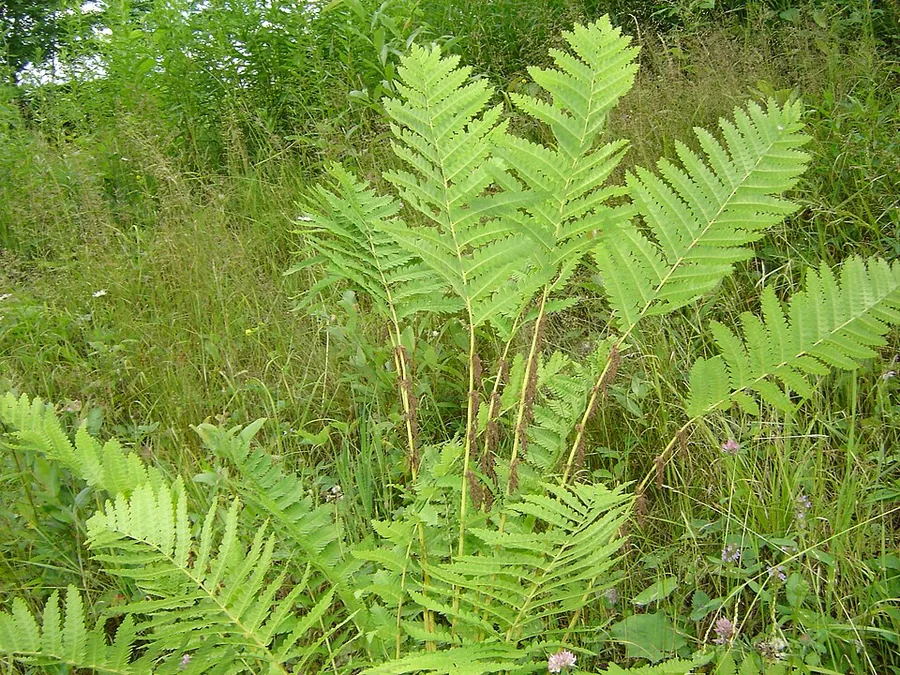
The interrupted fern is the plant for the difficult shady corner, the damp spot along a north wall or under a canopy where little else looks composed. Its name comes from a bit of natural styling in the frond itself: a few pairs of brown, spore-bearing leaflets sit in the middle and break up the green, so the leaf reads as gently interrupted. Those fertile leaflets arrive in mid to late spring and slip away by summer, leaving a clean green arch that carries the planting through the season.
Think of it as a low-effort anchor for a woodland-style scheme. It weathers winters down to -40°F (-40°C) and stays untouched by the deer and rabbits that spoil more delicate borders, so the look you set holds year after year. Given steady moisture it grows into a wide, vase-shaped clump that settles into a shady bed like it has always belonged there.
Choose it for form and texture rather than color, because it offers no flowers, only that upright, fountaining habit. It sits near the cinnamon fern and the royal fern in mood and setting, yet only this one carries the band of brown leaflets across the middle of its fronds, a subtle signature for a considered planting.
Care
The short version: set it in part to full shade, keep the soil evenly moist and lightly acidic, and top-dress with compost each spring. Once it has settled into its spot, it asks little beyond a drink in dry weather.
Light
Part shade shows it at its best, though this fern is remarkably adaptable and copes with anything from full shade to full sun. Sun comes with one condition, water, since it only holds up in bright, open positions where the soil stays constantly moist.
Water
Keep the soil consistently moist and never let it dry out, watering more freely through dry weather. A wetland fern by nature, it takes soggy ground and short spells of standing water in stride, conditions that would undo most border plants.
Soil
It settles happily into moist, humus-rich, acidic ground, at its best around a pH of 4.5 to 6.5. Beyond that it is unfussy, adapting to clay, loam, or sand wherever the moisture holds.
Temperature
Few garden plants match its constitution. It stands a range from -40°F to 86°F (-40°C to 30°C), riding out fierce northern winters and returning to the bed each spring.
Humidity
Like most woodland ferns it favors air on the damp side, ideally around 50% to 80% humidity. In the garden, steady soil moisture and a shaded, sheltered spot supply most of that for you.
Feeding
It barely calls for feeding. A single spring top-dressing of compost or leaf mold is all it wants, enriching the soil the slow, quiet way leaf litter would on a forest floor.
Pruning
There is no routine pruning to schedule. Simply cut away dead or tattered fronds in late winter or early spring, before the new growth rises, to keep the clump looking fresh in the border.
Repotting
It is not a container subject, so plan on dividing rather than repotting. Lift and split established garden clumps every 3 to 5 years, which also revives a crown that has begun to thin at its center.
Size & spacing
A settled clump reaches 2 to 5 feet (61 to 152 cm) tall and spreads 2 to 4 feet (61 to 122 cm) wide. Give each plant room for that full spread so the arching fronds can frame the corner without crowding their neighbors.
When to plant
This fern takes its place in the garden in spring, once the soil has thawed and warmed. Fresh fronds unfurl as the season opens, the brown fertile leaflets appear in the middle of each one by mid to late spring, and they fade by midsummer while the green carries the border on through fall.
Northern hemisphere
Southern hemisphere
Typical months for a temperate climate: start earlier in warm zones, later where spring frosts linger.
- Plant: spring
- Harvest: Non-flowering; fertile pinnae appear in the middle of the frond in mid-to-late spring and typically wither by midsummer
Hardiness
USDA hardiness zones: 3–8
Temperature: down to -40°C
Troubleshooting
An interrupted fern rarely troubles the gardener, and what little goes wrong almost always traces to dry soil or too much sun. A glance at the fronds and the crown for the early signs below is enough to keep the planting looking its best.
Fronds fading to brown and losing their fresh look
When the arching greenery starts to brown, the reason is nearly always dry soil, with strong sun hurrying it along. This is a plant that wants damp roots to keep its poise, so water deeply and dress the bed with leaf mold or compost to hold the moisture that keeps the display crisp. A fern left in harsh midday light belongs in a shadier corner of the garden, where its cool, woodland character reads best.
Fix:
- Water deeply to keep the soil consistently moist
- Mulch with leaf mold or compost to retain moisture
- Relocate to a shadier site if planted in full sun
A thinning heart with the shape holding only at the edges
A clump that goes empty in the middle has simply reached the stage where the rhizome crown is aging, a natural turn rather than any trouble. Lift and divide it in early spring, then set the vigorous outer pieces back into the border and let the tired center go. Refreshing the planting this way every few years keeps that full, fountain-like silhouette that makes the fern such a graceful anchor.
Fix:
- Divide the clump in early spring and replant the healthy outer sections
Toxicity
For a home with pets the verdict is easy: this true fern carries no known toxins, so it settles into a garden shared by cats, dogs, and other animals without worry. It is no food plant, but a curious nibble harms nothing, and the species is even known to hold its own against rabbit and deer browsing.
Safe for
People · Cats · Dogs · Horses · Rabbits · Livestock · Birds
Cats None
It belongs in a home with cats. A frond nibbled in passing does no harm, though a large helping of any greenery may leave a delicate stomach briefly unsettled.
Dogs None
A dog can share the garden with it easily, since it holds no toxins. The most a determined chewer might invite is a short, harmless bout of digestive upset.
Horses None
This true fern poses no poisoning risk to horses, and grazing animals tend to pass it by, so it settles into a paddock border without concern.
Rabbits None
Rabbits and this fern coexist comfortably in the same setting. Rather than suffering from a nibble, the plant is known to take rabbit browsing in stride.
Livestock None
Cattle, goats, and sheep run no risk from it. Stock generally leave it be, and an incidental mouthful does no damage.
Birds None
The fronds hold nothing that would trouble a bird, so poultry and wild visitors alike can move around it freely.
People None
It is entirely pleasant to handle, with no irritant to speak of. It isn't a plant for the table, so a rinse of the hands after working the soil is simply good garden habit.
No documented toxicity. Handle normally and wash hands after working with soil.
Varieties
There is no long roster of named selections to weigh here. The one form worth knowing for a planting is the wild type itself.
Osmunda claytoniana var. vera
This is the classic wild form of the interrupted fern, an infraspecific variety named by Wherry and kept on the books by Kew's Plants of the World Online.
How to propagate
To spread an interrupted fern through a garden, divide an established clump rather than work with seed, since it carries spores in place of seed.
DivisionModerate
Early spring · 1-2 years
To bring the fern to more corners of a garden, divide an established clump in early spring. Lift the rhizome crown, part it, and replant, allowing that the fern travels slowly on horizontal rhizomes and a fresh division wants 1 to 2 years to settle in and fill its place in the scheme. It will also seed itself from the spores on the fertile leaflets, though that path is slow and exacting, and rarely the choice for shaping a planting.
Myths
The interrupted fern offers flowers or seeds.
It never flowers and it sets no seed. As every fern does, it spreads by spores, borne here on a band of brown fertile leaflets set into the middle of an otherwise green, sterile frond, a detail that gives the plant its quiet, architectural interest.
Interrupted fern, cinnamon fern, and royal fern are one and the same.
They are three separate species that share the family Osmundaceae. The interrupted fern reveals itself through the band of brown fertile leaflets that interrupts the middle of each frond, leaving green leaflets above and below, a signature worth planting for.