Ornamental · Osmundaceae
Royal Fern
Osmunda regalis
Set against water and soft shade, this stately fern turns a damp corner into the calm centerpiece of the garden.
Partial shade
Every 2–4 days
USDA 3–9
2–6 ft · 0.6–1.8 m
Overview
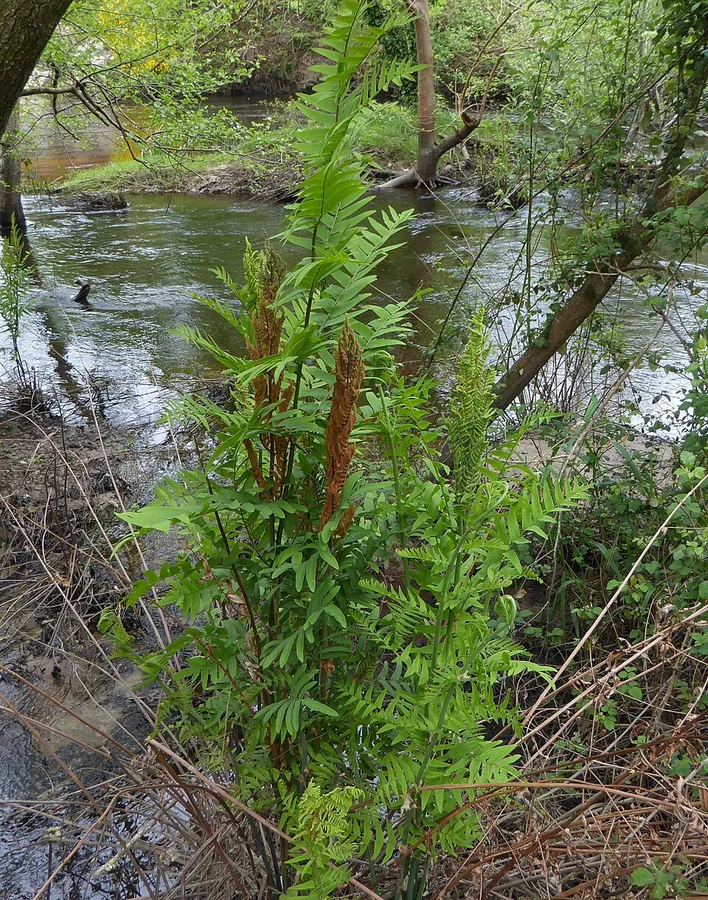
Few plants bring the quiet grandeur of a royal fern. Among the tallest and most composed ferns for a garden, it lifts arching fronds to 6 feet (180 cm) and anchors a shaded scheme the way a sculpture anchors a room. It descends from an ancient family, the Osmundaceae, and gathers into a full, dignified clump that reads as effortlessly regal. Late in the season its fertile fronds take on a rusty cast, the detail behind the old name flowering fern, though it never actually blooms.
This is a plant for the water's edge and the low, damp corner most gardens overlook. Give it a pond margin, a boggy border, or a shaded streamside, ground that stays moist to wet through the year, and it settles into the setting as if it had always been there. Frame it with acidic, humus-rich soil and gentle shade, and it holds the whole composition together.
Part of its appeal is how it marks time. Hardy to -31°F (-35°C) and returning each spring from the same crown, it opens as unfurling fiddleheads, fills out through summer, and fades in autumn, giving a shaded garden a season-long rhythm to live alongside. A mature clump reads as a calm, permanent presence rather than a passing flourish.
Care
The short version: place it in soft shade with soil that never dries, on the acidic side and rich with organic matter. Keep it steadily moist to wet, offer a light feed in spring, and let it hold its quiet place in the planting.
Light
Soft, dappled shade is where royal fern looks its most poised, the filtered light found beneath open trees. It will also stand in full shade or full sun, though full sun suits it only where the soil stays reliably wet, since dry roots under strong light scorch the fronds and spoil the effect.
Water
Moisture is the whole premise of the planting. Keep the soil consistently moist to wet, never dry, watering every 2 to 4 days and more often through heat or sun. A pond margin or boggy border is its natural stage, and it will even hold in a little shallow standing water.
Soil
Give it moist, rich, humusy ground on the acidic side, ideally a pH of 4.5 to 6.5. Clay, loam, or sand all work so long as the soil stays wet, and a generous layer of leaf mold or compost keeps the planting looking its best.
Temperature
Royal fern is unbothered by the calendar's extremes, comfortable across -31°F to 86°F (-35°C to 30°C). That hardiness lets it hold a place in northern gardens, dying back and returning from the crown as dependably as the seasons themselves.
Humidity
Like most ferns it favors air on the moist side, around 50% to 80%. The sheltered, humid pockets near water supply this without effort, which is part of why a waterside setting flatters it so completely.
Feeding
It asks little at the table. A spring topdressing of compost or leaf mold is usually all the planting needs, or a single balanced slow-release feed as growth begins, and nothing heavier.
Pruning
Upkeep is refreshingly light. Clear away the faded, browned, or frost-killed fronds in late autumn or early spring, before the new fiddleheads appear, and otherwise leave the clump to its own shape.
Repotting
For a container planting, repot only every 3 to 4 years, as the fern resents having its roots disturbed. The signs it wants more room are roots slipping through the drainage holes, the woody crown rising above the soil, and fronds that come in smaller and less full.
Size & spacing
Plan for a generous footprint: a mature clump reaches 2 to 6 feet (60 to 180 cm) tall and spreads 2 to 3 feet (60 to 90 cm) across. Give each crown that room so it can arch into the full, stately mound the design depends on.
When to plant
Royal fern lives by an unhurried garden calendar. Set new plants in place in spring or early autumn, while the ground is cool and damp, watch the fiddleheads open as the season warms, and enjoy the rusty fertile tips that arrive from late spring into summer.
Northern hemisphere
Southern hemisphere
Typical months for a temperate climate: start earlier in warm zones, later where spring frosts linger.
- Plant: Spring or early autumn
- Harvest: Non-flowering; spore-bearing fertile frond tips develop late spring to summer
Hardiness
USDA hardiness zones: 3–9
Temperature: down to -40°C
Troubleshooting
When a royal fern looks out of sorts, the cause almost always traces to soil that dried out. Browning tips, early yellowing, and thin growth all lead back there, so read the moisture first. Match the look below and set it right while the crown is still strong.
Frond Edges And Tips Browning At The Margins
Brown, brittle edges almost always point to drought stress, the one lapse a royal fern will not overlook. It relies on soil that stays moist to wet, so dry roots, strong sun, or a drying wind scorch the tips and dull the whole planting. Water deeply, mulch the root zone, and move container plants into part shade.
Fix:
- Water deeply and keep soil consistently moist to wet
- Apply organic mulch to conserve moisture
- Move container plants to part shade or provide afternoon shade
- Trim badly damaged fronds at the base
Fronds Yellowing And Fading Back In Midsummer
A dry spell can send this deciduous fern into early dormancy, closing down for the year before its time. It reads as a loss, yet the woody crown usually endures and returns with fresh fronds the next spring. Restore a deep watering rhythm and clear away the collapsed growth.
Fix:
- Resume deep, consistent watering to keep soil wet
- Cut back collapsed fronds; the crown usually re-flushes the following spring
Pale, Washed-Out Fronds Lacking Vigor
Thin, yellow-green fronds usually mean the soil has drifted too alkaline or too lean for a fern that wants acidic, humus-rich ground, and uneven watering deepens the fade. Work in fibrous, acidic matter such as leaf mold or composted bark, keep the moisture even, and the planting recovers its depth of color.
Fix:
- Incorporate fibrous, acidic organic matter such as leaf mold or composted bark
- Maintain even moisture
Toxicity
For a garden shared with pets and children, royal fern is easy company: a true fern, and not regarded as toxic. A chewed frond might bring a little passing stomach upset, but there is no real poison in play. The fine hairs and spores can leave sensitive skin briefly irritated, so a wash of the hands after a session of tidying is worth the habit.
Safe for
People · Cats · Dogs · Horses · Rabbits · Livestock · Birds
Cats None
A true fern, royal fern keeps easy company with cats. A curious nibble might prompt a little drooling or a brief upset stomach, and nothing beyond that.
Dogs None
Dogs share the space without concern, as the plant holds no toxin. The most a chewed frond tends to bring on is some mild, passing digestive upset.
Horses None
Horses may graze nearby untroubled, since the fronds carry no poison. A large mouthful of foliage can loosen the gut for a short while, and that is the extent of it.
Rabbits None
Rabbits can browse a royal fern without harm. As with any leafy green that is new to them, introduce it gradually so their digestion adjusts.
Livestock None
Cattle, goats, and sheep take no poison from this fern, which makes it a graceful choice for the damp edges of grazing ground.
Birds None
Garden and pet birds rest easy around the fronds and spores, with nothing toxic to pick at.
People None
It is safe around children, with no poison in any part of the plant. The young fiddleheads of some ferns are eaten cooked, though the spores or fine frond hairs can lightly irritate sensitive skin.
Royal fern is not known to be toxic, but as with any non-food plant, chewing fronds may cause mild, transient gastrointestinal upset, and spores or frond hairs can be a minor contact irritant.
Varieties
The straight species carries most gardens beautifully, yet a few named forms are worth seeking out for a shift in color or silhouette. These are the selections most likely to turn up at a good nursery.
'Purpurascens'
Its young fronds and stalks emerge in a rich purple-bronze that plays elegantly against the settled green of the clump.
'Cristata'
Crested, forked tips along the fronds and pinnae lend it a tasselled, frilled silhouette.
var. spectabilis
This is the North American royal fern, occasionally set apart as its own species, Osmunda spectabilis.
'Gracilis'
A slimmer, more compact selection whose new growth arrives touched with red.
How to propagate
Royal fern spreads at a graceful, unhurried pace, either by dividing an established crown or by raising new plants from its short-lived spores.
DivisionModerate
Early spring or autumn · 1 to 2 growing seasons
The surest way to increase royal fern is to divide the woody crown in early spring or autumn, letting each piece keep its own roots and growing points. Because the plant dislikes disturbance, divide it only now and then, and allow a fresh division 1 to 2 growing seasons to settle and gather fullness. Spores offer a slower route: sow the short-lived green spores onto moist, sterile peat as soon as they ripen, keep them humid and shaded, and wait several months for prothalli and then young plants to appear.
Myths
The name flowering fern means royal fern comes into bloom.
It never flowers. The bloom-like clusters at the frond tips are simply crowded sporangia bearing spores, and the plant carries on by spores rather than flowers or seeds.
Ferns, like the plants around them, begin from seed.
Ferns set no seed whatsoever. Royal fern rises from the spores shed by its fertile tips, or from lifting and dividing the crown to make new plants.