Ornamental · Asteraceae
Joe Pye Weed
Eutrochium purpureum
Set in full sun and moist earth, Joe Pye weed presides over the late-summer garden, wrapped in drifting pollinators.
Full sun
USDA 4–9
5–7 ft · 1.5–2.2 m
Overview
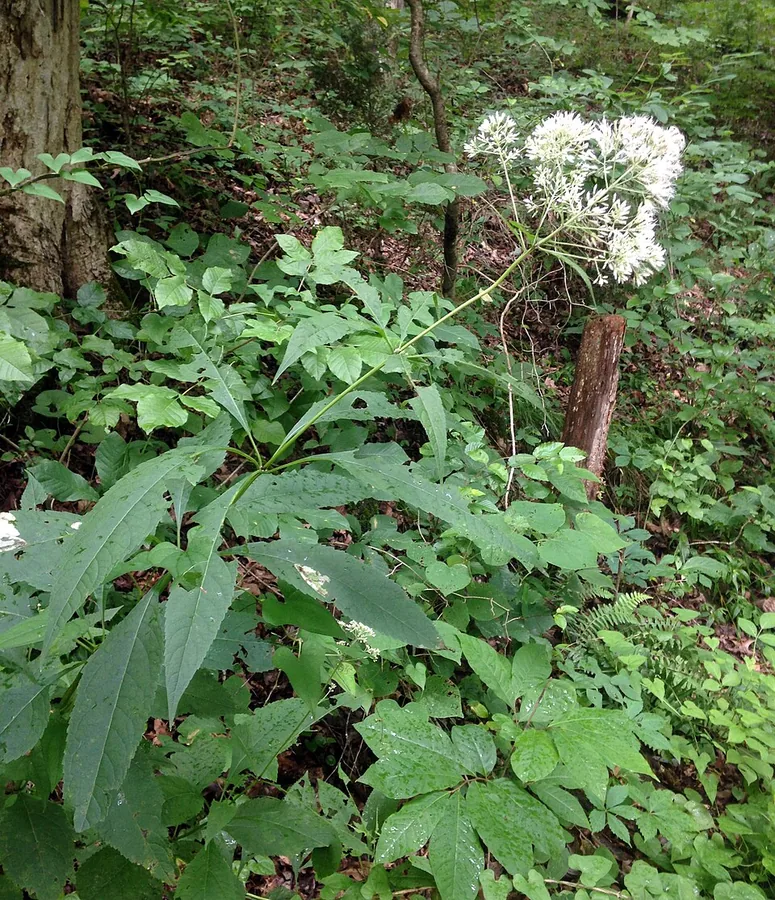
Joe Pye weed is the plant to reach for when a garden needs height and presence at the far edge of a sunny, moist border. A tall native perennial of eastern North America, it lifts broad domed clusters of dusky mauve-pink from midsummer into early fall on stems that climb 5 to 7 feet (150 to 215 cm), and for those weeks it sets a soft, humming, late-summer mood, alive with butterflies and bees.
The plain name belies the composure it brings to a planting. It grows as a slow-spreading clump that keeps its place, asks little upkeep, and returns with more stature each year, an easy anchor for a border you want to feel settled and mature. Its single condition is moisture, which makes it a natural centerpiece for a rain garden, a pond edge, or any low, damp corner you are dressing.
As a member of the aster family it earns its keep late in the season, feeding late-season pollinators just as the rest of the garden winds down. Set it where it has room to stand tall, keep its footing damp, and it holds the scene together on its own.
Care
The short version: full sun and steadily moist, fertile soil keep the display at its best. Water through any dry spell, since drought is the one condition it will not abide, and cut the old stems to the ground in late winter.
Light
Joe Pye weed keeps its best form and fullest flowering in full sun, and it will take partial shade, though the trade shows quickly. Starved of light, the stems stretch, lean, and flop, and the upright silhouette a border relies on softens into a slouch.
Water
This is a moisture lover that wants consistently damp to occasionally wet soil and holds no patience for drought. Let the ground dry and the leaf edges scorch, so a deep soaking through any dry spell keeps the planting lush and the display looking its part.
Soil
Give it moist, fertile, humus-rich ground, be it clay, loam, or sand, and it takes even the wet, low sites that turn other perennials away. It is unfussy about pH, at home anywhere from 5.5 to 8.0.
Humidity
Outdoor humidity never really enters into it with this plant. What shapes the display is airflow around the leaves, since crowded, still air is what lets powdery mildew and rust settle in.
Feeding
Rich, moist ground carries this plant with ease, so it wants little to no feeding. On lean soil a light scattering of compost through the growing season is all the attention it needs.
Pruning
Cut the old stems to the ground in late winter or early spring to open the way for the new season's growth. For a shorter, steadier plant that keeps its composure in the bed, cut it back by about half in early summer as well.
Size & spacing
Plan for a commanding plant, 5 to 7 feet (150 to 215 cm) tall and 2 to 4 feet (60 to 120 cm) across at maturity. Give it space at the back of a border so air moves freely around it and the planting keeps a clean, easy line.
When to plant
Joe Pye weed keeps the seasonal rhythm of a hardy perennial, and the display unfolds on that schedule. Set plants out after the last spring frost, let them gather through the season, and the flowers arrive from July into September to carry the late-summer garden before the plant retires for winter.
Northern hemisphere
Southern hemisphere
Typical months for a temperate climate: start earlier in warm zones, later where spring frosts linger.
- Sow: Sow seed after about 3 months cold-moist stratification; germination is slow and rates are low
- Plant: After last frost in spring
- Harvest: Blooms July to September (summer to early fall)
Hardiness
USDA hardiness zones: 4–9
Temperature: down to -34°C
Troubleshooting
Most of what unsettles a Joe Pye weed planting comes down to one of two things: a border that dried out, or air left too still around crowded stems. Both read first on the foliage. Match the look below and correct the setting rather than the symptom, and the display recovers its poise.
Brown, crisp edges along the leaves
Browned, brittle margins are the mark of leaf scorch, the tell that a border has run dry. Joe Pye weed keeps no reserve against drought, so the edges of the foliage are the first part of the display to go in a fast-draining bed or a sun-struck corner. A deep soaking through dry weeks and a layer of mulch keep the picture intact, and a stubbornly parched setting is better traded for a damp one such as a rain garden or the softer ground at a pond edge.
Fix:
- Water deeply during dry periods
- Mulch to retain soil moisture
- Relocate to a moister site such as a rain garden or pond margin
A pale, powdery veil settling across the leaves
A pale, dusty veil over the foliage is powdery mildew, a fungus that gathers where plantings crowd together and the air around a bed hangs still. A little space between plants lets a breeze pass through the border, watering low keeps the leaves from staying wet, and clearing away the most coated foliage tidies the scene. It reads worse than it is and seldom leaves any lasting mark on the planting.
Fix:
- Improve air circulation by spacing plants
- Avoid overhead watering
- Remove affected foliage
Tall stems that stretch, lean, and flop
Stems that turn leggy and lean are chasing light they never quite reach, and past a certain height the display simply topples. A place in full sun holds the composition upright. A cutback of about half in early summer brings on shorter, steadier growth for a more collected look, and a discreet stake steadies any tall stem that still drifts out of line.
Fix:
- Site in full sun
- Cut plants back by about half in early summer to encourage sturdier, shorter growth
- Stake tall stems if needed
Coppery flecks gathering beneath the leaves
Raised orange-to-brown flecks along the undersides of the leaves signal rust, a fungus that, like mildew, favors damp and motionless air. Lifting off the spotted foliage as it appears keeps the planting looking its best, and opening the bed for a moving breeze while keeping water off the leaves gives the spores nowhere to take hold.
Fix:
- Remove and dispose of affected leaves
- Improve air circulation
- Avoid overhead watering
Toxicity
For a home that shares its garden with animals, this is easy company: horticultural sources do not list Joe Pye weed as toxic to pets, livestock, or people. It is a treasured pollinator plant, at ease in a garden where cats, dogs, horses, and grazing animals roam.
Safe for
People · Cats · Dogs · Horses · Rabbits · Livestock · Birds
Cats None
Nothing toxic is on record for cats, so a household companion can share the garden freely. A large mouthful of any plant may still bring on a brief, mild stomach upset.
Dogs None
No toxic effect is documented in dogs, which makes it an easy fit for a garden the family dog wanders. A chewed stem or leaf is no cause for concern.
Horses Safe
It sits safely alongside horses, carrying nothing known to harm them where it stands in a pasture or a border.
Rabbits Safe
Rabbits may browse the foliage without harm, since the plant holds no recorded toxins.
Livestock Safe
Cattle, goats, and sheep can graze near it in comfort, with no reports of poisoning in livestock on record.
Birds Safe
It is wholly safe near birds. The flowers invite butterflies and bees into the scene, and the plant poses no threat to garden or wild birds.
People Safe
No toxicity to people is documented, and it stands as a safe garden ornamental. It is not grown for the table, though, so there is no call to eat it.
Varieties
The name Joe Pye weed gathers several species and selections that differ mostly in height and stem, each suiting a slightly different corner of a garden. These are the ones worth knowing.
Eutrochium maculatum (Spotted Joe-Pye weed)
Its purple-spotted, solid-pith stems and flat-topped flower clusters set it apart, and it holds up to wet ground and to cold as far down as zone 3.
'Gateway'
A more compact spotted selection that carries large dusky-pink clusters and draws pollinators to a border by the dozen.
'Little Red'
A shorter form of E. purpureum settling near 3 to 4 feet, which makes it the graceful choice for a smaller garden.
Eutrochium fistulosum (Hollow Joe-Pye weed)
The tallest of the group, with hollow lower stems and a generous flow of nectar on plants that can rise to 10 feet.
How to propagate
More Joe Pye weed comes either the slow way from seed or the easy way by splitting a clump, and most gardeners dressing a border choose the second.
DivisionEasy
Fall as the plant goes dormant, or early spring · One growing season
Division is the surest way to bring more Joe Pye weed into a garden. Lift a clump in fall as it slips into dormancy, or in early spring, part it into sections, and each piece settles in and fills its space across a single growing season.
SeedModerate
After about 3 months cold-moist stratification · Slow; germination rates are low
Seed is the unhurried route. It calls for about 3 months of cold, moist stratification before dormancy breaks, and even then germination comes slowly and unevenly. For a quicker result, stem cuttings taken in late spring root with ease and give the same plant for the same setting.
Myths
Joe Pye weed is an unruly weed destined to overtake a garden.
The name flatters nothing about how it actually grows. This clump-forming native perennial spreads slowly and keeps to its allotted place, which is why designers set it out as a well-behaved ornamental and pollinator magnet rather than treat it as a weed.
Nothing short of permanently boggy, waterlogged soil will satisfy it.
It is drawn to moisture, yet it asks for no swamp. Given an ordinary bed with soil kept evenly moist and well drained, it settles in beautifully and even takes the occasional wet spell in stride. Drought is the one condition it will not abide.