Ornamental · Asteraceae
New England Aster
Symphyotrichum novae-angliae
Give it full sun and a midsummer pinch, and the New England aster carries the garden's mood right through the fading days of fall.
Full sun
USDA 4–8
3–7 ft · 0.9–2.1 m
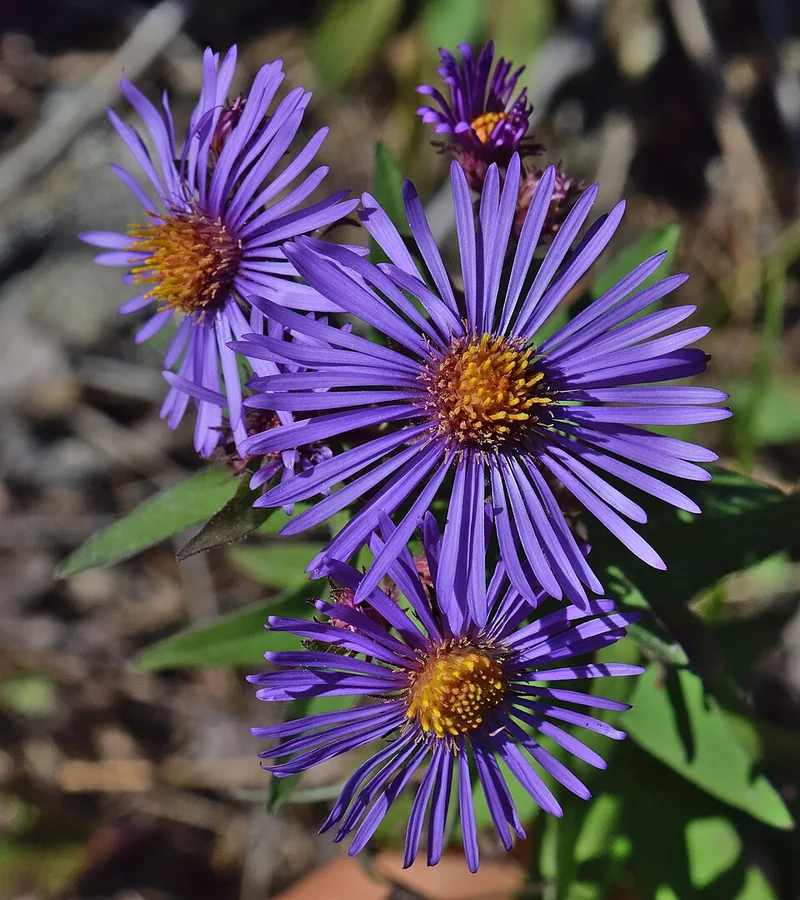
Overview
The New England aster is the plant that keeps a garden dressed for one more act. As the borders quiet and the light turns low, it opens in purple, pink, and ruby daisies from late summer into fall, a final flush of color set against a cooling scene. Kin to the sunflowers and daisies, it is the same flower that washes country roadsides and damp meadows in violet each September.
This is a tall, quick-growing perennial, so it earns its keep at the back of a border where its height reads as depth rather than clutter. Stems rise from 3 to 7 feet (90 to 210 cm) and the clump widens season by season, filling a bed with easy, informal presence. Hardy down to zone 4 and forgiving of heavy clay, it suits a relaxed cottage planting or a naturalistic corner left to its own rhythm.
Its truest appeal, though, is its timing. The flowers arrive just as monarchs move south and bumble bee queens settle in for winter, turning a quiet fall garden into a place of movement and one of the season's most valued late-source of nectar. Set it once, pinch it in midsummer, and it returns each year to close the season in style.
Care
The short version: full sun, rich soil kept evenly moist over good drainage, and a few pinches before mid-July so the tall stems keep their shape. It flowers in fall and holds the garden's late color when little else remains.
Light
Give it full sun and it rewards you with the fullest flowering and the steadiest stems, the frame a good border display depends on. A touch of afternoon shade is tolerated, but set in too much shade the plant stretches, leans out of line, and blooms far less.
Water
Keep the soil evenly moist, above all through dry spells, or the lower leaves drop and brown and dull the effect. It favors rich, damp ground and even accepts clay, which suits a rain garden nicely, provided the drainage stays sound so aster wilt never takes hold.
Soil
Plant it in rich, fertile soil full of organic matter, from good loam to heavy clay, and it settles in with ease. The one thing it will not abide is standing water, so choose ground that drains freely even as it holds its moisture.
Temperature
A tough, cold-hardy perennial, it weathers -29°F to 95°F (-34°C to 35°C) and thrives across zones 4 through 8. It retreats to the ground each winter and returns on its own in spring, so a bare patch in the cold months is simply the plant at rest.
Humidity
Ordinary outdoor air suits it, so there is no figure to chase. Air movement matters far more, since still, damp air pooling among crowded stems is what invites the powdery mildew that dulls the display.
Feeding
It asks very little at the table. A light feed of balanced or compost-based fertilizer across the growing season is plenty. Keep the nitrogen in check, since an excess only draws up soft stems that lean and spoil the line.
Pruning
Pinch the stems back several times before mid-July to hold the plant lower, fuller, and clear of the need for staking. Once frost has darkened the foliage, cut the whole clump to the ground and let the bed rest for winter.
Size & spacing
Stems stand 3 to 7 feet (90 to 210 cm) tall while each clump spreads 24 to 35 inches (60 to 90 cm) across, so allow it a generous footprint in the design. Give it that full width and air drifts through the planting, keeping the foliage clean and the composition crisp.
When to plant
This aster keeps a distinctly autumn rhythm, and a border planned around it saves its high note for the end. Set plants out in spring once frost has passed, or in early fall, pinch through early summer to keep them shapely, and the flowers arrive from late August into October to close the year.
Northern hemisphere
Southern hemisphere
Typical months for a temperate climate: start earlier in warm zones, later where spring frosts linger.
- Sow: Late winter to early spring; seed germinates more reliably after cold stratification
- Plant: Spring after last frost, or fall
- Harvest: August to October
Hardiness
USDA hardiness zones: 4–8
Temperature: down to -34°C
Troubleshooting
Most of what troubles a stand of asters comes down to two conditions that also read on the eye: damp, crowded quarters and stems grown too tall for their own poise. Both show early on the leaves and stems, which leaves time to set things right before the planting loses its look. Match the picture below, then act while the fix still holds.
Stems yellowing and sinking from the base upward
This is the work of aster wilt, a soilborne fungus that takes hold in wet, heavy clay where water lingers and never quite clears. A plant it claims cannot be brought back, so it is lifted and discarded rather than nursed along. Improve the drainage of that ground and choose a fresh place for the next planting, and the setting recovers its poise.
Fix:
- Remove and destroy severely affected plants
- Improve soil drainage
- Avoid replanting asters in the same spot
A pale film dulling the leaves as summer closes
That chalky bloom is powdery mildew, a fungus that arrives when a planting stands too close together and the air around it never stirs, and it tends to peak as the season turns. Lift away the marked leaves and keep water off the foliage, directing it to the roots instead. Set the plants with room to breathe and pinch the clump open, so a steady drift of air moves through and the look stays clean.
Fix:
- Improve spacing and air circulation
- Remove and discard affected foliage
- Avoid overhead watering
Tall stems leaning out of line after rain
Given rich ground or a shaded corner, the plant runs up past 90 cm (35 inches), and stems that lanky lose their upright grace, leaning or splitting once rain weighs them down. A round of pinching before mid-July keeps the clump lower and fuller, holding its shape through the season. Where the height is wanted for a border's back rank, an early stake steadies it, and a compact cultivar keeps the composition tidy on its own.
Fix:
- Stake or support taller plants
- Pinch back stems before mid-July to reduce height
Toxicity
For a home shared with pets or children, the news is easy. The New England aster is not toxic to cats, dogs, horses, or people, and the ASPCA lists asters as safe. A pet that takes a large mouthful may have a mild, passing stomach upset, but there is nothing poisonous to give a second thought.
Safe for
People · Cats · Dogs · Horses · Rabbits · Livestock · Birds
Cats None
A household cat is safe alongside it. A stray nibble may bring a little drool or a brief upset stomach, the kind any plant can prompt, yet nothing in the aster is poisonous.
Dogs None
Dogs share the space without concern. Should one chew a bloom or two, expect at most a passing spell of mild stomach upset and nothing beyond it.
Horses None
Horses may graze near it in perfect ease. The plant holds nothing that would poison them, so a stray mouthful asks for no worry.
Rabbits Safe
Rabbits browse the foliage without harm. Asters turn up time and again among the plants that garden and wild rabbits graze contentedly.
Livestock Safe
Cattle, goats, and sheep may graze it with no risk of poisoning. Nothing in the plant would do them harm.
Birds Safe
Birds come to no harm from it, and in truth it welcomes them. Many take the seed heads through fall and winter, while the late flowers gather the insects they pursue.
People Safe
It is safe around people as well. Grown for the eye in a garden rather than the table, it invites no eating, though there is no risk at all in handling it.
Varieties
Most gardeners choose a named cultivar for its color or its manners in a bed. These three are the ones worth knowing when you plan the planting.
Purple Dome
A neat, mounding form that settles near 2 feet of deep purple bloom and keeps its shape without pinching or staking, ideal for a front edge or a container by the door.
September Ruby (Septemberrubin)
A taller selection whose large ruby-red flowers, lit by bright yellow centers, carry color to the back of a border.
Andenken an Alma Potschke
A generous, eye-catching grower awash in bright rose-pink to salmon flowers that read warmly across a garden.
How to propagate
New England aster is easy to increase, whether you divide a settled clump or begin quietly from seed.
DivisionEasy
Spring or early fall, every 2 to 3 years · One growing season
Division is the surest way to carry these asters forward, and a chance to refresh a planting along the way. Lift and part the clumps every 2 to 3 years in spring or early fall, and each division finds its feet within one growing season. It restores the vigor of a tired stand, keeps the spread in graceful proportion, and clears the bare, hollow center that older clumps leave behind.
SeedEasy
Sow in late winter to spring; may self-seed in the garden · Blooms typically the second year from seed
Seed sown from late winter into spring offers a slower, quieter route, and a cold spell beforehand lifts germination considerably. Patience is part of it, since seedlings usually wait until their second year to bloom. Plants often self-sow across a garden as well, though the seedlings may drift from the parent in a pleasing, unplanned way.
Myths
New England aster is toxic to cats and dogs like many fall flowers.
There is no need for caution on this front, as the ASPCA lists asters among the plants non-toxic to cats, dogs, and horses. A pet that takes a large mouthful may feel a mild, passing stomach upset, yet nothing in the plant is poisonous.
This aster blooms all summer long.
It keeps its display for the close of the season, opening from roughly August into October. That late arrival is the very quality that sets it apart, carrying color and life for pollinators when the rest of the garden has all but finished.