Houseplant · Piperaceae
Baby Rubber Plant
Peperomia obtusifolia
Given bright indirect light plus a patient hand with the watering can, this understated peperomia settles gracefully into almost any room.
Bright indirect
USDA 10–12
6–24 in · 15–61 cm
Overview
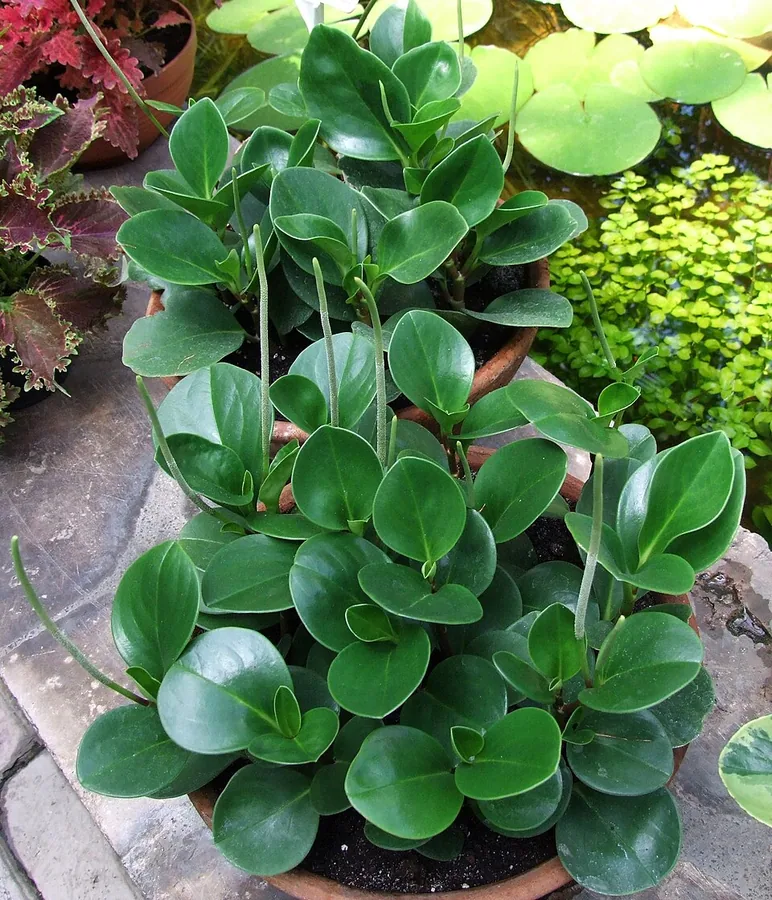
The baby rubber plant is the quiet, dependable piece a room can build around. A member of the pepper family, it grows wild from Florida through tropical America across the forest floor, though at home it reads as something far more composed. Indoors it stays neat at 6 to 24 inches (15 to 61 cm), its thick, glossy leaves lending a shelf or side table an unfussy, put-together calm.
That restraint is what makes it so easy to place. It slips onto a desk beside a stack of books, softens a bathroom sill, or rounds out a grouping without ever demanding the spotlight, and its low, mounding shape never outgrows the corner it was chosen for. Set it where a daily glance can catch it and the plant quietly earns its keep.
For a little more character, the variegated forms fold cream, white, and gold into a palette that flatters warm woods and pale walls, holding their color best in brighter light. The plain green types keep to a cleaner, more architectural look and settle happily into the dim corner a fussier cultivar would sulk in.
Care
The short version: bright indirect light, and let the potting mix dry almost completely before you water again. Set it in a fast-draining mix, feed lightly in spring and summer, and keep it above 50°F (10°C).
Light
Give it bright, indirect light for the fullest growth and the richest leaf color, which keeps a styled corner looking its best. It tolerates low light too, especially the plain green types, though a variegated plant fades and stretches in a dim spot. Keep it clear of direct sun, which scorches the leaves.
Water
This is where a good-looking plant is kept or lost. Let the mix dry almost completely before watering again, since the fleshy leaves carry their own reserve and rot quickly in wet soil. Ease off further from fall through late winter, when growth slows.
Soil
Set it in a well-drained houseplant or cactus mix, or a peaty blend that drains freely. It is easy about pH, taking anything from 6.0 to 8.0, but the soil must never stay soggy. A pot with drainage holes matters as much as the mix, whatever the finish of the cachepot around it.
Temperature
Treat it as the tropical plant it is and keep it above 50°F (10°C). Ordinary room warmth suits it year-round, but a cold draft or a chilly winter windowsill will set it back, so choose a settled spot away from the door.
Humidity
Average indoor humidity is plenty, so there is no figure to chase. It handles dry rooms better than most tropicals, though a little more moisture in the air helps keep spider mites at bay.
Feeding
Feed only through the spring and summer growth, when the plant can use it. A diluted liquid houseplant fertilizer once a month works, or a slow-release granular feed once a year for a hands-off routine. Skip feeding through fall and winter.
Pruning
Pull off old or damaged leaves as they turn up to keep the shape crisp. For a fuller, bushier plant, cut a stem just above a leaf node, which pushes it to branch out from that point.
Repotting
This plant is happy to stay put and can hold the same pot for several years, so a chosen cachepot can stay in place a long while. Repot only when roots crowd or circle the pot, the soil dries out unusually fast, or new growth stalls.
Size & spacing
Expect a tidy plant of 6 to 24 inches (15 to 61 cm) tall and about as wide. Its small, mounding shape suits a desk, a shelf, or a windowsill and sits comfortably among other pieces without crowding them.
Troubleshooting
Nearly every issue with this plant leads back to water, and most of those to a little too much. Learn to read the leaves and stems and a stylish plant stays that way, trouble caught long before the roots suffer. Match what you see below, then adjust before a small flaw spreads through the display.
A slumping plant whose lower stems have gone soft
A plant that suddenly slumps on its shelf, soft at the base, has fallen to root and stem rot, the near-certain result of soil kept wet too long. The water-storing leaves make it top-heavy, so the whole silhouette caves the moment the roots let go. Lift it from the pot, cut away every soft brown root and stem, and settle it into fresh, fast-draining mix. If the center is beyond saving, a few healthy cuttings will restore the display in time.
Fix:
- Remove the plant from wet soil and cut away all soft, brown, rotted roots and stem tissue
- Repot into fresh, well-drained potting or cactus mix in a pot with drainage holes
- Withhold water until the mix is nearly dry, then water sparingly
- If the crown is lost, root healthy stem or leaf cuttings to save the plant
Leaves yellowing and dropping off
A shelf plant that starts shedding yellow leaves is quietly registering too much water. Because the fleshy leaves keep a reserve of their own, the mix should read nearly dry before the next round. Pause the watering, empty the saucer, and let it dry back to restore that clean, poised look. A short dry spell suits it far more than a saturated pot ever will.
Fix:
- Stop watering and allow the soil to dry out almost completely
- Improve drainage and empty any standing water from the saucer
- Resume a let-dry-completely watering routine
Delicate webbing, powdery white clusters, or a sticky sheen over the leaves
A few familiar pests can spoil the look of a well-placed plant. Spider mites leave fine webbing and a dull, speckled surface, mealybugs settle as cottony white tufts where the leaves meet the stem, and whiteflies rise in a cloud when the plant is brushed. Set it apart from the rest of the collection, touch each mealybug with an alcohol-dipped swab, then rinse and treat the foliage with insecticidal soap or horticultural oil until the leaves are clean again.
Fix:
- Isolate the plant to prevent spread
- Wipe off mealybugs with a cotton swab dipped in alcohol
- Rinse foliage and treat with insecticidal soap or horticultural oil, repeating as directed
- Raising humidity discourages spider mites
Rough, blistered spots surfacing beneath the foliage
The corky, scab-like spots that dull an otherwise polished plant are oedema, not something catching from a neighbor on the same table. They surface when the roots take up water faster than the leaves can release it, usually after wet soil paired with a dim spot or humid air. Trim the watering, move the plant into brighter light with better airflow, and fresh growth returns unmarked. The existing spots stay, so retire a badly marked leaf only for the sake of the arrangement.
Fix:
- Reduce watering and let the mix dry between waterings
- Increase light levels and air circulation
- Lower ambient humidity around the plant
- Remove badly affected leaves for appearance (damage is permanent on existing leaves)
Sparse, drawn-out growth and colors losing their contrast
Set in a corner that never quite gets enough light, the plant loses its tidy shape and the stems stretch toward the nearest window. Variegated forms surrender their contrast and drift back to plain green, taking the visual interest with them. Move it to a brighter spot away from harsh midday sun, turn it now and then so it grows evenly, and pinch the leggy stems above a node to bring back that full, styled form.
Fix:
- Move to a brighter spot with bright indirect light (out of direct midday sun)
- Rotate the plant periodically for even growth
- Pinch or prune leggy stems above a node to encourage branching
Faded, burnt-looking patches along the plant's sunny side
When dry, bleached patches mar the leaves that face the glass, the cause is direct sun, more than these leaves can take on an exposed sill. Fierce afternoon light is the usual offender. Draw the plant back into bright but indirect light, and trim the worst leaves away, since the scorched patches will not recover their finish.
Fix:
- Move the plant out of direct sun to a bright indirect location
- Remove severely scorched leaves
Toxicity
Welcome news for a lived-in home: the baby rubber plant is non-toxic and pet-safe. The ASPCA and university extensions list it as harmless to cats, dogs, and horses, so it can sit within easy reach on a low shelf without a second thought for a curious pet or child.
Safe for
People · Cats · Dogs · Horses · Rabbits · Livestock · Birds
Cats None
A home with a cat can place this plant freely, since the ASPCA lists it as non-toxic and a curious nibble brings no poisoning. A cat that overindulges on any houseplant may bring a little back up, but nothing in the leaves themselves does harm.
Dogs None
The same ease extends to dogs, with the ASPCA confirming no toxic effect. A large mouthful might pass as a soft stool, yet there is no poison in play to worry a household.
Horses None
NC State lists it as non-toxic to horses, so an idle taste does no damage. As a small indoor piece it rarely finds its way near a horse to begin with.
Rabbits None
For a rabbit there is nothing here to fear, the fleshy leaves holding no toxins at all. Greens raised for them still make the better daily fare, but this plant poses no threat.
Livestock None
It carries none of the compounds that trouble grazing animals. As an indoor plant rather than pasture, it seldom enters a livestock setting in the first place.
Birds None
Nothing in the plant poisons birds, so a stray peck from a household parrot passes without concern. The thick leaves simply have no part in a proper bird diet.
People None
It sits safely within reach of children, with no toxic compounds to cause harm if a leaf is chewed. It is grown to be looked at rather than eaten, so a small curious taste calls for no alarm.
No special handling required for pet households; documented non-toxic
Varieties
Most of the named forms come down to the leaves, ranging from solid green to bold cream and gold variegation. These are the cultivars most likely to turn up when choosing one.
'Variegata'
Grey-green leaves blotched with green sit inside a broad creamy-white margin, a border that reads best when the plant is set in brighter indirect light.
'Alba'
New growth opens almost pure white to yellow with a flush of bright red, then eases into greener tones as the leaf matures.
'Albomarginata'
A silvery border traces the grey-green leaves, and the 'Albomarginata Minima' form pares the whole plant down to a dwarf.
'Minima'
A compact grower whose small leaves reach only one to two inches long, tailor-made for a tight nook or a small pot.
'Gold Tip'
Marbled variegation drifts across each leaf, every one finished with a gold tip.
'USA'
The leaves resolve into multi-shaded variegated patches for a busier, more mottled effect.
'Obtipan Green'
A short, clumping form dressed in solid emerald-green leaves, with none of the variegation of the others.
How to propagate
Few plants let you extend a look as easily as this one. A single leaf, a stem tip, or a divided clump all take root with barely any effort, so one healthy plant soon furnishes several rooms.
Leaf cuttingsEasy
Spring to summer · Several weeks to root
Take a single leaf with about an inch of petiole in spring or summer and set it into moist mix, where it roots over several weeks into a fresh plant for another corner of the home. It is one of the simplest ways to extend the collection.
Stem cuttingsEasy
Spring to summer · Several weeks to root
Clip a tip or stem cutting during the spring and summer growth and stand it in water or moist mix. Roots form over a few weeks, and the cutting grows on identical to the parent, ready to style into a matching pot.
DivisionEasy
Spring at repotting · Several weeks
At spring repotting, ease a crowded clump into smaller pieces, each keeping its own roots. They settle over several weeks and give full-sized plants at once, an easy way to spread a single look across several rooms.
Myths
The baby rubber plant descends from the same line as the classic rubber tree.
The name alone links the two. Peperomia obtusifolia belongs to the pepper family, Piperaceae, while the true rubber plant, Ficus elastica, sits in the fig family. The shared name only nods to the thick, glossy, rubbery-looking leaves, not to any real relation.
This plant can weather the seasons outdoors in a temperate climate.
This is a tropical plant, hardy only in USDA zones 10 to 12 and quick to suffer in the cold. Keep it above about 50°F (10°C), which is why it lives indoors nearly everywhere and steps outside only for summers where the nights stay warm.
Sources
- ASPCA Animal Poison Control
- NC State Extension Gardener Plant Toolbox
- Missouri Botanical Garden Plant Finder
- Clemson Cooperative Extension HGIC
- University of Missouri Integrated Pest Management
- UF/IFAS Extension (EDIS FPS466/FP466)
- UMass Amherst Center for Agriculture, Food, and the Environment (Greenhouse & Floriculture)
- Plants of the World Online, Royal Botanic Gardens Kew