Vegetable · Brassicaceae
Romanesco
Brassica oleracea var. botrytis
A cool-weather fall crop that turns a corner of the garden into something quietly extraordinary.
Full sun
Every 5–7 days
50–70°F · 10–21°C
75–100 days
Overview
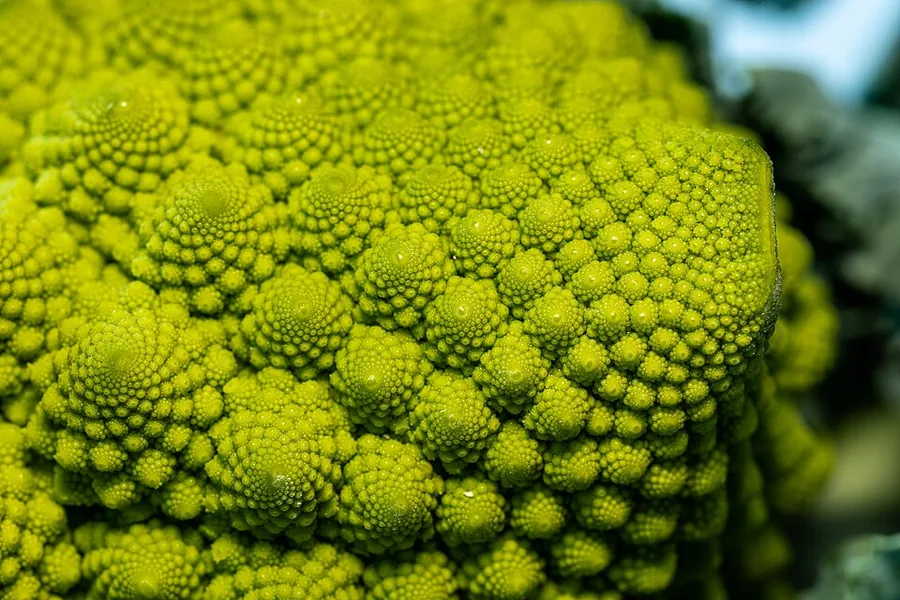
Romanesco has a way of stopping people mid-stroll through a garden. Its spiraled heads read almost like sculpture, and that graphic quality is exactly why it earns a place among the ordinary rows of a kitchen garden. A member of the cabbage family, it shares a table role with cauliflower and broccoli, yet arrives with a sweeter, nuttier note that suits an unhurried autumn dinner.
For all its poise, it asks to be grown on its own terms, and it is the most demanding brassica in the patch. Steady moisture, generous soil, and cool weather set the scene while the head fills, and summer heat undoes the effect, loosening the curds. The graceful solution most growers settle on is to treat it as a fall crop, letting the harvest arrive with the season's first cool evenings.
Once the calendar is on your side, Romanesco slips easily into the rhythm of a garden year. Give it full sun and room to breathe, keep the cabbage pests at a distance, and lift each head while it is firm and tight. What lands in the kitchen basket is as much a centerpiece as an ingredient, a vegetable that dresses a plate and a table with equal ease.
Care
The short version: full sun, rich and evenly moist soil, and a feed every couple of weeks, all arranged so the head comes into its own in cool fall weather rather than the heat of summer.
Light
Romanesco is a creature of full sun, and the light is what brings the head to its clear chartreuse. It will accept a little partial shade, though the leaves should never be tied over the curds the way white cauliflower demands, since shade only dims the color that makes it worth growing.
Water
Consistency is everything at the watering can, so keep the soil evenly moist, near an inch of water a week, and let it never run dry. Erratic watering shows up later as buttoning and unruly heads. A morning drink lets the foliage dry through the day and keeps disease at arm's length.
Soil
Set it into rich, well-drained soil worked through with compost or well-rotted manure, ground that holds moisture without turning heavy. A pH between 6.0 and 7.0 suits it well, and that near-neutral range quietly discourages clubroot into the bargain.
Temperature
Cool weather is the setting this plant was made for. It performs best between 50°F and 70°F (10°C to 21°C), the window in which the head knits together firm and tight. Once the days edge into the mid-80s, the curds relax and the texture turns coarse.
Humidity
There is no humidity figure to manage here, since open-air conditions serve it perfectly. Air movement is the real consideration, because leaves left crowded and damp invite the diseases brassicas are prone to. A little spacing keeps the whole planting looking clean.
Feeding
Romanesco is a hearty eater and appreciates a feed every two weeks, a balanced or low-phosphorus fertilizer chosen by a soil test. Once the plants stand about 4 inches tall, a side-dressing of nitrogen such as calcium nitrate carries them forward. Steady nourishment keeps the growth unbroken.
Pruning
This is a plant that asks for no styling by the shears. Leave the head open to the sun so the color develops, and take off only the outer leaves that turn diseased or fall to pests. Restraint is the whole approach.
Size & spacing
Grown well, plants reach 2 to 3 feet (60 to 90 cm) tall and spread 18 to 30 inches (45 to 75 cm) across, so give each one its full footprint. That generous spacing lets air drift between the broad outer leaves and keeps the bed both healthy and handsome.
When to plant
The whole pleasure of Romanesco rests on timing, since the head wants to mature into cool weather. Sow indoors 6 to 8 weeks ahead, then move plants out in cool early spring or, for the finest results, in mid to late summer so the crop crowns as autumn settles in.
Northern hemisphere
Southern hemisphere
Typical months for a temperate climate: start earlier in warm zones, later where spring frosts linger.
- Sow: Start seed indoors 6-8 weeks before the intended transplant date.
- Plant: Transplant in cool early spring, or (preferred) in mid- to late summer for a fall harvest; Romanesco is best grown as a fall crop.
- Harvest: Cut the head when it is full-sized, firm and tight, before the fractal spiral curds begin to separate or loosen.
Hardiness
USDA hardiness zones: 3–10
Temperature: down to -40°C
Troubleshooting
The occasional setback with Romanesco almost always traces to a stalled start or a spell of heat at the wrong moment. The head and the surrounding leaves are the first to tell the story, so glance there before anything else. Match what you notice below and step in early, and the season stays on course.
No firm head, or one that loosens into a ricey curd
Heat is the usual undoing here, since the curds come apart once daytime temperatures climb past 86°F (30°C) during heading. A boron shortfall can add to it, browning the curds and keeping them from holding tight. Arrange the crop to mature in cool fall weather, and address boron only when a soil test asks for it.
Fix:
- Time the crop so heads mature during cool weather
- Correct boron deficiency per soil test
Wilting, stunted plants with swollen, distorted roots
Ease a failing plant from the soil and you may meet the swollen, misshapen roots of clubroot or maggots working the root zone. An infected plant is beyond saving and should be pulled and destroyed. Bringing the soil toward neutral pH holds clubroot in check, and a long rotation away from brassicas keeps it from settling in.
Fix:
- Remove and destroy affected plants
- Raise soil pH toward neutral to suppress clubroot
A small head appears early on a stunted plant
The culprit is buttoning, which tends to follow any interruption to steady growth, be it transplant shock, an underfed plant, or a dry spell. Seedlings set out too old or through a cold stretch are the usual cause. Keep the soil evenly moist and well nourished, and move young transplants out at the right moment so the plant never loses its stride.
Fix:
- Maintain even moisture and adequate fertility
- Avoid transplanting overgrown or cold-stressed seedlings
Chewed leaves with green caterpillars at work
The soft green cabbageworms and cabbage loopers account for most of the damage, while tiny flea beetles stipple young seedlings with shot holes. Lifting the caterpillars off by hand and draping floating row covers early keep both in check. For a heavy showing of caterpillars, Bacillus thuringiensis clears them and leaves everything else untouched.
Fix:
- Handpick caterpillars
- Use floating row covers
- Apply Bacillus thuringiensis for caterpillars if needed
Toxicity
As a food crop, Romanesco brings no worry into a household. Nothing in its leaves, stems, or head is toxic to people or pets, so it belongs anywhere cats, dogs, rabbits, or backyard hens keep company. The one gentle footnote is that a great deal of raw brassica can leave some animals a little gassy.
Safe for
People · Cats · Dogs · Horses · Rabbits · Livestock · Birds
Cats None
Cats share a home with it safely, since nothing in the leaves, stems, or head is toxic. A stolen nibble might bring a little gas, and no more.
Dogs None
Dogs are on safe ground too. A few plain cooked florets make a welcome treat, though a large helping of raw brassica can leave one gassy.
Horses Safe
Horses come to no harm from it. Brassicas sit outside their natural fare, so keep any offering small to spare the stomach.
Rabbits Safe
The leaves and florets are a safe, agreeable green for rabbits. Introduce them slowly so the gut has time to settle.
Livestock Safe
Safe as forage, with nothing toxic about it. The only note to keep in mind is that heavy, steady grazing of brassicas lets the natural goitrogens accumulate.
Birds Safe
Backyard poultry are welcome to it, pecking contentedly at leaves and curds. No part of the plant poses them any risk.
People Safe
For the table it is a wholesome vegetable, fine raw or cooked. The whole head and the tender leaves are good eating, with nothing to guard against.
Safe to handle and grow around pets and children. Note that brassica glucosinolate goitrogens are mainly a concern for heavily-grazed livestock, not household pets.
Varieties
Just two Romanesco selections tend to reach the seed catalogs, and each carries the signature spiral. Here is how they set themselves apart.
Veronica
A well-regarded hybrid prized for uniform lime-green fractal heads with crisp, well-defined spirals.
Romanesco Italia
An open-pollinated heirloom offering classic apple-green pointed spirals on tall plants across a long season.
How to propagate
Romanesco begins in only one way, and that is from seed. It will not take from cuttings, so every plant traces back to a tray started indoors.
SeedModerate
Sow indoors 6-8 weeks before transplanting; transplant when seedlings have 4-5 true leaves. · About 4 weeks from sowing to transplant-ready seedling, then 75-100 days to a mature head.
Romanesco arrives by way of seed alone, never cloned at home, so each plant can be traced to a single packet. Sow indoors 6 to 8 weeks before the plants go out, and shift the seedlings into the garden once they hold 4 to 5 true leaves, some 4 weeks along. From there the wait runs a patient 75 to 100 days before a head is ready to lift.
Myths
Romanesco heads must be blanched by tying the leaves over them, just like white cauliflower.
That practice suits white cauliflower, which stays pale only in shade, and Romanesco lives by the opposite rule. Its chartreuse curds need full sun to color up, so the leaves stay untied and the head remains open to the light.
Romanesco is a genetically engineered cross of broccoli and cauliflower.
In truth it is a traditional Italian cultivar of Brassica oleracea, seated in the same cauliflower and broccoli group as its relatives. It is an old heirloom, not a GMO, one gardeners have tended for generations.