Ornamental · Plumbaginaceae
Sea Thrift
Armeria maritima
A breath of the coast for a sunny corner: sea thrift settles into stone and gravel and cushions it in spring pink.
Full sun
Every 7–14 days
USDA 4–8
6–12 in · 15–30 cm
Overview
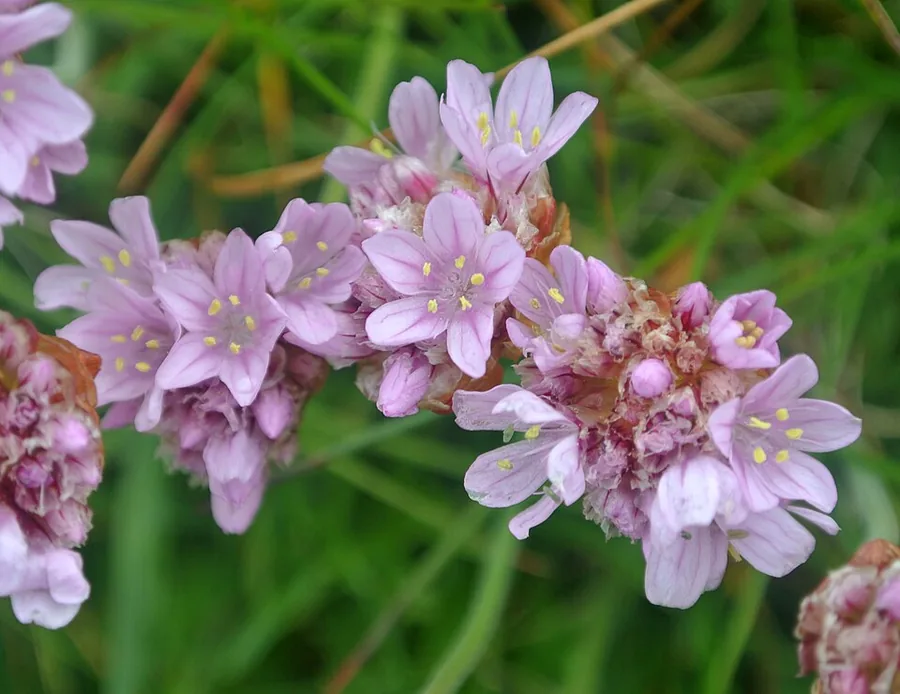
Sea thrift carries a whisper of the seaside into the garden. A wild native of coastal cliffs and salt marshes, it reads as effortless in the kind of pared-back, sun-washed setting where gravel, stone, and open sky do the talking. It gathers into a low grassy cushion and lifts slim stems of round pink to white flowers each spring, and at just 6 to 12 inches it keeps to the foreground, edging a path or softening the lip of a raised bed.
Its charm lies in restraint. This is a plant for the lean, sunny, quick-draining corners that other perennials refuse, so it suits gravel gardens, dry stone walls, and coastal-style plantings that trade lushness for texture and light. For a busy household it is a gift, asking for sun and sharp drainage and little else, and rewarding the hands-off gardener rather than the fussy one.
There is a quiet, year-round presence to it. The evergreen mound holds its shape through winter across much of its range, it takes salt air, wind, and dry spells in stride near the coast or in an exposed courtyard, and a settled clump stays put for years, becoming one of those reliable fixtures a garden is built around.
Care
The short version: a sunny position, lean sharply drained soil, and a restrained hand with water and feed. Keep the setting spare and dry, and sea thrift holds its poise for years.
Light
Sea thrift belongs in full sun, where it flowers most freely and keeps its neat form. It will accept partial sun or light shade, but a shaded position loosens the cushion and dims the display, so the brightest, most open spot flatters it best.
Water
Drought sits comfortably with this plant, while wet ground does not. Once established, it wants watering only every 7 to 14 days, with the soil left to dry out completely between. Standing moisture is the undoing of the crown, so a dry hand always serves it better.
Soil
The right foundation is lean, gritty, fast-draining ground, the more sand and stone in it the better. It settles happily into a pH between 6.0 to 7.5. Rich earth or heavy clay holds the moisture it cannot abide and undoes an otherwise easy plant.
Temperature
Hardiness is rarely a concern with sea thrift, which weathers -29°F to 86°F (-34°C to 30°C) without complaint. Winter cold does not trouble it; the real limit is warmth paired with damp, a summer discomfort rather than a frost one.
Humidity
This is a plant for dry, open air, ill at ease in muggy, still corners. No humidity target applies, but stagnant damp encourages mildew, so a position with room around each clump and a passing breeze keeps it looking its best.
Feeding
Feeding is almost beside the point here. A light spring touch is ample, and rich soil works against it, softening and rotting the heart of the clump. Spare, hungry ground keeps it trim and long-lived.
Pruning
Removing each spent flower stem in full keeps the plant tidy and coaxes a scattered second showing. Leave the foliage standing through fall, though, since cutting the cushion to the ground costs the following spring's flowers.
Repotting
Sea thrift is renewed by division every 2 to 3 years rather than potting on. When the center turns woody and bare and the flowering fades, lift the clump and split it, and the fresh outer growth resumes the display.
Size & spacing
Picture a compact cushion about 6 to 12 inches (15 to 30 cm) high and roughly as broad. Set plants at close to that spacing so the mounds meet in a soft, unbroken edge without pressing together and holding damp air.
When to plant
Sea thrift keeps to a cool-season rhythm that suits a spring garden. Seed goes in during late winter, young plants take their place outdoors once spring frosts have passed, and the first pink globes arrive through April and May to open the season, with occasional encores into summer and fall.
Northern hemisphere
Southern hemisphere
Typical months for a temperate climate: start earlier in warm zones, later where spring frosts linger.
- Sow: late winter to early spring
- Plant: spring after last frost
- Harvest: mid to late spring (April-May) with sporadic summer/fall rebloom
Hardiness
USDA hardiness zones: 4–8
Temperature: down to -34°C
Troubleshooting
For all its poise, sea thrift has one weakness, and it is water that lingers. Settle the drainage and most of the troubles below never touch it. Should a sign appear, trace it to its cause and step in early, before rot works its way into the crown.
A hollow, dead center in the cushion
The culprit is crown rot, the most frequent end for sea thrift, and it begins where the center holds water it cannot shed. Heavy clay, over-fed soil, or a long, damp autumn all keep the crown too wet. Lift the plant, remove the spent center, and settle the sound outer growth into lean, gritty ground with fast drainage.
Fix:
- Lift and divide the clump, discarding the dead center
- Replant healthy outer divisions in lean, gritty, very well-drained soil
- Reduce watering
A wilting mound in waterlogged ground
When the soil stays wet, root rot takes over, and the plant flags even as the ground sits saturated. Slip a clump loose and the roots show soft and darkened. Move it to gritty, quick-draining ground, ease off the watering, and let it find its feet again.
Fix:
- Improve drainage
- Withhold water
- Move or replant in gritty, fast-draining soil
Sticky, warped tips or leaves nibbled ragged
Two small visitors are usually to blame. Aphids settle along the stems, leaving new growth tacky and warped, while slugs and snails rasp ragged holes and lay slime trails over the leaves. A sharp jet of water or a little insecticidal soap sees off the aphids, and the slugs are best gathered or trapped after nightfall.
Fix:
- Rinse aphids with a strong stream of water or use insecticidal soap
- Hand-pick or trap slugs and snails
A white bloom dusting the foliage
That pale film is powdery mildew, a fungus that settles in where the air is humid and plants stand too close. Ease the spacing so a breeze can move through, take off the worst leaves, and water at the base rather than overhead. In full sun with sharp drainage it seldom takes hold.
Fix:
- Improve air circulation
- Remove affected foliage
- Avoid overhead watering
Toxicity
For a home shared with pets or children, sea thrift is an easy conscience: it is not toxic. No reference marks it poisonous to people, pets, or livestock, so a stray nibble asks for no more than a shrug. A wash of the hands after time in the garden is all the caution it calls for.
Safe for
People · Cats · Dogs · Horses · Rabbits · Livestock · Birds
Cats None
Sea thrift holds no toxic rating where cats are concerned, so a curious taste is nothing to fret over. As with any plant, a large mouthful might bring a brief, mild spell of stomach upset.
Dogs None
A dog can share the garden with sea thrift in complete safety, as no part of it is poisonous. Should one bolt a quantity of foliage, a passing stomach ache is the most to expect.
Horses Safe
Horses come to no harm from sea thrift, which sits on no toxic list. It is a low rock-garden plant with little to graze in the first place.
Rabbits Safe
Rabbits may browse sea thrift freely, since it carries nothing toxic. Even so, no single garden plant should make up the whole of their diet.
Livestock Safe
Cattle, goats, and sheep face no poisoning from sea thrift, rated toxic by nobody. Its low, grassy cushion is scarcely a temptation to a grazing animal regardless.
Birds Safe
Birds are entirely safe in the company of sea thrift. Nothing in its leaves, stems, or flowers can do them harm.
People Safe
Sea thrift is not rated poisonous to people, so it is safe to handle and to garden around. A wash of the hands after working the soil is precaution enough.
Generally safe to handle; wash hands after gardening as a routine precaution.
Varieties
Past the familiar sea-pink of the species, a handful of named forms shift the palette with different flowers and even tinted leaves. These few are the ones a nursery is most likely to stock.
Alba
Alba offers the white-flowered take, its globes a clean ivory in place of the usual pink.
Splendens
Splendens deepens the palette, its rose-pink heads lifted over green foliage.
Rubrifolia
Rubrifolia brings colored foliage, a reddish-purple flush that plays against the pink flowers.
Vindictive
Vindictive is the compact, free-flowering rose-red form long prized as one of the finest for the garden.
How to propagate
Increasing sea thrift comes down to three routes, each suited to a different aim. The choice follows what a garden needs most: a quick result, a generous supply of free plants, or a faithful copy of a chosen favorite.
DivisionEasy
Spring · One growing season
Dividing in spring is the most dependable route to more plants, and it doubles as a way to refresh a clump past its prime. Discard the woody dead center of an old plant and reset the vigorous outer sections, which establish over a single growing season.
SeedEasy
Sow in spring or fall · Generally flowers in the second year
Seed is easy and can go down in spring or fall alike. Flowering asks for patience, since most seedlings wait until their second year to bloom.
Stem cuttingsModerate
Summer · Several weeks to a few months
For a true copy of a favored plant, basal cuttings taken in summer do the job. They are slower and more demanding than division, rooting over several weeks to a few months.
Myths
Sea thrift is a fleeting plant, gone within a handful of years.
The reputation is unearned. Set in lean, sharp-draining soil and full sun, it keeps its place for many years. What passes for a short life is nearly always crown rot arriving with wet or over-rich ground, not any failing of the plant. See to the drainage, and it stays for the long run.