Ornamental · Plumbaginaceae
Statice
Limonium sinuatum
Plant it in sun and free-draining soil, and statice delivers papery blooms that carry their color from the border to the vase for months.
Full sun
Every 7–10 days
61–81°F · 16–27°C
90–120 days
Overview
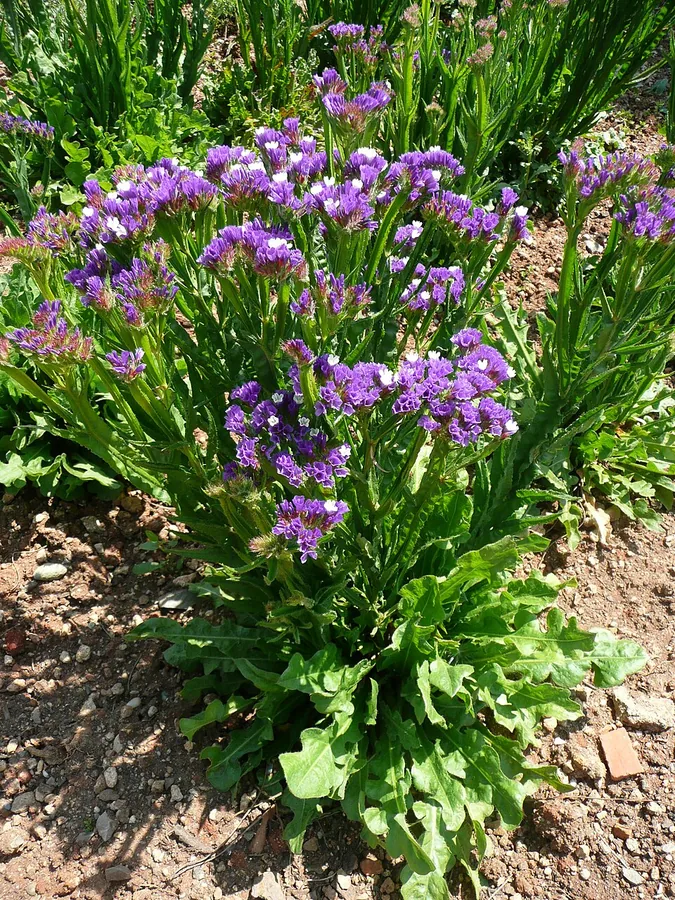
Statice earns a place in the summer garden for the papery, jewel-toned flowers it lifts on stiff, winged stems. A member of the leadwort family, it comes from the sun-washed coasts of the Mediterranean, a heritage that lingers in its other name, sea lavender. Gardeners tend to keep it as a warm-season annual, a tender perennial at heart that settles in for the season only across the mild zones 8 to 10.
Color is what makes statice a designer's staple, and the range is generous: deep blue, purple, rose, apricot, and yellow, gathered into tight, papery clusters. That dry, textural quality is the reason it moves so gracefully from garden to interior, since cut stems hold their color for months, ready to style into a bouquet, a mantel arrangement, or a wreath that lasts.
For all its polish, statice keeps life simple. It shrugs off drought and settles happily into lean, sandy ground, asking far less than its good looks suggest. What it will not abide is wet soil, so the whole relationship comes down to sun and drainage.
Care
The short version: give statice full sun, light soil that drains freely, and a restrained watering routine. Let it dry between waterings, feed it next to nothing, and leave breathing room between plants.
Light
Statice asks for full sun, with little patience for shade. Reserve the brightest, most open ground for it, because thin light leaves stems floppy and colors muted, exactly what you do not want in a plant grown for the vase.
Water
Let the soil dry between waterings, on the order of every 7 to 10 days, always leaning toward the drier side. Established plants carry drought with ease, while roots kept wet are the surest way to lose them, so a light hand serves both the plant and the display.
Soil
Set statice into light, well-drained sandy loam, loam, or sand, where free drainage counts for more than fertility. It takes a broad pH span, from 6.0 to 8.0, so most garden beds will suit it as long as water drains away cleanly rather than lingering.
Temperature
Statice looks its best in mild warmth, between 61°F and 81°F (16°C to 27°C). A tender perennial, it is cut down by frost, which is why treating it as a single-season annual has become the usual practice.
Humidity
There is no humidity target to meet, since ordinary outdoor air suits it well. Air movement earns its keep far more than any reading, because close, humid conditions stress the plant and encourage rot, so an open, breezy setting keeps it looking sharp.
Feeding
Feed with a light hand, or not at all. Statice thrives in lean soil and rarely wants more than a modest dose of balanced fertilizer during the growing season, since overfeeding only produces soft growth that dulls the finished look.
Pruning
Skip the deadheading, since each plant offers one long bloom rather than a repeat performance. Cut stems the moment their color is full, whether the destination is a fresh arrangement or a bunch hung to dry.
Size & spacing
Plants reach 12 to 18 inches (30 to 46 cm) tall with a spread of 9 to 12 inches (23 to 30 cm), a tidy scale that suits the front and middle of a border. Space them about that far apart so air moves between them and the crowns stay dry.
When to plant
Statice keeps to a graceful, frost-framed season. Sow the seeds indoors in late winter, move plants into the garden once the spring frosts have passed and the soil has warmed, and gather stems from early summer into fall wherever the air stays cool.
Northern hemisphere
Southern hemisphere
Typical months for a temperate climate: start earlier in warm zones, later where spring frosts linger.
- Sow: 6 to 8 weeks before the last spring frost date, or direct sow at the last spring frost date
- Plant: After the last spring frost when soil has warmed
- Harvest: Summer (June to July), continuing into fall in cooler climates
Hardiness
USDA hardiness zones: 8–10
Temperature: down to -12°C
Troubleshooting
Nearly every statice complaint traces to overwatering or heavy, humid air rather than any lapse in attention. Keep watch over the crown and the fresh growth, where the first signs surface. Match what you see below and respond early, before a small stumble undoes the display.
Wilting plant collapsing over a blackened crown
A plant that wilts above a darkened base is showing crown and root rot, brought on almost always by overwatering or ground that drains slowly. Lift a struggling one and the crown feels soft and blackened, the roots gone to mush. Remove and discard the worst plants, then open up the drainage and cut back watering sharply before the trouble travels.
Fix:
- Remove and discard severely affected plants
- Improve drainage and reduce watering frequency
Stalled plants with thin bloom through a humid summer
As a Mediterranean tender perennial, statice has little love for heat and humidity together, and it stalls when the air turns heavy. Growth slows and flowering thins across a muggy summer. Give it full sun, sharp drainage, and open air, and where summers run hot and close, grow it as a cool-season annual for a better show.
Fix:
- Site in full sun with excellent drainage and air movement
- Grow as a cool-season annual where summers are hot and humid
Curling shoot tips with a sticky sheen
Curling tips and a faint stickiness point to aphids, small soft-bodied insects that gather on tender growth and flower stalks. A firm spray of water clears most of them, with insecticidal soap held in reserve for stubborn cases. Easing off the nitrogen helps too, since the soft growth it encourages is precisely what draws them.
Fix:
- Dislodge aphids with a strong spray of water
- Use insecticidal soap if populations are heavy
Toxicity
A welcome note for homes with pets: statice is safe. The ASPCA counts it among the non-toxic plants, so a cat, dog, or rabbit that samples a stem is unharmed, and an arrangement of dried blooms poses no worry on the table or the wall.
Safe for
People · Cats · Dogs · Horses · Rabbits · Livestock · Birds
Cats None
Statice is safe in a household with cats. The ASPCA lists it as non-toxic, so a curious taste of a stem does no harm.
Dogs None
Dogs are in the clear as well, since a chewed stem or a fallen flower head leaves them perfectly fine.
Horses Safe
Horses can graze nearby without concern, as statice holds no toxins known to affect them.
Rabbits Safe
Rabbits face no risk from it either, the papery blooms and foliage carrying nothing harmful.
Livestock Safe
Cattle, goats, and sheep can share a pasture with statice and come away unharmed by a mouthful.
Birds Safe
Both garden and pet birds are safe in its company, with no toxic parts to avoid.
People Safe
It is harmless to handle, which is just why florists reach for it, and working with the stems or dried blooms poses no concern.
Varieties
Statice is sold mostly as seed series shaped for the cutting garden. A few names recur season after season, each favoring a particular palette or a certain grade of stem, which makes choosing for a color scheme straightforward.
QIS Series
An even, refined cut-flower strain named for the phrase Quick In Spring, available across a generous palette that runs from dark blue and purple to apricot.
Pacific Series
A vigorous mix prized for the long, strong stems that give arrangements their structure, fresh or dried.
Sunset Mix
A warm-toned blend that moves through apricot, rose, and yellow.
How to propagate
Statice begins with seed, its one reliable start, whether raised as transplants indoors or sown directly where it will bloom and be cut.
SeedModerate
Sow indoors 6 to 8 weeks before the last spring frost, or direct sow after frost danger passes · Germinates in about 2 to 3 weeks; transplants establish over several weeks
Statice is grown from seed. Start it indoors 6 to 8 weeks before the last spring frost, or sow it directly once frost danger has passed. Seedlings emerge in about 2 to 3 weeks, then take several more to settle in. Keep them warm in a light, well-drained mix, and water with restraint so the young plants do not damp off.
Myths
Statice must be deadheaded constantly to keep flowering.
Each plant delivers one long bloom rather than a rolling succession, so cutting away spent heads coaxes out nothing more. That leaves you free to forgo deadheading altogether and simply harvest stems once the color is full, for the vase or for drying.
Statice is poisonous to cats and dogs and unsuited to bouquets.
In fact the ASPCA lists statice, also called sea lavender, among its non-toxic plants. It is a safe filler flower for arrangements in a home shared with pets.