Ornamental · Asteraceae
Shasta Daisy
Leucanthemum × superbum
With sun and free-draining soil, the Shasta daisy brings a clean, summer-long white to any garden scheme.
Full sun
Every 7–10 days
USDA 5–9
12–35 in · 30–90 cm
Overview
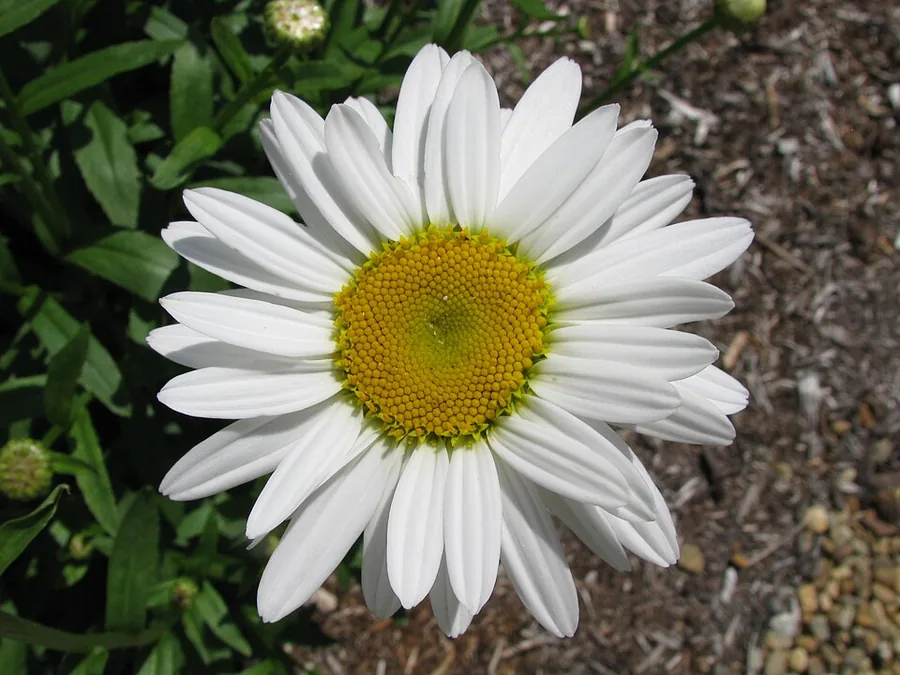
Few flowers set a summer mood as effortlessly as the Shasta daisy. Its white blooms with golden centers rise on upright stems above dark green foliage, lending a border that fresh, uncomplicated look that reads as classic rather than fussy. A garden hybrid in the aster family, improved from the wild oxeye daisy, it earns its place in the composed cottage garden and the clean modern bed alike, returning each year to flower from June into September.
As a design plant it asks for almost nothing. Set it where the light is generous and the ground drains, in a sunny, free-draining spot, and it holds its own through heat and dry weeks without demanding attention. The one situation to design around is winter wet, since soggy ground rots the crown and takes the plant with it.
The range of sizes makes it endlessly placeable, from low forms that edge a path to tall cultivars grown for the cutting garden and the vase indoors. It is a short-lived perennial, so the clumps want dividing every couple of seasons to keep the display full, a small ritual that also multiplies your plants around the garden.
Care
The short version: a sunny, sharply drained position comes first, water only once the top half of the soil has dried, deadhead through the summer to keep the display crisp, and lift and divide the clump every 2 to 3 years to keep it looking its best.
Light
Give the daisy full sun, six hours or more of direct light a day, and it rewards the position with its fullest flowering. It will take a little afternoon shade, but a shadier spot leaves the stems weak and leaning and thins the display noticeably.
Water
Let the top half of the soil dry between waterings, which usually settles into a rhythm of every 7 to 10 days. Once established it is genuinely drought tolerant, so a low-maintenance planting is well within reach, and overwatering, not neglect, is the risk to guard against through winter.
Soil
It suits almost any bed, taking loam, clay, or sand in stride, and it is relaxed about pH anywhere from 6.0 to 8.0. The one condition worth building into the design is sharp drainage, because standing wet at the crown ends the plant.
Humidity
Ordinary outdoor air suits it and there is no figure to manage. What matters to a healthy planting is open air movement, since crowded, damp foliage is what invites leaf spot and crown rot into a bed.
Feeding
This is a restrained feeder, content with a light spring dose of balanced general-purpose fertilizer. Rich soil and heavy feeding work against the look, pushing soft, floppy growth in place of the upright stems that carry the flowers well.
Pruning
Deadheading through the season keeps a planting looking tidy and the buds coming. When the main flush is spent, cutting the stems back to the low basal leaves refreshes the plant and draws a little more life from this short-lived perennial.
Size & spacing
Depending on the cultivar chosen, plants reach 12 to 35 inches (30 to 90 cm) and settle into a clump 12 to 24 inches (30 to 60 cm) across. Spacing them to that width keeps the planting airy and the composition clean.
When to plant
The daisy keeps step with the temperate gardening year. Sow indoors in the closing weeks of winter, move the young plants out once hard frost has cleared, and the flowers arrive to carry the border from June into September. Early spring is also the graceful moment to lift and divide the clumps that anchor the scheme.
Northern hemisphere
Southern hemisphere
Typical months for a temperate climate: start earlier in warm zones, later where spring frosts linger.
- Sow: 6 to 8 weeks before the last spring frost
- Plant: Spring after danger of hard frost has passed
- Harvest: June to September
Hardiness
USDA hardiness zones: 5–9
Temperature: down to -29°C
Troubleshooting
Most of what goes wrong with a Shasta daisy traces back to drainage or a clump grown past its prime. A little attention to the leaves and crown catches trouble early, well before it spoils the look of a planting. Match what you see below, then act while it still helps.
Wilting and collapsing stems in a well-watered bed
A daisy that flags and folds while the bed stays moist is failing below ground. Where drainage is poor, verticillium wilt or crown and root rot moves in, and a crown gone soft and brown will not recover. Clear away the lost plants, correct the drainage, and divide any sound crowns into a better-drained part of the garden.
Fix:
- Remove and discard severely affected plants
- Improve drainage and avoid overwatering
- Divide and replant healthy crowns in a better-drained site
A bare center with flowers only around the edge
A clump that blooms only at its rim over a dead center has quietly outgrown its space and is ready to be divided. Lift it in early spring, discard the woody, spent heart, and replant the vigorous outer sections to bring the display back to full.
Fix:
- Divide the clump in early spring
- Replant vigorous outer divisions and discard the woody center
Dark spotting that mars the foliage
Spots that darken and spread in damp spells signal fungal or bacterial leaf spot, appearing first on the lower leaves. The remedy is straightforward. Remove the marked foliage, keep water off the leaves, and open the planting so air moves freely through it.
Fix:
- Remove and destroy affected foliage
- Avoid overhead watering
- Improve air circulation
Distorted tips, sticky film, or fine speckling
Curled tips under a sticky film usually mean aphids are working the tender new growth. Mottled, stippled leaves or faint winding trails instead point to spider mites or leaf miners. Wash the aphids off with a strong jet of water, keep insecticidal soap in reserve for a heavy outbreak, and remove any mined leaves to tidy the planting.
Fix:
- Hose off aphids with a strong stream of water
- Apply insecticidal soap if infestation is heavy
- Remove and destroy mined leaves
Toxicity
For all its easy charm, this is not a wholly harmless plant around animals. As a relation of the toxic chrysanthemum it carries pyrethrin-like sesquiterpenes, so a pet that chews the leaves or flowers may drool, be sick, or develop a rash. The reaction tends to be mild and the bitter taste deters most animals, but it is worth siting cut arrangements and plantings where curious pets and small children will not graze them.
Toxic to
Cats · Dogs · Horses · Rabbits · Livestock · Birds · People
Cats Mild
A cat that nibbles the leaves might drool, gag, or lose its last meal, and the sap can leave its mouth or skin faintly sore. That bitter flavor is the plant's own defense, and it usually turns a cat away before much is swallowed.
Dogs Mild
A dog that helps itself to a few flower heads may end up queasy, drooling, and passing loose stools. Repeated handling of the cut stems can also bring a mild, itchy rash to dogs with delicate skin.
Horses Mild
Horses rarely bother with the bitter leaves, but a mouthful taken while grazing can prompt some drooling and a short spell of digestive upset. Sap on the muzzle may leave the skin a little sore.
Rabbits Caution
Because it holds the same pyrethrin-like compounds, it makes a poor companion for rabbits and belongs well out of their reach. Set out their familiar greens instead of letting them browse the leaves.
Livestock Caution
Cattle, goats, and sheep will nearly always graze around the bitter plant, though one that is hungry enough to eat a lot could end up mildly upset in the gut. The safe course is to keep it clear of overgrazed paddocks.
Birds Caution
Birds have scant reason to feed on it, and the irritant compounds make it sensible to keep cage birds clear of any cut flowers. Wild birds calling at the blooms for seed come to no harm.
People Caution
No part of a Shasta daisy belongs on the plate, and the sap can leave sensitive skin flushed and itchy once handled. Keep young children from chewing the flowers, though a single stray petal is no cause for alarm.
Most pets ignore the bitter foliage; a nibble may cause mild stomach upset or skin irritation rather than serious harm.
Helpline numbers

United States
ASPCA Animal Poison Control: (888) 426-4435 (fee applies)
Poison Control: (800) 222-1222



Canada
Poison Centres: 1-844-764-7669
Varieties
Part of the daisy's appeal is how many forms it comes in, giving a garden designer real range in height and flower shape. These are the cultivars worth specifying by name.
Becky
A tall cultivar rising to 3 to 4 feet on stems firm enough to stand unstaked, carrying 3 to 4 inch white flowers around yellow center disks, a natural for the back of a border or the cutting bed.
Crazy Daisy
A double-flowered form whose frilled, gently shaggy ray florets give the blooms a fuller, softer presence in an arrangement.
Snowcap
A compact cultivar holding to just 15 to 18 inches, made for the front of a border or a container display.
How to propagate
Building a fuller planting is simple, whether the aim is faithful copies of a chosen cultivar or a sweep of seedlings to carry a new border.
DivisionEasy
Early spring, every 2 to 3 years · One growing season to re-establish and resume strong flowering
Division keeps a clump looking young, best done in early spring every 2 to 3 years. Discard the woody, spent center, reset the vigorous outer pieces into well-drained soil, and allow them a full season to establish and return to strong flowering.
SeedEasy
Start indoors 6 to 8 weeks before the last spring frost, or sow outdoors in spring · Often blooms the first or second year from seed depending on sowing time
The species and many cultivars come easily from seed, started indoors 6 to 8 weeks before the last frost or scattered outdoors in spring, and plants raised this way often flower in their first or second year. Named cultivars, though, hold their character only through division, so that is the route for a favorite selection.
Myths
Shasta daisies are completely harmless and a pet may eat them freely.
They belong to the same family as the toxic chrysanthemum and carry similar pyrethrin-like sesquiterpenes, so a pet that chews them may drool, vomit, or develop a rash. A bitter Shasta daisy is a mild irritant rather than a treat, even though it is far gentler than a true mum.
Shasta daisies are dependable, long-lived perennials that never need tending.
In truth they are short-lived, and a clump loses its looks quickly without division every 2 to 3 years. Good drainage and a firm cut-back after bloom are what keep them going, so a little seasonal care preserves the planting for several more years.