Bulb · Asparagaceae
Star of Bethlehem
Ornithogalum umbellatum
A quiet spring bulb whose white star flowers open at midday, lending an easy, meadow-soft note to the garden.
Full sun
Every 5–10 days
USDA 4–9
6–12 in · 15–30 cm
Overview
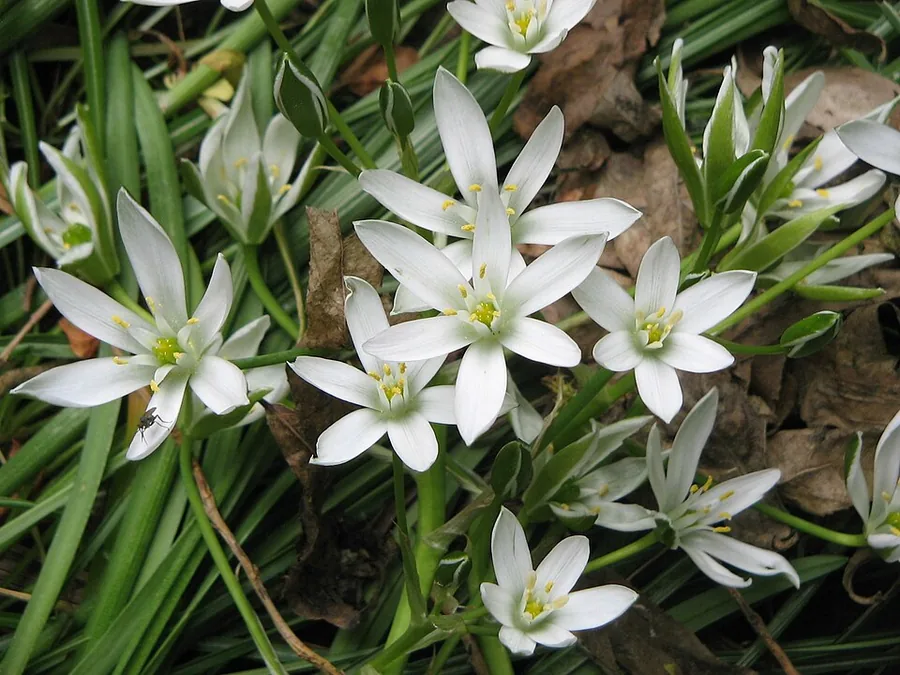
Star of Bethlehem arrives as one of spring's understated pleasures, scattering white, star-shaped flowers low across the garden just as the season finds its feet. There is a gentle rhythm to it, since the blooms open around midday and close again by late afternoon or under a gray sky, a habit that lent the plant its old name, nap-at-noon. Grassy foliage sets the stage first, and the flowers follow to float over it in late spring.
It belongs to the asparagus family and grows from a bulb that keeps company with itself, multiplying into easy drifts by way of offset bulblets. That generosity suits a relaxed, naturalized corner or the loose edge of a spring border, though it asks for a little discipline, because a tidy planting can wander into the lawn. Across much of the northern United States it has already strayed beyond gardens into pastures and turf, where it reads less as an ornament and more as a weed.
For all its charm, the whole plant is poisonous, and that shapes where it belongs. Every part holds cardiac glycosides, the bulb most of all, so it is no plant for a garden shared with grazing animals or wandering toddlers. Give it a considered spot, out of reach and away from foot traffic, keep gloves on hand for the digging, and it earns its place among the season's quieter flowers.
Care
The short version: work the bulbs into moist, well-drained soil in fall under full sun to part shade, keep them watered as they grow and bloom in spring, then let them ease into a dry summer rest.
Light
It shows best in full sun, where the flowering is fullest, yet it settles comfortably into partial sun or light shade and shrugs off about 25 percent shade. That tolerance makes it a natural for the ground beneath deciduous trees, where it does its growing before the canopy closes over the spring garden.
Water
Keep the soil evenly moist through spring growth and bloom, reaching for the watering can about every 5 to 10 days when rain stays away. Once the planting has established, it carries itself through summer drought with ease, and it prefers dry ground once the foliage goes dormant in late summer.
Soil
Give it moist, fertile, well-drained loam worked through with organic matter, and it asks for little else. It takes an easy view of pH, content anywhere from 6.0 to 7.5, so the real consideration is drainage rather than richness, since standing water is what undoes the bulb.
Temperature
This is a resilient, cold-hardy bulb suited to gardens that see a real winter, holding through cold near 5°F (-15°C) and summer warmth around 86°F (30°C). It waits out the cold underground and returns as the spring soil warms, keeping to the garden's natural rhythm.
Humidity
There is no humidity target to tend here, since ordinary outdoor air suits it entirely. What the setting really turns on is drainage at the roots, not the moisture of the air around it.
Feeding
It lives lightly and wants very little feeding. A measure of balanced bulb fertilizer or compost worked into the bed at planting, with a light feed in early spring as growth returns, is plenty, and a leaner soil actually helps keep its spreading manners in check.
Pruning
Let the foliage fade in its own time after the flowers pass, since that quiet spell is how the bulb restores itself for another spring. Trimming away the spent flower stalks keeps self-seeding down and the planting tidy, and gloves are wise, as the sap can irritate skin.
Repotting
Every 3 to 4 years, as the clumps grow dense, lift and divide them to keep the display generous. The planting signals the moment plainly, with flowering thinning, bulbs rising toward the surface, and a press of small bulblets gathering around the parent.
Size & spacing
Low and unassuming, the plants reach only 6 to 12 inches (15 to 30 cm), a scale that suits the front of a border or a naturalized edge. Each clump widens to 12 to 24 inches (30 to 60 cm) and keeps expanding, so give it a little space, or a bed of its own, and let it settle without crowding what grows beside it.
When to plant
The plant keeps to a calm seasonal calendar. Set the dormant bulbs out in September or October, let winter pass over them, and they will unfurl leaves and then white flowers from May into June, timed to the softening light of late spring. When the flowers finish, the foliage yellows and the planting settles into a summer rest.
Northern hemisphere
Southern hemisphere
Typical months for a temperate climate: start earlier in warm zones, later where spring frosts linger.
- Sow: not typically started indoors; plant dormant bulbs directly
- Plant: fall (September to October)
- Harvest: late spring to early summer (May to June)
Hardiness
USDA hardiness zones: 4–9
Temperature: down to -34°C
Troubleshooting
Two issues shape how and where to plant it, and they sit at opposite ends of the same coin. In heavy, wet ground the bulb sulks and rots, while in an open, easy spot it spreads faster than a tidy border may want. Read the situations below and adjust the setting early, before either takes hold.
Soft, spoiled bulbs that never rise
When bulbs turn soft and refuse to appear, the trouble is bulb rot, and it comes down to a setting that holds too much water. Heavy, poorly drained ground, or a spot that stays wet through the bulb's summer rest, is almost always to blame. Lift a doubtful bulb to check for soft, foul-smelling tissue, part with the ones that have gone, and give the firm white bulbs a fresh, better-drained home.
Fix:
- Lift and discard affected bulbs
- Improve drainage by amending with grit or organic matter or move to a raised, better-drained site
- Replant healthy firm bulbs in well-drained soil
Green drifts straying into lawn and border
The plant makes its own company through offset bulblets, gathering them around each parent and slipping past a border's edge into lawns and pastures. Lift the whole clump and gather up every small bulblet before it loosens, then bag the lot rather than composting it. The task repeats over a few seasons, since the ones left behind return, but it keeps the planting where you want it.
Fix:
- Dig out clumps removing all bulblets before they detach
- Bag and dispose of dug bulbs rather than composting
- Repeat removal over several seasons as missed bulblets resprout
Toxicity
This is a plant to place with intention, because it is genuinely poisonous rather than merely decorative. Every part carries cardiac glycosides, concentrated most in the bulb, and they can harm cats, dogs, horses, and livestock, with real risk to people as well. Nothing on it is edible, and even the water from a vase of cut stems has been linked to poisoning, so it suits only a garden where no curious mouth can reach it.
Toxic to
Cats · Dogs · Horses · Rabbits · Livestock · Birds · People
Cats Severe
A cat that chews any part will usually begin drooling and vomiting, turn from its food, and develop diarrhea. The bulb holds the real danger, where the glycosides run highest, and a larger bite can unsettle the heart rhythm and leave the cat weak or collapsed, reason enough to keep it out of a cat's reach.
Dogs Severe
Dogs that dig up and gnaw the bulbs are the most exposed. Watch for drooling, a lost appetite, vomiting, and diarrhea, and treat any staggering, weakness, or irregular heartbeat as an emergency worth immediate care.
Horses Severe
A grazing horse may salivate heavily and show colic-like belly pain, diarrhea, and muscle tremors. As the toxin accumulates the heartbeat turns fast and erratic, and that is where the true hazard lies, so pastures are no place for it.
Rabbits Severe
For a rabbit, the same cardiac glycosides rule the plant out as safe forage. Expect gut upset and a refusal to eat, and know that enough of the bulb can disturb the heart, so the plant belongs well beyond a rabbit's reach.
Livestock Severe
Cattle, sheep, and goats often show signs within hours, beginning with salivation, diarrhea, and abdominal pain. Once the heart rate and rhythm falter the case turns grave, and grazing enough bulbs can prove fatal, so grazing ground is best kept clear of it.
Birds Severe
Birds are not spared the cardiac toxins either. A poultry flock or pet bird that pecks the foliage or bulbs can suffer gut distress and the same dangerous strain on the heart, so any patch is best fenced away from them.
People Caution
No part of this plant is food, and children are the ones to guard most. Swallowing leaves, flowers, or especially a bulb can bring on vomiting and, in quantity, the same heart-rhythm trouble seen in pets, so it belongs among the plants handled as poisons, with hands washed after any contact with the sap.
Keep bulbs and plants away from pets and children; wear gloves when handling as the sap can irritate skin. Even vase water from cut stems has been implicated in poisoning.
Helpline numbers

United States
ASPCA Animal Poison Control: (888) 426-4435 (fee applies)
Poison Control: (800) 222-1222



Canada
Poison Centres: 1-844-764-7669
Varieties
There is no parade of named cultivars to choose among here, which lends the plant a certain unfussed appeal. What settles into gardens is simply the wild species.
Ornithogalum umbellatum (species)
The wild species that graces gardens carries white, star-shaped flowers striped green on the back, opening near midday and closing by late afternoon or beneath cloud, the gentle habit that earned it the name nap-at-noon.
How to propagate
Increasing the planting takes little more than patience, since the bulb quietly parts with fresh offsets year on year, turning a single clump into an easy drift.
Offsets & pupsEasy
After foliage dies back in summer or in early fall when dormant · Blooms the following spring once replanted
The simplest way to widen a planting is through offsets. After the foliage has faded in summer or early fall, lift a clump, ease the small bulblets from the parent, and set them back about 2 to 3 inches deep, where each will flower the very next spring.
DivisionEasy
Summer dormancy after foliage yellows · One growing season
Division doubles as good housekeeping, thinning a crowded clump while giving you more to plant. Once the leaves yellow in summer dormancy, lift and separate any dense clump, and the divisions settle in within a single growing season, all while the plant keeps drifting outward on its own.
SeedModerate
Sow ripe seed in fall · Several years to flowering
Seed is the unhurried route and rarely the practical one. Ripe seed can be sown in fall for those inclined to try, but the seedlings are slow and take several years to flower, which is why nearly all the spread comes from bulblets rather than seed.
Myths
Star of Bethlehem is only mildly toxic and amounts to little more than a stomachache.
Every part of the plant holds cardiac glycosides, and the bulb by a wide margin the most. A small taste may go no further than gut upset, but a real dose can unsettle the heart in the same way foxglove does. Regard it as truly poisonous, not a passing stomachache.
It is a harmless naturalizing wildflower, safe to set anywhere in the garden.
It parts with offset bulblets quickly, drifts beyond the bed, and settles in as a weed of lawns, pastures, and turf. Alabama lists it as a Class C noxious weed. Plant it only where the setting can hold it, if at all.