Bulb · Asparagaceae
Lily of the Valley
Convallaria majalis
Nodding white bells that dress a shaded corner in scent, though every part of them is poisonous.
Partial shade
Every 5–10 days
USDA 3–8
6–12 in · 15–30 cm
Overview
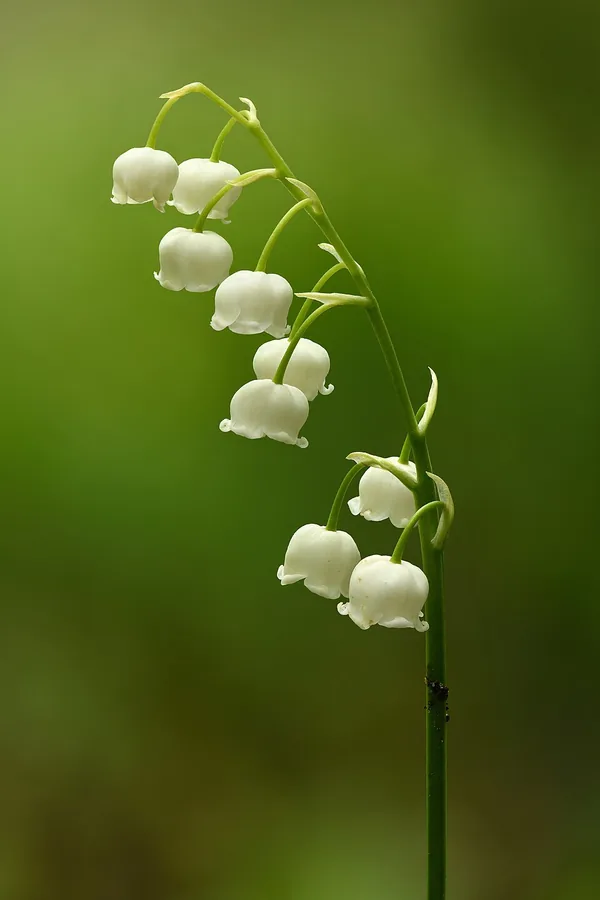
Lily of the valley belongs in the quiet, shaded rooms of a garden, the ones that ask for atmosphere rather than a splash of color. Its arching stems of small white bells arrive with one of spring's most memorable scents, the kind that greets you at a doorway or drifts across a shaded terrace on a still evening. Spreading underground on creeping rhizomes called pips, it settles into a soft green carpet beneath trees or along the north wall, and the broad paired leaves keep that composed, upholstered look long after the flowers have gone.
As a design element it earns its keep by being almost effortless. Hardy from zone 3 to 8, it holds a shaded bed through cold winters and thrives in the dappled to full shade that stumps showier plants, which makes it a natural for a woodland walk or a cool courtyard corner. Give it moist, rich soil and it will spread with real enthusiasm, so treat it as a groundcover for a defined space rather than a polite edging, since it can overrun neighbors and has been flagged as invasive in some regions.
One note belongs on every planting plan. Every part, from the fragrant flowers to the bright red berries, carries cardiac glycosides that can throw the heart into a dangerous rhythm. For a home with pets or small children, place it where its beauty can be admired but never handled or tasted.
Care
The short version: settle the pips into a shaded garden room, keep the rich soil evenly moist, and divide crowded clumps every few years to keep the planting looking its best. Wear gloves whenever you handle it.
Light
Reserve it for a dappled to full shade setting, the cool, low-lit ground beneath trees or against the north side of a wall where little else will flower. A touch of morning sun does no harm, but hot afternoon light scorches the leaves and pushes the planting into early decline, so keep it to the shaded rooms of the garden.
Water
Keep the rich soil evenly moist, offering water roughly every 5 to 10 days and a little more through a dry spell. A settled colony rides out a summer drought, though the foliage grows ragged when it runs short, so a drink during the long dry stretches keeps a shaded bed looking fresh and composed.
Soil
It thrives in moist, fertile, organically rich ground that still drains, the sort of woodland floor it evokes in a border. Heavy clay or a drier patch is workable, but the fullest, most polished carpet forms where the soil holds moisture and plenty of compost.
Temperature
Cold barely registers with this planting. It is an iron-hard perennial that carries a shaded bed through winters down to -40°F (-40°C) and grows contentedly up to about 84°F (29°C), past which summer heat and sun begin to tire the foliage.
Humidity
Ordinary garden air suits it, so humidity is not something to manage. What counts far more is easy air movement, since a crowded, still, damp corner is exactly the setting that invites leaf spot onto the foliage and spoils the look.
Feeding
A single spring feed, as the new growth rises, is all a shaded planting asks. A top-dressing of compost or a balanced general-purpose fertilizer keeps it in good heart, and a yearly mulch of leaf mold sustains the woodland effect over the years.
Pruning
Upkeep is light. Remove the spent flower stems and cut back the tired foliage in late summer or fall as it yellows, and the bed reads tidy again. Always wear gloves, since every part of the plant is poisonous to handle and to eat.
Repotting
In a border the task is dividing, not repotting. Every 3 to 5 years, lift the congested colonies and split them to keep the planting fresh, since crowded clumps flower less and thin out through the center where the eye lingers.
Size & spacing
It stays low and grounded, reaching just 6 to 12 inches (15 to 30 cm) tall, with each plant spreading 9 to 12 inches (23 to 30 cm) before it reads as continuous cover. Space the pips with that easy spread in mind, letting them close the gaps into a seamless woodland carpet in time.
When to plant
Lily of the valley keeps a gentle seasonal rhythm that suits an unhurried garden. Set the pips in fall or early spring, and the sweet white bells open from April into early summer, scenting the shaded corners before the planting eases into a calm summer green.
Northern hemisphere
Southern hemisphere
Typical months for a temperate climate: start earlier in warm zones, later where spring frosts linger.
- Plant: Plant rhizomes (pips) in fall or early spring.
- Harvest: Blooms early to mid-spring (April to early summer).
Hardiness
USDA hardiness zones: 3–8
Temperature: down to -40°C
Troubleshooting
This is an easy, undemanding planting, so the occasional flaw is usually cosmetic and tied to the weather or a too-wet corner rather than anything serious. Notice the early signs on the leaves and stems, and you can keep a shaded bed looking composed. Match what you see below, then set it right before it draws the eye.
Soft, decaying stems slumping at the base
Stems that soften, discolor, and fold at the base are a sign of stem rot, which settles in wherever the soil stays wet and the drainage falls short. Draw out the spoiled material and bin it before the trouble travels along the bed. Ease the water back, open up the drainage, and the planting quietly finds its footing again.
Fix:
- Improve soil drainage
- Reduce excess moisture
- Remove and dispose of rotted material
Tan and brown spotting freckling the foliage
Those brown and tan marks are typically fungal leaf spot, leaf blotch, or anthracnose, drawn to the same cool, shaded corners that make this planting so restful to look at. Small at first, the spots widen and blur together whenever the weather turns wet. Lift away the marked leaves, tidy the fallen litter, and water low at the soil so the foliage that frames your border stays dry and presentable.
Fix:
- Remove and dispose of affected leaves
- Improve air circulation and avoid wetting foliage
- Water at the soil line
Foliage fading to yellow and brown in summer
A summer retreat of yellowing, browning leaves is usually just heat and drought stress, the planting bowing out of the season rather than falling ill. A little too much sun or a run of dry days brings the fade on sooner. Lay a tidy mulch to hold moisture, water through the dry weeks, and the green carpet returns to set the scene again next spring.
Fix:
- Provide shade and consistent moisture
- Mulch to conserve soil moisture
- Site in dappled to full shade
Warped new growth dotted with small insects or webbing
When the fresh growth loses its poise, two pests are the likely intruders. Aphids gather on the tender shoots and buckle them, while spider mites trail fine webbing through the dry spells. A glance at the leaf undersides settles the question, a firm jet of water clears most of them, and insecticidal soap steps in only if they refuse to leave.
Fix:
- Spray with a strong jet of water
- Apply insecticidal soap if needed
- Remove heavily infested foliage
Toxicity
For all its grace, this is one of the most poisonous plants a garden can hold, and it deserves a clear-eyed place in the plan. Every part carries cardiac glycosides, from the sweet flowers and leaves to the red berries and even the water a cut stem has stood in. Swallowing any of it can cause vomiting and dangerous changes to the heartbeat, and a large enough dose can be fatal to pets, livestock, and people alike.
Toxic to
Cats · Dogs · Horses · Rabbits · Livestock · Birds · People
Cats Severe
For a cat, even a passing nibble is dangerous. Drooling and vomiting come first, then a sinking weakness as the heartbeat slows and loses its rhythm, and a large enough dose can stop the heart entirely.
Dogs Severe
In a dog, look for vomiting, a pulse that runs slow or fast, low blood pressure, and collapse. The very cardiac glycosides that poison a cat can kill a dog, so any chewing is an emergency.
Horses Severe
A horse that grazes the foliage may suffer colic, a dangerously uneven heartbeat, and unsteadiness on its feet. The poisoning runs severe and can prove fatal without swift veterinary help.
Rabbits Severe
Rabbits take the cardiac glycosides badly, with gut upset, a faltering heart rhythm, and sudden weakness. Keep them well away from every part of the plant.
Livestock Severe
Cattle, goats, and sheep are all poisoned by the leaves, flowers, and berries alike, with heart-rhythm failure that can be deadly. Even dried plants caught in hay stay fully toxic.
Birds Severe
Birds are exquisitely sensitive to these heart toxins, and even a small amount can tip the heartbeat into a fatal rhythm. Keep the plant and its berries entirely out of their reach.
People Caution
Nothing here belongs on a plate. The flowers, leaves, or red berries, and even the water a cut stem has stood in, can bring on vomiting and dangerous shifts in heart rhythm. Keep it well away from children and call poison control if any is swallowed.
Wear gloves when handling, and keep all parts including the sweet-smelling flowers and red berries away from pets and children. Wash hands after contact.
Helpline numbers

United States
ASPCA Animal Poison Control: (888) 426-4435 (fee applies)
Poison Control: (800) 222-1222



Canada
Poison Centres: 1-844-764-7669
Varieties
The plain white species anchors most schemes with its cool, classic look, but a couple of named forms are worth knowing when a corner calls for a different note.
var. rosea
The pink-flowered form softens the familiar white bells into a gentle, light pink for a subtler palette.
Golden Slippers
Chosen for its leaves rather than its bloom, this one lights up a shady corner in chartreuse to golden yellow.
Companions
Lily of the valley pairs best with shade-loving plants that share its taste for moist, rich soil, the kind of company it keeps on a woodland floor.
Plant near
Hosta: Shares the same shade and moist, rich soil preferences as a woodland groundcover companion.
Ferns: Thrive in the same dappled to full shade and moist conditions.
How to propagate
Filling out a shaded planting is simple, since this one is built to multiply on its own underground. You can lift and split what it has already grown or start from seed, though one route brings a finished look far sooner than the other.
DivisionEasy
Fall or early spring · One to two growing seasons
Division is the dependable route to more of this planting, and the one most gardeners favor. Come fall or early spring, lift a settled clump and ease the rhizomes, known as pips, apart into pieces. Set them back in and they knit in over one to two growing seasons. Slip on gloves first, since every part of the plant is poisonous.
SeedModerate
Fall · Several years
Seed asks for patience. Sown in fall, it comes up unevenly, and several years pass before the planting reads as full. Division fills a bed far sooner, so seed rarely earns the wait.
Myths
The fragrant white bells and red berries make a harmless nibble.
Charming as it looks, every part of this plant is poisonous, the fragrant flowers and the bright berries that catch a child's eye included. Their cardiac glycosides can throw the heart into a dangerous rhythm. A taste is never safe, and a larger amount can be fatal.