Bulb · Asparagaceae
Tuberose
Polianthes tuberosa
Give it full sun and free-draining soil, and tuberose turns a late-summer evening into an occasion with its famous scent.
Full sun
Every 5–10 days
55–84°F · 13–29°C
90–120 days
Overview
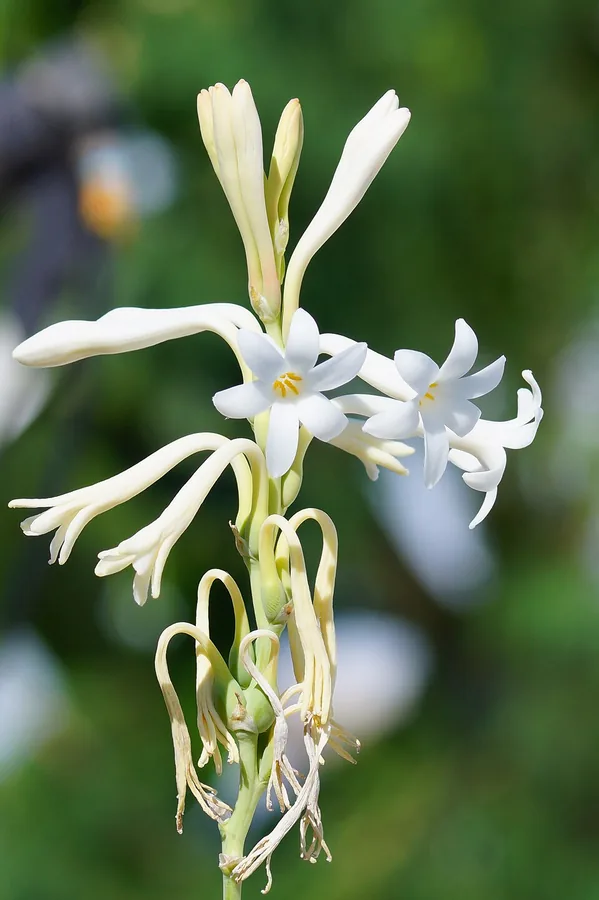
Tuberose earns its place for one reason above all, and that is its perfume. Come late summer the tall spikes lift creamy white flowers into the evening air, and the scent lingers long past sunset, which is why the flower has graced cut arrangements and moonlit gardens for generations. The name suggests a rose, yet the two share nothing. This is a tuberous-rooted relative of the agaves, born in Mexico and grown there for centuries.
Standing 2 to 3 feet (61 to 91 cm) tall, tuberose rises on slim grassy foliage before sending up a spike that opens fresh blooms for weeks, a slow unfurling that rewards a patient gardener. It is a tender perennial, at its finest where summers run warm and winters stay soft. In cooler regions it becomes a seasonal guest, its tubers lifted in fall and stored much as dahlias are.
The wish list is short and civilized: warmth, sun, and a soil that drains cleanly. Set the tubers out in spring, keep them watered through the height of summer, then ease back as the foliage fades to yellow in fall. The one indulgence it will not tolerate is soggy ground, so heavy, wet soil is best left off the menu entirely.
Care
The short version: full sun, rich soil that drains fast, and steady moisture through the summer growing season. Feed monthly, draw back the watering as the leaves yellow in fall, and divide the clumps every few years to keep the display generous.
Light
Give tuberose full sun and it flowers at its best, so reserve it a place that stays bright for most of the day. It will accept a little afternoon shade, but leave it in too much shade and the plant trades its flowers for soft, leafy growth.
Water
Keep the soil evenly moist through the summer growing season, letting the top half dry between waterings so the tubers are never left standing in water. In most gardens a drink every 5 to 10 days strikes the right note. As the foliage yellows in fall, ease off and let the plant retire into dormancy.
Soil
Everything here rests on rich, well-drained loamy or sandy soil. Tuberose is generous about acidity, content anywhere from 6.0 to 8.0, so most beds will do, provided the water moves through and never gathers into a puddle.
Temperature
Tuberose is a creature of warmth, most at ease between 55°F to 84°F (13°C to 29°C). It is tender and will not survive frost, so where winters bite the tubers are lifted and set into storage before the first freeze.
Humidity
Ordinary outdoor air suits tuberose perfectly, with no figure to fuss over. It looks to warmth and drainage for its comfort far more than to any moisture in the air.
Feeding
Feed monthly through spring and summer while the plant is in growth, using a balanced general-purpose garden fertilizer. That measured feeding sustains the tall spikes and keeps fresh flowers arriving.
Pruning
There is no routine pruning to attend to. Trim away the flower spikes once they have faded, and leave the foliage to die back on its own in fall, allowing the tuber to store its energy for next year's bloom.
Repotting
Rather than repotting, tuberose asks for the occasional division, which keeps its performance fresh. Lift and split the crowded clumps every 2 to 3 years when offsets multiply, flowering slackens, or tubers begin to surface.
Size & spacing
24–36 in (61–91 cm) tall
When to plant
Tuberose keeps to a warm-season calendar and turns its back on frost. Start the tubers indoors in early spring, move them out once the cold has lifted, and by August the spikes begin to open, perfuming the garden right through September and the close of summer.
Northern hemisphere
Southern hemisphere
Typical months for a temperate climate: start earlier in warm zones, later where spring frosts linger.
- Sow: Early spring, started in containers before last frost
- Plant: Spring after the last frost date, planted 2 inches deep and 6-8 inches apart
- Harvest: August to September (late summer to early fall)
Hardiness
USDA hardiness zones: 7–10
Temperature: down to -18°C
Troubleshooting
Nearly every setback with tuberose begins underground or announces itself as a lush season with few flowers to show. Read the signs early and the remedy is usually a small one. Find the description that fits, then act before the tuber pays the price.
Soft, failing tubers beneath yellowing, sinking foliage
The trouble is tuber rot, and it traces almost without exception to soil that has stayed too wet. Tubers set deep in heavy ground sit in trapped water and turn soft from within. Lift the plant, pare away every mushy, foul-smelling piece, and return only the firm tubers to sandy or loamy soil that drains at once.
Fix:
- Stop watering and improve drainage
- Lift affected tubers and discard rotted ones
- Replant healthy firm tubers in well-drained sandy or loamy soil
Abundant foliage yet a disappointing show of flowers after the first season
When bloom falls away, the cause is usually crowded clumps competing for the same soil, or foliage cut back before the tuber had banked its energy. Divide the clump every 2 to 3 years and let the leaves fade in their own time each fall. Keep only the largest tubers, since small offsets need a season or more before they flower.
Fix:
- Divide clumps every 2-3 years
- Allow foliage to die down naturally before lifting
- Replant only the largest tubers for reliable bloom
Contorted new growth studded with tiny insects
The offenders are usually aphids, gathering on the tender new shoots to draw the sap and leaving the growth puckered and glazed with honeydew. Thrips, spider mites, and scale may crowd in as well. A firm jet of water dislodges them first, with insecticidal soap held in reserve for stubborn returns.
Fix:
- Spray off with a strong jet of water
- Apply insecticidal soap if needed
Toxicity
Tuberose keeps easy company with pets, livestock, and children. It carries no known toxins and never appears on the ASPCA's toxic plant lists, so a passing nibble is nothing to worry over. The single note of caution is the sap, which can mildly irritate sensitive skin, so rinse your hands once the stems are cut.
Safe for
People · Cats · Dogs · Horses · Rabbits · Livestock · Birds
Cats None
Tuberose keeps safe company with cats and stays off the ASPCA toxic list. A curious nibble of leaf might bring a little mild stomach upset, as any unfamiliar plant can, but nothing of consequence.
Dogs None
Dogs may share the garden with tuberose untroubled. No toxin lurks here, so a chewed leaf or flower does no harm.
Horses Safe
Horses stand in no danger near tuberose. It holds no known toxic compounds and never counts as a concern for grazing animals.
Rabbits Safe
Rabbits may browse tuberose foliage in safety, since the plant holds nothing that could hurt them.
Livestock Safe
Cattle, goats, and sheep face no risk from tuberose, which carries no toxicity on record for farm animals.
Birds Safe
Birds keep safe around tuberose, whether they peck at it or simply share the space.
People Safe
Tuberose is safe for people, and its flowers are prized for their scent. The only reservation is the sap, which can mildly irritate sensitive skin, so rinse your hands after handling cut stems.
The flowers are intensely fragrant; the strong scent may be overwhelming to some people in enclosed spaces.
Varieties
Only a few tuberose forms turn up with any regularity, distinguished mostly by their flowers and their fragrance. These are the names worth carrying into the garden center.
The Pearl
A cherished double-flowered form whose fully petaled, waxy white blooms carry the look of a small gardenia.
Mexican Single
A single-flowered form long held to be the most fragrant tuberose of them all.
Sensation
A fragrant selection set apart by the soft pink cast of its flowers.
Marginata
A miniature form prized as much for its variegated foliage as for its bloom.
How to propagate
The simplest route to more tuberose is to lift the tubers and divide them, an easy ritual that doubles as the way to keep a settled clump flowering freely.
Offsets & pupsEasy
Spring, when lifting and dividing dormant tubers · Largest offsets may bloom the next season; small offsets often take a year or more to reach blooming size
Tuberose obliges by multiplying on its own, ringing the parent tuber with offsets. Lift and separate them in spring while the tubers rest. The largest will often bloom the very next season, while the smaller ones want a year or more of growing on before they reach flowering size, so they reward a little patience.
DivisionEasy
Spring, every 2-3 years · One or more growing seasons before reliable flowering
Dividing a crowded clump every 2 to 3 years in spring keeps the planting vigorous and generous with bloom. Ease the tubers apart and replant only the largest for the finest display. Allow a growing season or more before the divisions settle and flower dependably.
SeedModerate
Spring · Several years to reach flowering size
Tuberose can be raised from seed sown in spring, though it is the unhurried path. Seedlings take several years to reach blooming size, far longer than offsets, so most gardeners keep to dividing tubers.
Myths
Tuberose is a variety of rose.
The name deceives almost everyone, yet tuberose bears no relation to the rose. It is a tuberous-rooted member of the Asparagaceae family, known as Polianthes tuberosa and also as Agave amica. The name traces to its swollen tuber, drawn from the Latin tuberosa, rather than to any flower.