Ornamental · Crassulaceae
Stonecrop
Sedum
Give it sun and sharp drainage, then let stonecrop bring a quiet, low-slung ease to the garden.
Full sun
Every 10–21 days
60–90 days
USDA 3–9
Overview
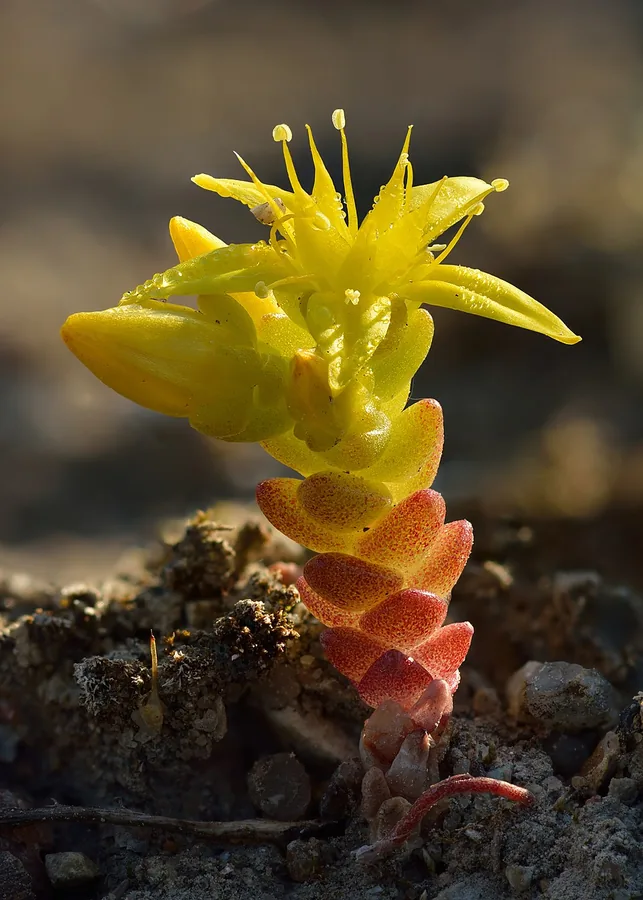
Stonecrop is the plant for the difficult corners a considered garden would rather not leave bare. Low and quietly handsome, these succulents thrive on heat, drought, and thin rocky ground, so they earn their place in the spots a lawn or a border never could. As creeping mats they settle into a living carpet that suits rock gardens, gravel courtyards, green roofs, and the sunbaked seams between paving stones.
Its range is part of the appeal for anyone composing a scheme. Some forms read gold or chartreuse, others a moody bronzy-red, and many warm in tone as the season turns cold, keeping a planting alive through winter. Star-shaped summer flowers in yellow, white, pink, or red bring pollinators and a light seasonal lift, and once they pass the foliage holds the look all year. The hardiest types stand up to winters as low as -40°F (-40°C), so the effect lasts.
The style secret is restraint. Rich soil and frequent watering leave it floppy and leggy, and soggy ground rots it away, so the elegant approach is the sparest one. Keep it lean and dry in the brightest spot on the property, and the garden looks its most composed exactly when you do the least.
Care
The short version: a sunny position, lean and gritty fast-draining soil, and water only when the ground has dried right through. Leave the feeding aside and let its easy character carry the space.
Light
Give stonecrop full sun, and the more of it the better, since sun is where it looks its sharpest. It will accept partial sun or light shade, but in deeper shade the stems stretch and slump and the gold and red forms lose their color to plain green, and the composed look goes with it.
Water
As a succulent, it prefers to dry out completely between waterings, then take a deep drink and wait. Once established it often lives on rainfall, wanting a top-up only every 10 to 21 days through a long dry stretch. Overwatering, more than anything, is what undoes it.
Soil
Set it in lean, gritty, sharply drained soil, the sandier and more gravelly the better for a clean, dry-garden look. A pH of 6.0 to 7.5 suits it, and it takes poor ground in stride. Heavy soil that stays wet at the roots is the one thing it will not abide.
Temperature
Stonecrop weathers a broad range, from -40°F to 100°F (-40°C to 38°C), which is why the hardy types hold a planting together through hard winters. Sharp drainage counts for more than the cold, since wet winter soil is the real threat to the display.
Humidity
Dry air suits it perfectly, so there is no humidity level to manage. What deserves attention is damp, stagnant air in a crowded corner, which invites rot and gives slugs somewhere to shelter.
Feeding
Feed sparingly, or not at all. Stonecrop is at its best grown lean, and rich feeding leaves it floppy and leggy, so a single light dose of balanced fertilizer in spring is the most a tidy planting ever needs.
Pruning
Shear back leggy or flopped stems to keep the mat trim and dense, and pinch in any runner that strays beyond its lines. Clip away the spent flower stems once the bloom has passed to keep the planting looking considered.
Repotting
In a container, refresh it every 2 to 3 years, or sooner if the mat crowds the pot, thins in the middle, or drains almost at once. A fresh gritty, fast-draining mix each time keeps a potted display in good order.
Size & spacing
Most creeping stonecrops stay low, just 2 to 6 inches (5 to 15 cm) tall, while each plant reaches 12 to 24 inches (30 to 60 cm) across into a broad mat. Space them for that spread and they close into unbroken, even cover.
When to plant
Stonecrop settles happily across zones 3 to 9, an easy fit for most gardens. Set it out in spring once frost has passed, on through early fall, and let the star-shaped flowers open across summer, from June into August, when a terrace or courtyard is most in use.
Northern hemisphere
Southern hemisphere
Typical months for a temperate climate: start earlier in warm zones, later where spring frosts linger.
- Sow: Late winter to early spring (8-10 weeks before last frost); most types are grown from cuttings or division rather than seed
- Plant: Spring after last frost through early fall
- Harvest: Summer (June to August); star-shaped yellow, white, pink, or red flowers attract pollinators
Hardiness
USDA hardiness zones: 3–9
Temperature: down to -40°C
Troubleshooting
Stonecrop asks little and falters rarely, and when it does the story is almost always too much water or too little sun. The stems and roots show the first signs, so a passing glance is usually enough. Match what you see below and step in before rot takes hold.
Blackened, mushy stems collapsing from the center
This is root and stem rot, the trouble that claims more sedums than any other. It comes not from a disease to spray but from water lingering in heavy or poorly drained ground. Stop watering, cut out every soft, rotted stem, and re-root the firm pieces in fresh gritty mix on a raised, sharply drained spot to bring the planting back.
Fix:
- Stop watering and let the soil dry out completely
- Cut away all soft, rotted stems and roots and discard them
- Re-root healthy firm cuttings in fresh gritty, fast-draining mix
- Replant in a raised, lean, sharply drained site or amend heavy soil with coarse sand and grit
Leggy, sprawling stems losing their color to green
The usual culprit is too little sun, at times with soil that runs too rich or too wet encouraging soft, loose growth. Move it into full sun, shear the leggy stems back hard for a denser mat, and ease off water and feed. Gold and red forms hold their color only in the strongest light, so give them the brightest position you have to keep the scheme sharp.
Fix:
- Move or transplant to a full-sun location
- Shear back leggy stems to force denser, more compact regrowth
- Stop fertilizing and grow in leaner, grittier soil
- Reduce watering
Ragged, chewed leaves, sometimes with slime trails
Overnight damage with shiny slime trails marks slugs and snails at the fleshy growth. Small bumps, white cottony masses, or clusters of soft insects along the stems instead point to scale, mealybugs, or aphids. Lift the slugs off by hand after dark, clear the others with insecticidal soap or a firm jet of water, and tidy away the damp, shaded debris where they gather.
Fix:
- Hand-pick slugs and snails or use slug bait/traps
- Wipe off or spray scale, mealybugs, and aphids with insecticidal soap or a strong water jet
- Improve airflow and avoid overly damp, shaded conditions that favor slugs
Toxicity
For a household with pets or young children, stonecrop is a reassuring choice, since it is non-toxic. The ASPCA lists it as safe for cats and dogs, and it poses no real risk to other animals or to people. The one small note is that a few species carry sap that can leave a mild itch on sensitive skin.
Safe for
People · Cats · Dogs · Horses · Rabbits · Livestock · Birds
Cats None
Cats are safe around stonecrop, which never appears on the ASPCA toxic list. A curious one that chews a leaf might get a mild stomach upset, the same as with any plant outside its normal diet, and no more than that.
Dogs None
Dogs can live alongside it without concern. A nibble brings, at worst, a little drooling or a loose stomach that soon settles.
Horses Safe
No account records stonecrop poisoning a horse, and it is not flagged as a pasture hazard. A horse that crops a little foliage will be fine.
Rabbits Safe
Rabbits can browse the fleshy leaves without harm. As with any new green, offer it gradually so a large sudden helping does not unsettle their gut.
Livestock Safe
Cattle, goats, and sheep are not poisoned by stonecrop, and most stock pass it by in favor of tastier forage anyway.
Birds Safe
The plant is no toxic threat to garden or pet birds, and chickens may peck the low mats now and then with no ill effect.
People Safe
Stonecrop is safe to grow and handle with children nearby. The sap of a few species can leave a mild itch on sensitive skin, so wash your hands after a long session of trimming or planting.
Generally safe to handle, but the sap of a few sedum species may cause mild skin irritation in sensitive people; wash hands after extensive handling.
Varieties
Stonecrop spans a wide palette of color and form, from gold needles to low red mats, and the choices below are the ones a garden most often turns to.
Sedum rupestre 'Angelina'
A spirited creeping groundcover of spiky gold-to-chartreuse needles that warm to reddish-orange in the cold of fall and winter, lifted by yellow flowers in summer.
Sedum spurium 'Dragon's Blood'
A low two-row stonecrop that spreads a mat of bronzy-red foliage and opens deep red star-shaped flowers through summer.
Sedum album
An evergreen mat former of small green fleshy leaves and white summer flowers, and the species the ASPCA names by name as non-toxic Stonecrop.
Sedum acre
Gold moss stonecrop, tiny-leaved and bright yellow in bloom, a free self-seeder that can spread fast enough to turn weedy.
Upright border sedums (now Hylotelephium, e.g. 'Autumn Joy')
A separate group of taller, clump-forming border perennials reclassified into Hylotelephium, standing upright rather than creeping into low mats.
Companions
Stonecrop pairs best with other sun-loving, drought-tough plants that want the same lean, dry, gritty soil, and worst with anything that needs rich, wet ground and shade.
Plant near
Sempervivum (hens and chicks): Another sun-loving, drought-tolerant succulent with the same lean, well-drained soil needs for rock gardens and green roofs.
Creeping thyme: Low, sun-loving, drought-tolerant mat former that shares the same gritty, well-drained, dry conditions between pavers and on slopes.
Keep apart
Moisture-loving shade plants: Plants needing rich, consistently moist soil and shade require conditions (wet soil) that rot sedum and shade that makes it leggy.
How to propagate
Multiplying stonecrop is almost effortless, which makes filling a scheme cheap and quick. A stray stem or a fallen leaf will often root on its own, so a single plant soon dresses a whole run of ground.
Stem cuttingsEasy
Spring to summer · 2 to 4 weeks to root
Stem cuttings are the simplest route and the one most gardeners rely on. Take a stem in spring or summer, let the cut end dry and callus for a day, then press it into gritty mix or lay it on the soil, where it roots at the nodes in 2 to 4 weeks.
DivisionEasy
Spring or early fall · A few weeks to a season
Lift an established mat in spring or early fall, pull or cut it into chunks, and replant the pieces wherever the scheme needs filling. Each division settles over a few weeks to a full season.
Leaf cuttingsEasy
Spring to summer · 3 to 6 weeks
Pull a healthy leaf with a short piece of stem attached and rest it on gritty mix through the spring or summer growth. New roots come over 3 to 6 weeks.
SeedModerate
Late winter to spring · Several weeks to germinate
Species sedums will grow from seed sown in late winter or spring, taking several weeks to germinate. Named cultivars do not come true from seed, so keep to cuttings or division to hold their color and form.
Myths
Sedums need rich soil and frequent watering to look their best.
The truth runs the other way. Stonecrops are succulents suited to hard, dry ground, so they want lean, gritty soil, sharp drainage, and very little water. Indulge them with rich earth and steady watering and the reward is floppy, leggy growth and fatal root and stem rot.