Ornamental · Asteraceae
Strawflower
Xerochrysum bracteatum
Set it in full sun and lean soil, and the strawflower repays you with papery blooms that decorate a room long after the garden quiets down.
Full sun
75–90 days
USDA 8–10
1–5 ft · 0.3–1.5 m
Overview
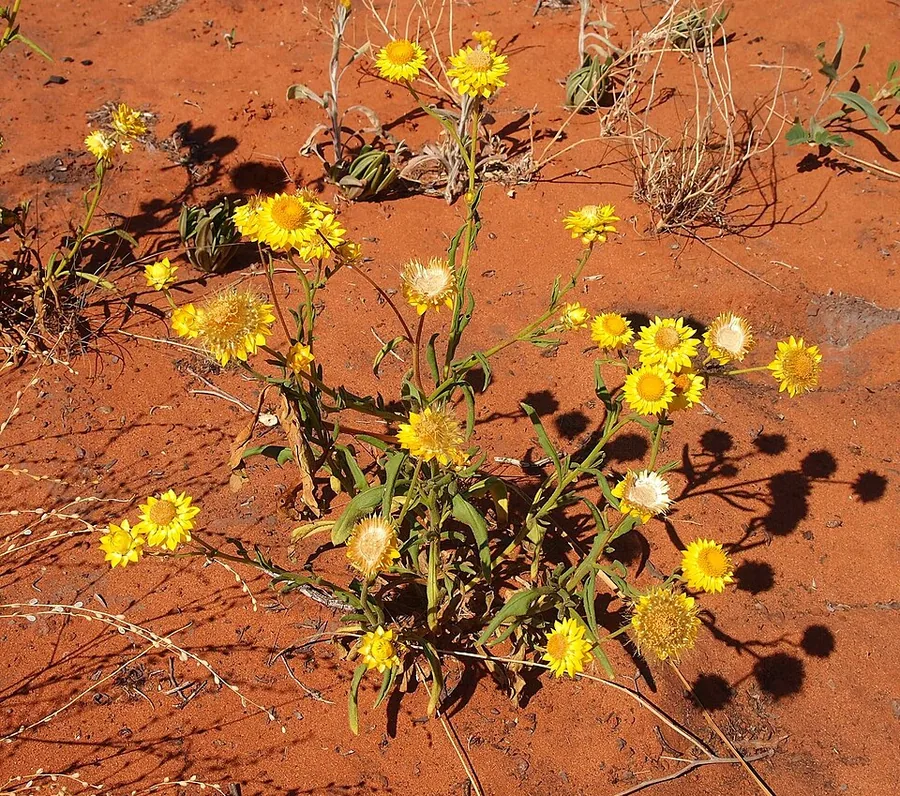
The strawflower, or golden everlasting, is that rare garden flower with a second life indoors. Its blooms are not petals at all but stiff, papery bracts that keep their color for months after cutting, which is exactly why they end up in a jar on a mantel or a shelf. Native to Australia and part of the daisy family, it settles easily into a sunny plot as a warm-season annual.
Outdoors it earns its keep with almost no fuss. A full-sun bed with soil that drains suits it, and once established it rides out heat and dry weeks while the border stays low-maintenance. The color range runs from gold and bronze to pink and white, so it slips into a warm scheme or a soft one, and it draws bees and butterflies through the season.
Its real charm is how it bridges garden and home. Cut the stems while the bracts are still half-closed, hang them to dry, and you have everlasting bouquets that hold their shape for a winter table, a hallway shelf, or a wreath, long after the plant outside has finished its run.
Care
The short version: a full-sun spot and free-draining soil kept on the dry side. Water only once the surface dries, deadhead to keep the display going, and stake the taller kinds before they lean.
Light
Strawflowers want full sun, ideally six or more hours a day, and they reward it with a fuller, more upright display. A little afternoon shade is fine, but in dim light the stems stretch and lean and the plant offers far fewer of those papery blooms.
Water
Let the top half of the soil dry between waterings and the plant looks after itself. It shrugs off drought once established, so the misstep to avoid is overwatering, which brings on root rot. Average to dry ground suits it far better than a bed that stays wet.
Soil
Give it well-drained loam of average fertility and it settles in happily. It takes a broad pH range from 5.5 to 8.0 and tolerates the dry, lean soil where showier plants sulk. Drainage is what matters, not richness.
Humidity
Ordinary outdoor air is all it asks, so there is no reading to chase. What counts is air movement, since still, muggy air around crowded plants is what lets mildew dull the display.
Feeding
This is a light feeder that looks its best in plain soil. A balanced general-purpose fertilizer once a month through the growing season is plenty, and there is nothing to gain from pushing it harder.
Pruning
Deadhead the spent blooms as they fade and the flowering carries on longer. A light pinch on young plants shapes a fuller, sturdier form, and the taller kinds may lean on a stake to hold their line.
Size & spacing
Depending on the variety, plants run from a tidy 12 inches to a towering 1 to 5 feet (30 to 152 cm), spreading 6 to 18 inches (15 to 45 cm) across. Space them so air moves freely between the plants and the planting keeps its shape.
When to plant
Strawflowers are creatures of warmth and will not sit through a frost. Start the seeds indoors in early spring, move the plants out once the chill has gone and the soil has warmed, and enjoy blooms from early summer until the first frost draws the season to a close.
Northern hemisphere
Southern hemisphere
Typical months for a temperate climate: start earlier in warm zones, later where spring frosts linger.
- Sow: 6 to 8 weeks before the last spring frost; do not cover seed, as light aids germination
- Plant: After the last frost when soil has warmed
- Harvest: Blooms summer to fall (about June until frost); harvest for drying when bracts are partly open
Hardiness
USDA hardiness zones: 8–10
Temperature: down to -12°C
Troubleshooting
Given a sunny, open spot, strawflowers keep their good looks with little intervention, and most trouble comes down to too much water or too little air. Notice the early signs on the leaves, stems, and roots, and step in before a small flaw spoils the picture.
A slumping plant with yellowing, softening stems
When a strawflower slumps in a bed that never dries, the cause is root rot born of waterlogged ground. The roots blacken and soften until they can no longer carry water, and the whole plant loses its poise. Hold off watering and let the soil dry, then rework the drainage or resettle the plant where standing water is never part of the picture.
Fix:
- Stop overwatering and let soil dry
- Improve drainage or move to a better-drained site
A pale, powdery bloom clouding the foliage
That dusty film is powdery or downy mildew, a fungus that arrives when leaves stay damp and the air hangs still around plants set too close together. It reads as neglect long before it does real harm, so treat it early. Clear away the worst leaves, give the planting more generous spacing, and water low at the roots rather than over the top. A sunny, open position keeps the display looking crisp.
Fix:
- Improve spacing and air flow
- Water at the soil line and avoid wetting foliage
- Remove and discard affected leaves
Elegant tall stems losing their upright line
The taller cultivars carry their flowers high and grow top-heavy, so a single squall can send that clean vertical line sprawling. Stake them early, while the stems are short enough to train discreetly. A pinch when the plants are young pays off later too, building a fuller, more self-supporting shape that keeps its composure in the border.
Fix:
- Stake or provide support for tall plants
- Pinch young plants to promote sturdier branching
Toxicity
For a home with pets or small children, the strawflower is easy company: it is non-toxic throughout. The ASPCA lists it safe for cats, dogs, and horses, and rabbits, livestock, birds, and people are covered too. A stray nibble will not poison anyone.
Safe for
People · Cats · Dogs · Horses · Rabbits · Livestock · Birds
Cats None
A houseful of cats changes nothing. The ASPCA lists the strawflower as non-toxic, so a curious taste leads to no poisoning.
Dogs None
Dogs pose no complication. A mouthful of leaf or bloom carries no poison, though a big helping of any plant can unsettle a delicate stomach.
Horses None
Horses are equally in the clear. The strawflower sits on the non-toxic list, so grazing nearby holds no danger.
Rabbits Safe
Rabbits may browse it freely, since not a part of the plant is poisonous to them.
Livestock Safe
Cattle, goats, and sheep can share the same ground in comfort, as the plant carries no toxins that trouble grazing stock.
Birds Safe
Birds come to no harm around it, whether they work the seed heads or simply drift through the planting.
People Safe
It is gentle company for people, too. The papery blooms are a favorite for drying, and handling the plant poses no risk to children.
Varieties
Strawflowers scale from knee-high dwarfs to three-foot statements, so there is one to suit a pot, a border, or a cutting patch. These are the named ones worth seeking out.
Bright Bikini
A dwarf strain holding near 15 inches in a lively color mix, made for pots on a step or table edge.
Dargan Hill Monarch
A grey-leaved cultivar whose large golden-yellow flowers bring a warm, sunlit note to a bed.
Kimberly Sunset
Another grey-leaved selection, this one in soft pink for a quieter, more romantic palette.
Kingsize Mixed
Bred for larger blooms on plants near 3 feet, a natural for the back of a border.
How to propagate
You can begin strawflowers from a seed packet or copy a favorite from cuttings, and the choice turns on whether you want an easy mix or an exact match to keep.
SeedEasy
Start indoors 6 to 8 weeks before last frost; surface-sow as light aids germination · Germinates in roughly 1 to 3 weeks; blooms within the first season
Seed is the usual starting point, sown indoors 6 to 8 weeks ahead of the last frost. Rest each one on the surface and leave it open to the light that wakes it, and expect sprouts in about 1 to 3 weeks. Once the cold has lifted the young plants move outside, ready to flower that same season.
Stem cuttingsEasy
During active growth in the growing season · Several weeks to root
For a named cultivar you want to keep exactly, cuttings are the graceful route. Taken during active growth and given several weeks to root, each one grows on as a faithful copy of the parent rather than the mixed company seed would deliver.
Myths
Strawflowers are true everlasting flowers that never fade or die.
The name flatters it a little. The papery bracts do keep their color and shape for a long stretch once dried, which is how the everlasting reputation began, but the living plant is short-lived and grown as an annual. The arrangement outlasts the season; the plant in the ground does not.
You can save seed from a favorite cultivar and get identical plants.
It rarely works that way, because named cultivars do not come true from seed, so a saved packet gives you a mixed cast rather than repeats of the one you admired. To hold onto a particular look, take stem cuttings instead of collecting seed.