Ornamental · Asteraceae
Sunflower
Helianthus annuus
Plant it in full sun with a little shelter, and the sunflower crowns the garden from summer into fall.
Full sun
70–100 days
USDA 2–11
2–10 ft · 0.5–3 m
Overview
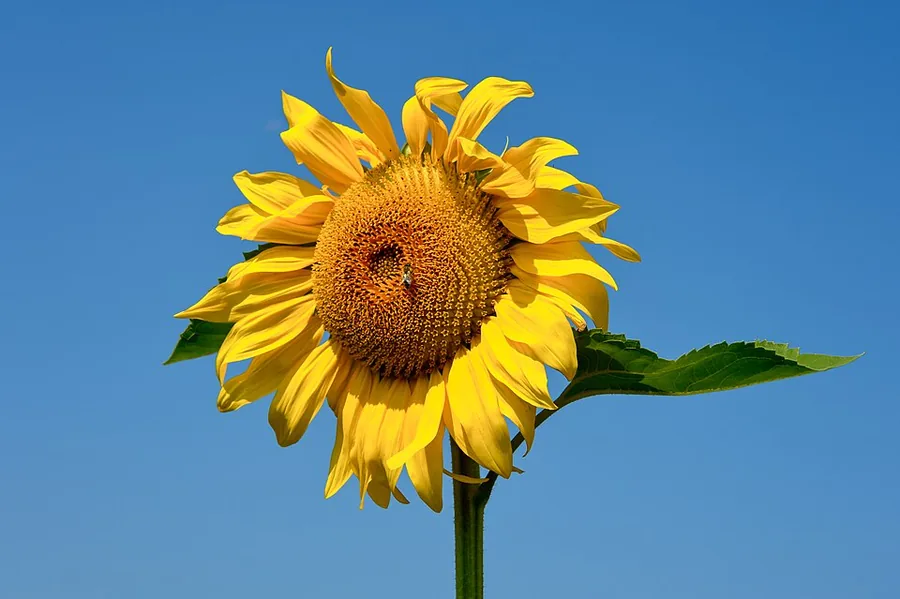
Nothing sets the tone of a late-summer garden like a sunflower standing at the back of a border. A member of the daisy family that grows wild across much of North America, it rises from a single seed to a presence that can reach 10 feet (3 m) in a season, turning a plain fence line into a golden backdrop. Give it full sun and it becomes the anchor the whole planting arranges itself around.
The choices suit almost any setting. A towering single-stem giant makes a dramatic statement at the edge of a plot, while low, branching kinds soften a bed with a long, easy run of smaller blooms over many weeks. Cut-flower gardeners favor the pollenless types that keep an arrangement pristine, and dwarf cultivars bring the same cheer to a window box or a sunny doorstep.
Part of the appeal is how little it asks of a full schedule. Sunflowers settle in wherever there is sun, warmth in the soil, and a little space to spread, and they carry a dry week without complaint once established, which makes them a forgiving choice for a garden tended between other things. The only real design decision is placement, since the tallest kinds want a sheltered corner and a discreet stake before the heads grow heavy.
Care
The short version: full sun, a deep and well-drained soil of average fertility, and steady water while the seedlings establish and again around bloom, then a lighter touch once the plants settle in and take dry spells in stride.
Light
A sunflower earns its keep only in full sun, so give it the brightest, most open ground in the garden. That exposure is what rewards you with strong stems and the broad, upright heads that define the look. Set it against shade and the effect falls flat, with thin, leaning plants and few flowers.
Water
Keep the ground moist while the seeds sprout and the young plants find their feet. From there, water deeply and on a rhythm for about 20 days before and after flowering, the window when the heavy heads ask for the most. Settled plants turn notably drought tolerant, an easy trait for a low-fuss border.
Soil
Start with deep, loose, well-drained soil of ordinary fertility, nothing precious required. The long taproot wants to travel straight down, so open up any compacted layer before sowing. Everyday garden soil carries the plant beautifully.
Humidity
Outdoors, humidity looks after itself, so there is no figure to chase. What earns your attention is airflow, since damp, crowded foliage is the setting downy mildew prefers.
Feeding
This is not a plant with a big appetite. A single side-dressing of slow-release all-purpose fertilizer once a few true leaves appear is plenty for the season. Keep nitrogen light, or you trade elegant blooms for leafy growth and disease.
Pruning
There is next to nothing to tidy. A little deadheading keeps a branching type flowering longer, and clipping away any tired or diseased growth keeps the planting looking its best.
Size & spacing
Heights run from 18 inches to 1.5 to 10 feet (0.5 to 3 m) depending on the cultivar, with a spread of 1.5 to 3 feet (46 to 91 cm). Choose a scale that flatters the space, and give each plant room so air drifts easily between them.
When to plant
Sunflowers keep to the rhythm of the warm season and will not stand frost. Sow directly once the last spring frost has passed and the soil has warmed to at least 60°F (16°C), and the display unfolds from mid summer into fall. Come early fall, the seed heads bow and their backs fade to yellow-brown, the cue that they are ready to gather.
Northern hemisphere
Southern hemisphere
Typical months for a temperate climate: start earlier in warm zones, later where spring frosts linger.
- Sow: Usually unnecessary; sunflowers resent transplanting, so indoor starting is generally not recommended
- Plant: After the last spring frost, once soil has warmed to at least 60°F (16°C)
- Harvest: Blooms mid to late summer into fall; harvest seed heads in early fall when the back of the head turns from green to yellow-brown and nods downward
Hardiness
USDA hardiness zones: 2–11
Temperature: down to -46°C
Troubleshooting
Even an easy plant has its off days, and with a sunflower they tend to appear on the leaves, the flower heads, or the long stems. A quick eye keeps a small issue from spoiling the show. Find the match below and act while it still counts.
Webbing and spoiled seed hidden within the head
Webbing and spoiled seed inside the head point to caterpillars, most often sunflower moth larvae, which feed on the buds, petals, and forming seed within. Part a suspect head and the tunneling, webbing, and dark frass give them away. Lift out what you find, remove any head too far gone, and turn to a labeled control at early flowering if the problem widens.
Fix:
- Handpick caterpillars where practical
- Remove and destroy heavily infested heads
- Apply a labeled biological or insecticidal control at early flowering if needed
Pale blotches above the leaf and gray growth below
Pale blotches above the leaf with gray growth beneath are the mark of downy mildew, a fungus that arrives in cool, wet weather and stunts and distorts the newest growth. Take out and destroy anything affected before it travels. Loosen the spacing so air circulates, and keep water off the foliage to close the door on it.
Fix:
- Remove and destroy affected plants and debris
- Improve air circulation and avoid overhead watering
- Plant resistant cultivars where available
Ripening seed lost from the head before harvest
Ripening seed disappearing from the head is the work of birds, which arrive as the seeds fill and strip them clean. A mesh bag or a length of row cover, slipped on as the seeds plump, keeps them off. Spinners, reflective tape, or an owl decoy add a further deterrent, and near-ripe heads can be cut to finish drying under cover.
Fix:
- Cover maturing heads with mesh or row cover
- Use scare devices such as spinners, reflective tape, or owl decoys
- Cut and dry nearly mature heads indoors to finish ripening
Tall stems leaning or broken after wind and rain
The tallest single-stem giants carry heads heavy enough to lodge, tipping or breaking when wind and rain arrive. Stake those cultivars early, well before the heads gain their full weight. Deep, even watering encourages firmer rooting, and a sheltered position spares them the worst of the weather.
Fix:
- Stake tall and giant cultivars
- Provide deep, even watering to encourage strong rooting
- Site plants where they are sheltered from strong wind
A sticky sheen and clustered insects along the stems
A sticky sheen and small clustered insects usually mean aphids, soft feeders that settle on stems and leaf undersides and leave honeydew behind. A firm rinse of water clears most of them, and lady beetles and lacewings tidy up whatever remains. Keep insecticidal soap in reserve for the rare colony that overruns the plant.
Fix:
- Dislodge aphids with a strong jet of water
- Encourage natural predators such as lady beetles and lacewings
- Apply insecticidal soap if populations are heavy
Toxicity
For a household with pets, the sunflower is a relaxed choice from top to bottom. The ASPCA lists it as non-toxic to cats, dogs, and horses, and the seeds are as welcome to people and birds as they are harmless. A stray nibble of leaf or petal is nothing to give a second thought.
Safe for
People · Cats · Dogs · Horses · Rabbits · Livestock · Birds
Cats None
Sunflowers pose no threat to cats, and a passing taste of leaf or petal leaves them perfectly well.
Dogs None
Dogs share the garden with sunflowers safely, and a handful of seeds now and then is a wholesome indulgence.
Horses None
Horses may graze beside sunflowers untroubled, listed by the ASPCA as non-toxic to them.
Rabbits Safe
Rabbits can browse the leaves and flowers with no consequence, so a nibbled stem is of no concern.
Livestock Safe
Cattle, goats, and sheep coexist with sunflowers easily, and the seed even earns a place in their feed.
Birds Safe
Birds delight in sunflower seed and take no harm from it, treating a ripe head as a feeder of its own.
People Safe
People have long enjoyed the seeds raw or roasted, and the plant as a whole is safe company.
Varieties
Thousands of sunflowers have been named, yet a few reliable forms shape most gardens, from statuesque giants to cut flowers made for the vase. The few worth knowing before you plan a bed are gathered here.
Mammoth (Russian Giant)
The grand statement of the group, a single-stem giant grown for its immense heads and a heavy harvest of edible seed.
Autumn Beauty
A branching sort that scatters smaller flowers in warm autumn tones across a long, generous season.
ProCut and Sunrich series
Pollenless single-stem selections prized for the clean, long-lasting stems they bring to an arrangement.
Teddy Bear
A dwarf of soft, double blooms that suits a small bed or a pot on a sunny step.
How to propagate
A sunflower begins and ends with seed, which is part of what makes it such an easy pleasure to raise from the ground up.
SeedEasy
Direct-sow after the last spring frost once soil has warmed to at least 60°F (16°C) · Germinates in about 7 to 10 days
Sow the seed straight into its final place once the last spring frost has passed and the soil has settled to at least 60°F (16°C). Set each one 1 to 2 inches down, and a shoot appears in roughly 7 to 10 days. Sunflowers dislike being lifted and moved, so there is no case for indoor pots; sow them exactly where they are meant to stand.
Myths
A grown sunflower keeps turning its head to follow the sun across the sky all day.
Only the young plants, still in growth, truly follow the light, tracing east to west by day and drifting back east by night. Once the head opens into its full bloom, the movement ends for good. A field of mature sunflowers faces east and holds there, rather than trailing the sun.