Ornamental · Asteraceae
Zinnia
Zinnia elegans
A summer-long source of cut color for the home, the zinnia earns its place from June to frost.
Full sun
Every 5–7 days
68–86°F · 20–30°C
60–70 days
Overview
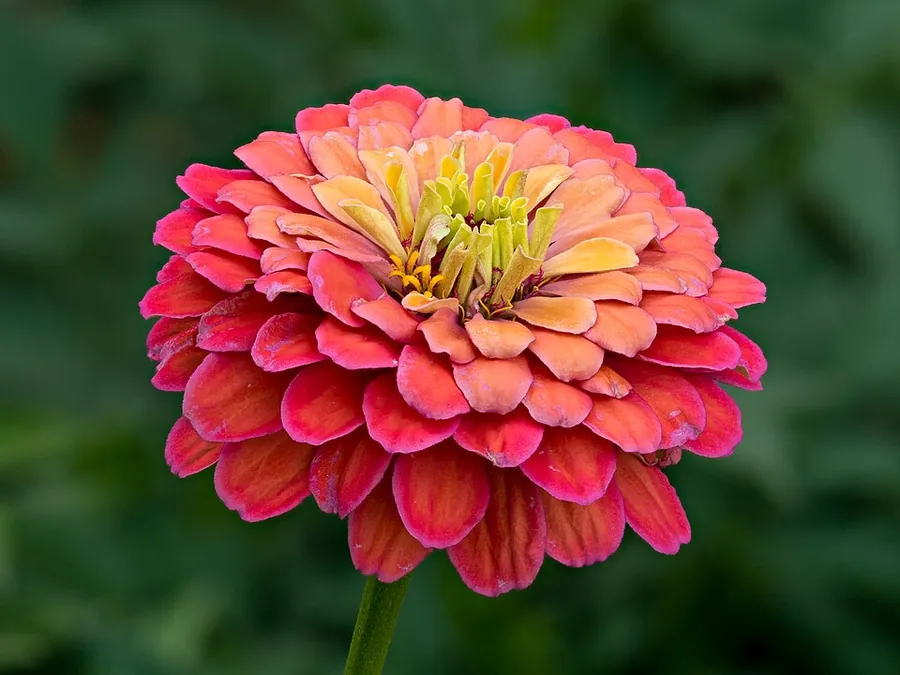
Few annuals earn a place in the garden as easily as the zinnia, and few give a home more color for the effort. A member of the daisy family with roots in Mexico, it has traveled from the wild to gardens the world over. As a warm-season annual, a single sowing carries a border, and the rooms beside it, from spring through the first hard frost.
The plant suits almost any setting. The compact forms sit near 6 inches and edge a path or fill a windowbox, while the tall cutting types rise toward 4 feet and keep a table arrangement fresh for weeks. Bees and butterflies drift through the open flowers, turning even a small planting into a lively corner of the garden.
Two conditions frame where a zinnia belongs. It asks for full sun and dry leaves, since crowded, damp foliage invites the mildew and leaf spots that spoil its looks. Give it an open, breezy spot and water at the roots, and it stays handsome from the border to the vase.
Care
The short version: a sunny, open spot in well-drained soil, watered at the base about an inch a week. Space the plants for air, deadhead often, and the display runs from summer to frost.
Light
Site zinnias in full sun, at least 6 hours of direct light a day and more where you can offer it. Sun keeps the plants trim and the flowers coming, and it dries the leaves quickly, the surest way to keep mildew at a distance.
Water
Water at the base in the morning and keep the leaves dry, since damp foliage is what invites disease. Give about an inch a week and let the top half of the soil dry between waterings, easing off once the plants take hold, as zinnias carry heat and drought with ease.
Soil
Set them in well-drained loam. Zinnias accept a pH anywhere from 5.5 to 7.5 and ask for little, but they dislike wet feet, so drainage matters more than a rich bed.
Temperature
These are plants of warmth, at their best between 68°F and 86°F (20°C to 30°C). Cold soil holds them back and frost ends them, which is why the season begins only once real warmth arrives.
Humidity
Zinnias favor low humidity, around 40% to 60%. Heavy, muggy air feeds mildew and leaf spot, so a place where air moves freely serves them better than any measure of moisture.
Feeding
Feed monthly through spring and summer with a balanced fertilizer. Zinnias are light feeders that flower well in ordinary ground, so a gentle hand is all they want.
Pruning
Deadhead spent blooms and cut for the table often, and the plant answers with fresh branches and more color. Pinch the young plants early as well, and they fill out fuller with many more buds.
Repotting
not_applicable
Size & spacing
Plants run from 1 to 4 feet (30 to 120 cm) tall by type, shaping where they sit in a border. Space them 6 to 12 inches (15 to 30 cm) apart so air moves through and the leaves stay dry.
When to plant
Zinnias belong to the warm months and will not stand frost. Start seed indoors 4 to 6 weeks before the last frost or sow it outdoors once the ground warms, and the color settles in from midsummer to the first frost.
Northern hemisphere
Southern hemisphere
Typical months for a temperate climate: start earlier in warm zones, later where spring frosts linger.
- Sow: 4 to 6 weeks before the last frost
- Plant: After the last frost once soil warms to about 70°F (21°C)
- Harvest: Summer to first frost
Troubleshooting
Most of what troubles a zinnia appears on the leaves and begins with foliage that stays wet. Notice the earliest marks and a small patch stays a small patch rather than spreading through the planting. Match what you see below, then act while it still counts.
Reddish-brown spots with gray centers spreading over the leaves
This is Alternaria leaf spot, the most serious disease a zinnia faces, able to ring a stem and wilt a whole plant once established. It arrives on splashing water and old debris during warm, wet spells. Remove and destroy the affected plants, water at the base, keep zinnias off the same ground for two years, and give the seed a hot-water soak before sowing.
Fix:
- Remove and destroy infected plants and debris
- Water at the base of plants and avoid overhead irrigation
- Rotate planting sites and avoid replanting zinnias in the same spot for 2 years
- Treat seed with hot water (125°F for 30 minutes) before sowing
A pale, powdery film across the upper leaves
That dusty veil is powdery mildew, a fungus that settles in when plants crowd together in still, humid air. It lifts off at first, then yellows and frays the foliage as late summer goes on, dimming the whole display. Open the planting for air, water at the base, and choose resistant series like Profusion or Zahara for the seasons ahead.
Fix:
- Improve spacing and air circulation
- Water at the base in the morning and avoid wetting foliage
- Remove and discard heavily infected leaves and end-of-season debris
- Choose resistant types such as the Profusion or Zahara series
Angular purple spots framed by the leaf veins
Those crisp-edged marks are bacterial leaf spot, their straight sides drawn by the veins that pen the bacteria in. It moves on splashing water and lingers on unclean seed and old debris, so it shows after rain or overhead watering. Keep the foliage dry, clear away the spotted leaves, space plants to dry quickly, and begin with clean seed and resistant types.
Fix:
- Avoid overhead watering and handling wet plants
- Remove infected leaves and plant debris
- Improve spacing so foliage dries quickly
- Start with disease-free seed and resistant cultivars
Toxicity
For a home shared with animals, the zinnia is a reassuring choice. The ASPCA lists it as non-toxic to cats, dogs, and horses, and the petals are edible for people. A pet that nibbles a leaf may feel briefly unsettled, but nothing here does lasting harm.
Safe for
People · Cats · Dogs · Horses · Rabbits · Livestock · Birds
Cats None
Safe company in the home. A cat that chews a leaf out of curiosity might feel briefly off, and no more than that.
Dogs None
No real risk for dogs. One that nibbles the foliage may run a little loose in the gut, which passes on its own.
Horses Safe
Listed as non-toxic, so a horse grazing near a zinnia planting comes to no harm.
Rabbits Safe
Rabbits can sample the leaves and flowers safely, though a large helping of any new green can loosen the stool.
Livestock Safe
Cattle, goats, and sheep take no poison from zinnias, and the plants pose no hazard in the pasture.
Birds Safe
Birds are in no danger from the plant, and they turn to the ripe seed heads as fall comes on.
People Safe
The petals are edible and appear as a garnish on salads and cakes. Nothing on the plant is toxic to people.
No special handling required; ingestion of plant material may still cause mild stomach upset in some pets.
Varieties
From 6-inch dwarfs for the front of a bed to tall stems cut for the table, the range suits every part of the garden. These are the names worth knowing.
Benary's Giant
A tall cutting favorite at 36 to 42 inches, its big, fully double, dahlia-like blooms holding their form beautifully in a vase.
State Fair
A vigorous tetraploid rising 3 to 4 feet and carrying very large flowers.
Profusion
An interspecific Zinnia x hybrida series that shrugs off both leaf spot and powdery mildew.
Zahara
A Zinnia marylandica series bred for strong resistance to leaf spot and mildew.
Thumbelina
A compact dwarf near 6 inches tall, a natural for edging and containers.
Queen Lime
A 30 to 40 inch series prized for its unusual lime-green and muted antique color blends.
How to propagate
The zinnia is one of the easiest flowers to raise from nothing, and seed is by far the natural way to begin.
SeedEasy
Spring
Zinnias rise quickly and easily from seed, a simple pleasure for any gardener. Sow directly after the last frost once the soil warms to about 70°F (21°C), or gain time by starting them indoors 4 to 6 weeks earlier. Set the seed about a quarter inch deep, hold it at 65°F to 70°F (18°C to 21°C), and it sprouts in roughly 5 to 7 days. Thin or space the seedlings so air moves freely, then pinch the young plants to encourage branching and a fuller show of bloom.
Myths
Overhead watering keeps zinnias cool and in good health.
A shower from above leaves the foliage wet, and wet leaves are just what powdery mildew, Alternaria, and bacterial leaf spot need to take hold. Water at the base instead, and let the leaves stay dry.
Every zinnia mildews alike, so the variety chosen makes no difference.
The variety makes a considerable difference. Resistant series such as Profusion and Zahara hold off leaf spot and mildew far better than the older large-flowered forms, which often look worn by late summer.