Houseplant · Asphodelaceae
Aloe Vera
Aloe vera
Offer it bright light, gritty soil, and a dry pause between drinks, and aloe asks for little more.
Bright indirect
50–86°F · 10–30°C
USDA 9–11
12–24 in · 30–60 cm
Overview
Few succulents repay a windowsill quite like aloe vera. Its swollen, gel-filled blades lend it the old names burn plant and first-aid plant, and that same fleshy frame is precisely what carries it through a forgotten watering. Born of arid country, it banks its own moisture and simply outlasts the dry stretches.
As a houseplant it ranks among the most easygoing you can keep. Stand it in a bright window, root it in a quick-draining mix, and allow the soil to bake dry before the next drink. The single thing it will never abide is wet feet, the quiet undoing of nearly every aloe that falters indoors.
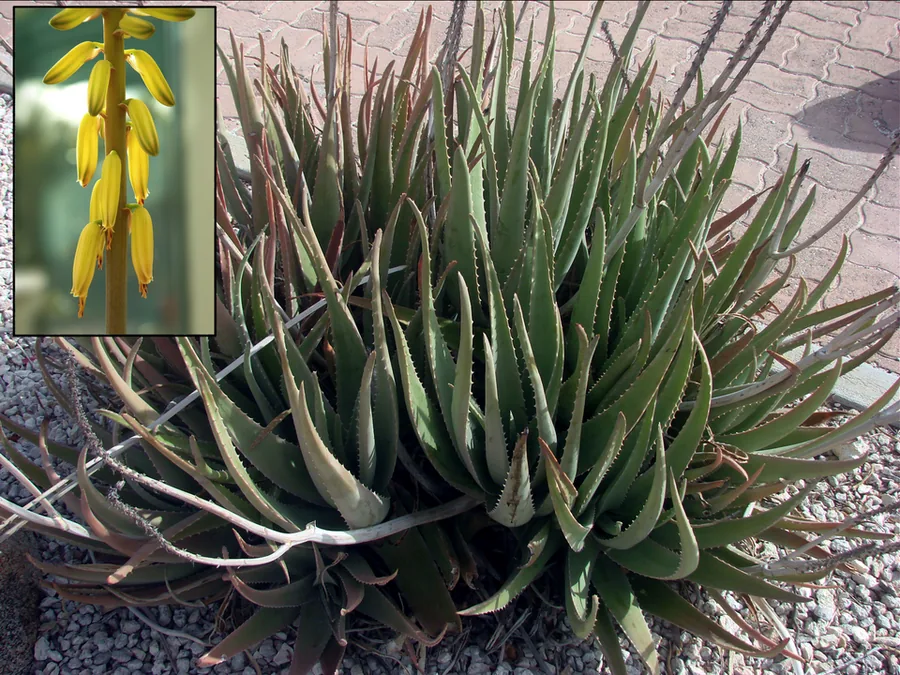
This is a genuine perennial, unhurried in its growth and long-lived, sending up pups around its base that potting on turns into fresh plants. Given warmth and the open air, a mature specimen may even raise a tall spike crowned with tubular yellow to orange flowers.
Care
The short version: bright light, a gritty quick-draining mix, and one deep soak only after the pot has gone completely dry. Go light on feeding, hold it warm, and never leave it sitting in water.
Light
Aloe craves bright light, best of all a sunny window or a perch that catches several hours of direct sun. It will take full sun once eased into it, but a plant thrust straight into harsh rays scorches, while one left in the shadows pales and stretches thin.
Water
Here lies the step that undoes most growers. Let the soil go bone dry, then water deeply until it streams from the base, and withhold the next drink until it has dried out entirely. A pot kept damp and water left to pool are what rot the roots and the crown.
Soil
Set it in a gritty cactus or succulent mix that sheds water in seconds, never a heavy potting soil that clings to moisture. Aloe favors a faintly alkaline footing, a pH around 7.0 to 8.5, which most cactus blends already land near.
Temperature
Everyday room warmth suits it well, anywhere across 50°F to 86°F (10°C to 30°C). It carries no tolerance for frost, so any plant taking the summer air outside should come back in before the chill sets in.
Humidity
Parched air troubles it not at all, since this is a low-humidity desert native. No target reading applies and no misting is wanted.
Feeding
Aloe asks for next to no feeding. A dilute balanced houseplant fertilizer offered now and then through spring and summer covers it, and leaving it out altogether costs the plant little.
Pruning
Little upkeep is called for. Pare away shriveled or dead lower leaves at the base using a clean knife, and clear a spent flower stalk once it has run its course.
Repotting
Move it on every 2 to 3 years, or earlier when pups crowd the pot and roots nose out through the drainage holes. Step up a single pot size into fresh gritty mix and a container built to drain.
Size & spacing
Kept indoors it stands near 12 to 24 inches (30 to 60 cm) tall and broadens to 12 to 35 inches (30 to 90 cm) as the clump fills out. Choose a pot generous enough for the offsets it keeps producing.
Troubleshooting
Nearly every aloe complaint comes down to water, light, or the pot it lives in, and the leaves tend to say which. Read them with a calm eye, then settle the cause below rather than papering over the symptom.
Soft, mushy leaves browning at the base
When the lower leaves slump into something soft and see-through, the culprit is root and crown rot, and it follows generous watering far more often than neglect. Soil that never dries leaves the roots starved of air until the base of the plant gives way. Set the watering can down, ease the aloe out of its pot, trim every rotted root and slick leaf with a clean blade, and settle it back into fresh gritty mix in a container that drains.
Fix:
- Stop watering and let the soil dry out
- Remove the plant, cut away rotted roots and mushy leaves with a clean blade
- Repot into fresh gritty succulent mix in a pot with drainage holes
Thin, curling, or wrinkled leaves
A healthy aloe holds its water in those swollen blades, so once they thin out and pucker the tank has simply emptied. Think of it as ordinary drought stress, the most forgiving fault on this page, and one that reverses in a day. Pour a deep drink through until water escapes the base, then return to soaking the pot only after the soil has gone fully dry again.
Fix:
- Water thoroughly until it drains from the bottom
- Resume a regular deep-but-infrequent watering schedule
Reddish-brown or scorched patches on the leaves
Those bleached and rusty marks read as sunburn rather than illness, the mark of bright sun arriving all at once. Carry an aloe from a sheltered sill into open outdoor glare and the face turned toward the fiercest light scorches first. Bring it back under bright indirect light to recover, and on the next attempt let it grow into stronger sun across a week or two until its skin can take the heat.
Fix:
- Move the plant to bright indirect light
- Acclimate gradually to stronger sun over one to two weeks
Toxicity
Aloe sits in a curious place, gentle for people yet toxic to pets. The clear gel turns up in burn creams and lotions, while the bitter yellow latex just under the skin carries saponins and anthraquinones like aloin that purge the gut. The ASPCA lists aloe as toxic to cats, dogs, and horses, so keep the pot well beyond the reach of pets and small children.
Toxic to
Cats · Dogs · Horses · Rabbits · Livestock · Birds · People
Cats Moderate
A cat drawn to nibble the blades tends to bring up its meal and pass loose stools, then drift quiet and uninterested in the food bowl. Should you notice trembling or urine tinged with red, the dose was larger and warrants a closer look.
Dogs Moderate
The picture in a dog mirrors the feline one, all upset stomach, runny stools, and a subdued, listless air. A heartier mouthful can stir trembling and lend the urine a reddish cast.
Horses Moderate
A horse that takes in the bitter latex is purged by it, so loose droppings, a flat demeanor, and a refused feed tend to follow. Larger helpings of the leaves can bring trembling on top of that.
Rabbits Toxic
Those same purging anthraquinones land heavily on a rabbit's delicate digestion. Park the plant somewhere a rabbit simply cannot reach, since it lacks the latitude to nibble aloe the way it crops other leaves.
Livestock Toxic
Cattle, goats, and sheep grazing on aloe swallow the laxative latex and scour hard for the trouble. Wall it off from any pasture where stock might wander to it.
Birds Toxic
Aloin acts as a fierce purgative against a bird's slight frame, so an inquisitive parrot or backyard hen has no business near the pot.
People Caution
While the clear inner gel finds its way into countless human goods, the yellow latex beneath the skin is a punishing laxative that gripes the stomach and belongs nowhere near a mouth. Whole leaves carry both layers in a single bite, so set them out of a child's reach.
This is a medicinal-for-people, toxic-to-pets plant; the inner gel differs from the toxic latex, but pets chewing whole leaves ingest both.
Helpline numbers

United States
ASPCA Animal Poison Control: (888) 426-4435 (fee applies)
Poison Control: (800) 222-1222



Canada
Poison Centres: 1-844-764-7669
Varieties
Most plants sold as aloe vera amount to the same thing, yet a pair of forms surface often enough to recognize on sight.
Aloe vera 'Chinensis'
Its leaves wear denser cream freckling, and the rosette lounges into a looser, more reclining habit instead of standing tall.
Aloe vera var. barbadensis
Here is the medicinal workhorse of the species, cultivated across farms for plump, gel-laden leaves that supply a long shelf of skincare.
How to propagate
Aloe multiplies almost on its own, chiefly through the offsets it gathers around its base. Dividing a clump works too, and seed remains an option, though seed is the scenic detour.
Offsets & pupsEasy
Spring to summer during active growth · 4 to 8 weeks to root and establish
The most effortless path to more aloe runs through the small pups that gather close around the parent's base. Take them in spring or summer while growth is in full swing, leave any cut face to dry and form a callus over a day or two, and tuck each one into gritty mix. Allow 4 to 8 weeks for the new plant to root and settle.
DivisionEasy
At repotting in spring · 4 to 8 weeks
A spring repotting is the natural moment to split a congested clump that has raised several rooted crowns, easing them apart so each can grow in its own pot. As with the pups, give these divisions 4 to 8 weeks to take hold.
SeedModerate
Spring, warm conditions · Several months to a year
Growing from seed is the patient route, and seldom the rewarding one. Scatter seed over gritty mix in spring under steady warmth, then settle in for several months to a year before anything resembling a plant appears. The pups deliver the same result on a far shorter clock.
Myths
Aloe gel is good for people, so the whole plant is safe for pets to chew.
The soothing gel on bathroom shelves and the acrid yellow latex tucked beneath the skin are two separate substances entirely. Bite through a whole leaf, as a pet does, and both go down together, latex and all, carrying the saponins and anthraquinones like aloin that touch off vomiting and diarrhea. The ASPCA lists aloe as toxic to cats, dogs, and horses, so the pot belongs somewhere they cannot get to it.