Ornamental · Asteraceae
False Sunflower
Heliopsis helianthoides
Plant it in full sun and lean soil, and false sunflower fills a summer border with gold from midsummer to first frost.
Full sun
Every 5–10 days
90–120 days
USDA 3–9
Overview
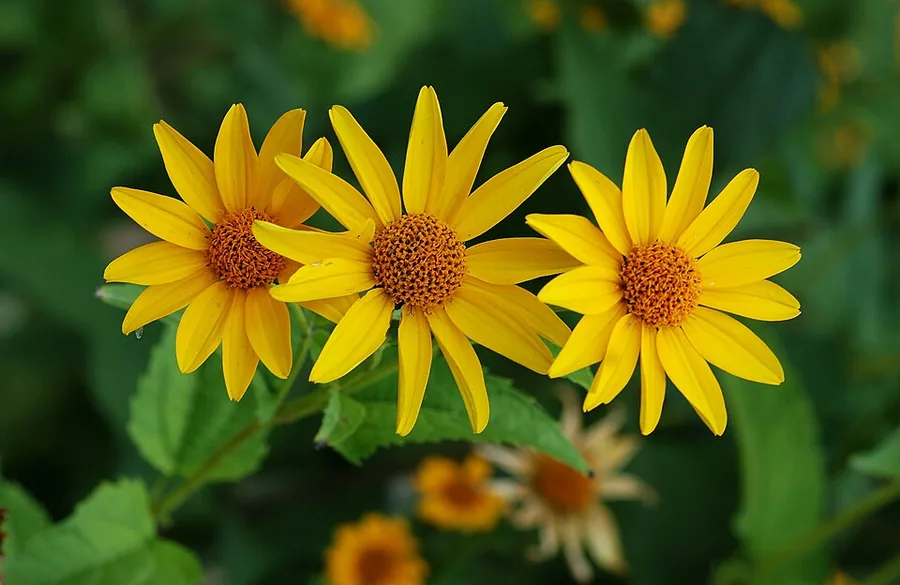
False sunflower brings the easy glamour of high summer to a sunny garden, with golden, daisy-like flowers that read from across a terrace and hold the eye through the warmest months. A North American native in the aster family, it takes heat, drought, and indifferent ground in stride once settled, which makes it a relaxed anchor for a low-maintenance scheme. The name plays on its likeness to a true sunflower, yet it returns of its own accord each year.
It belongs in the kind of garden meant to be lived in rather than fussed over. Set in full sun and average to dry soil, it carries a border with bees and butterflies for company and asks almost nothing in the way of feeding. Curiously, rich ground works against the look, pushing soft stems that lean and spoil the line.
Given room it spreads, the clump broadening year on year and seedlings arriving on their own, an effect made for a meadow or a loose, prairie-style planting and best edited in a more tailored border. A little deadheading and dividing keeps it in keeping with the scheme, and in return it stays a fixture for decades.
Care
The short version: full sun and lean, well-drained soil. Water only until it settles in, leave the fertilizer aside, and deadhead through the season to keep the display going and the self-seeding in check.
Light
Give false sunflower full sun, a position with 6 or more hours of direct light a day, and it rewards the spot with its best form. A little partial shade is tolerable, but shade brings the weak, stretched stems that lean and undo the line, so the brightest corner of the garden is the one to choose.
Water
Water it attentively through the first season while the roots take hold, then let the routine relax. Once settled it is drought tolerant and content with dry to medium soil, so let the top half of the ground dry between waterings and keep it well clear of soggy conditions.
Soil
It asks little of the soil and lives happily in clay, rocky, poor, and dry ground, provided the bed drains well. Any pH from 5.5 to 7.5 suits it. The one ground to avoid is the rich, pampered border, since lush soil grows floppy plants that spoil the look.
Temperature
This is a hard-wearing perennial that weathers winters down to -40°F (-40°C) and summer heat up to 100°F (38°C). That range carries it across most of the country, and it dies back to the ground each winter before returning to the scene in spring.
Humidity
Everyday outdoor humidity is no concern, so there is no figure to chase. Good airflow does the real work, since open spacing keeps the foliage dry and the planting looking fresh.
Feeding
Feed it rarely, if at all. A light dressing of compost or a balanced feed in spring is the most it ever wants, and overdoing the rich food only invites the soft, leaning growth that undermines a tidy border.
Pruning
Deadhead spent flowers to carry the bloom further into the season and keep self-seeding down. Cutting the stems back by one-third to one-half in late May gives shorter, steadier plants that hold their place, and a final cut to the ground in late fall or early spring clears the bed for the year ahead.
Repotting
There is no repotting to think about, since false sunflower is a garden plant rather than a container one. Instead, divide the clump every 3 to 4 years when the center thins or the planting crowds, which keeps it lively and well within its part of the design.
Size & spacing
Plants rise 3 to 6 feet (91 to 183 cm) tall and open 2 to 4 feet (60 to 122 cm) wide, so place them where that scale earns its keep at the back or middle of a border. Allow each its full width so air moves freely and the tall stems read cleanly against their neighbors.
When to plant
False sunflower keeps an easy seasonal rhythm. Sow it in fall or start seed indoors 6 to 8 weeks before the last frost, set plants out once the cold has passed, and the flowers carry a border from June into September.
Northern hemisphere
Southern hemisphere
Typical months for a temperate climate: start earlier in warm zones, later where spring frosts linger.
- Sow: 6-8 weeks before last spring frost, or direct sow
- Plant: After last spring frost
- Harvest: June to September (mid summer to early fall)
Hardiness
USDA hardiness zones: 3–9
Temperature: down to -40°C
Troubleshooting
False sunflower is robust company in a planting and rarely ailing, so most of what arises is a matter of looks rather than survival. Aphids, leaning stems, and a wandering habit are the familiar few. Match the picture below and step in early to keep the scheme composed.
Tiny insects gathering where new growth begins
The specks crowding the soft tips and unopened buds are aphids, drawn to the tender new growth false sunflower puts out at the height of the border season. They leave a sticky film and a little leaf distortion that can dull an otherwise polished planting. A firm rinse of water restores the look, insecticidal soap settles a heavier visit, and the lady beetles that come calling keep the scene tidy from there.
Fix:
- Spray off with a strong jet of water
- Apply insecticidal soap if heavy
- Encourage lady beetles and other natural predators
Tall stems losing their upright line
When the stems lean and the planting loses its composure, the culprit is usually a site that is too shaded or soil that is too generous, both of which coax soft, overstretched growth. Cutting the plants back by one-third to one-half in late May returns them shorter and more self-possessed for the display ahead. The lasting answer is a setting of full sun and lean soil, with a discreet stake behind the tallest stems where the look calls for it.
Fix:
- Cut stems back by one-third to one-half in late May to make plants shorter and sturdier
- Stake or provide support for tall plants
- Move or plant in full sun
A planting that drifts beyond its lines
Left unattended, false sunflower self-seeds with abandon and the clump broadens season after season, an easy charm in a meadow but a touch unruly in a composed border. Removing the spent flowers before they scatter seed keeps the picture intentional, and lifting the stray seedlings restores the edges. A division every few years settles the planting back into its place in the scheme.
Fix:
- Deadhead spent flowers before seed sets
- Remove unwanted seedlings
- Divide and thin clumps
Toxicity
For a home shared with pets and children, the verdict is easy: false sunflower is not toxic to people or animals and never appears on the ASPCA poison list. It is a native pollinator plant to live with at ease. The only thing to bear in mind is that, as with any plant, a large mouthful might bring a passing upset stomach.
Safe for
People · Cats · Dogs · Horses · Rabbits · Livestock · Birds
Cats None
A household cat can share the garden with it freely, since nothing in the leaves, stems, or flowers is toxic.
Dogs None
Dogs are at ease around the planting, free to sniff and brush past it, because none of the plant is poisonous to them.
Horses Safe
Horses come to no harm near it, as false sunflower lacks the toxins that trouble pastured animals.
Rabbits Safe
A rabbit may sample the foliage without ill effect, though it tends to graze the planting back in the garden.
Livestock Safe
Cattle, goats, and sheep graze around it safely, as the plant holds no toxins known to affect livestock.
Birds Safe
The standing seed heads become a quiet centerpiece for wildlife, feeding finches and other songbirds through fall and winter.
People Safe
Tending and arranging it is safe for people, and it carries no reputation for irritating the skin.
No special handling required; routine garden hygiene and washing hands after handling soil is sufficient.
Varieties
The wild species styles a border beautifully on its own, but breeders have offered shorter forms, darker stems, and richer flower centers to suit different schemes. These named selections are the ones worth seeking out.
Summer Sun (Sommersonne)
A perennial favorite whose golden-yellow single to semi-double flowers sit on tidy, compact plants that hold a border together.
Tuscan Sun
A compact selection of about 18 inches, scaled for smaller beds and a sunny container by the door.
Burning Hearts
Standing 3 to 4 feet on dark purple stems, its reddish-orange centers warm a planting toward the end of the season.
Lorraine Sunshine
Prized for the variegated cream-and-green leaves that carry a bed even before the yellow flowers arrive above them.
Summer Nights
Red stems and deep mahogany-red centers beneath golden rays lend a darker, more dramatic mood to the scheme.
Companions
False sunflower pairs best with other sun-loving natives that share its taste for dry-to-medium soil and bring the same pollinators to the bed.
Plant near
Bee balm (Monarda): Shares full sun and supports pollinators in native and prairie-style plantings
Purple coneflower (Echinacea): Similar sun, soil and moisture needs and complementary summer bloom for pollinator gardens
Little bluestem and other native grasses: Provide support and contrast in meadow plantings with matching dry-to-medium soil needs
How to propagate
False sunflower is easy to carry through a garden, whether you split a clump, save its seed, or root a cutting from a cultivar you want to keep in the scheme.
DivisionEasy
Spring or fall · One season
Division is the most graceful way to keep a clump looking its best. Lift and split it in spring or fall every 3 to 4 years, both to renew a tired center and to keep the planting within its allotted footprint, and the fresh pieces settle into the scheme within a single season.
SeedEasy
Fall or early spring · Blooms typically by the second year from seed; can self-seed and form colonies
Seed is the easy, unhurried route. Direct sow in fall or early spring, or start it indoors, and accept that the plants tend to wait until their second year to flower. Once at home it sows itself readily, drifting in to form colonies that suit a relaxed, naturalistic planting.
Stem cuttingsModerate
Late spring to early summer · Several weeks to root
To carry a favorite cultivar through the garden true to type, take basal stem cuttings from fresh new growth in late spring or early summer. They ask a little more attention than division and need several weeks to root before they earn a place in the bed.
Myths
False sunflower is poisonous to cats and dogs.
The concern is unfounded, as no toxicity has been reported and the plant never appears on the ASPCA toxic list. It is a native ornamental cherished for the pollinators it brings, and the most a curious pet risks is the mild stomach upset any plant can cause when eaten in quantity.
False sunflower and sneezeweed are the same plant.
The two belong to different genera within the daisy family, for all their family resemblance. False sunflower is Heliopsis helianthoides and sneezeweed is Helenium, and a discerning eye keeps the two distinct.