Houseplant · Nephrolepidaceae
Kimberly Queen Fern
Nephrolepis obliterata
Give it bright indirect light and steady moisture, and this upright sword fern keeps a room looking full and composed all year.
Bright indirect
Every 3–7 days
61–75°F · 16–24°C
USDA 9–11
Overview
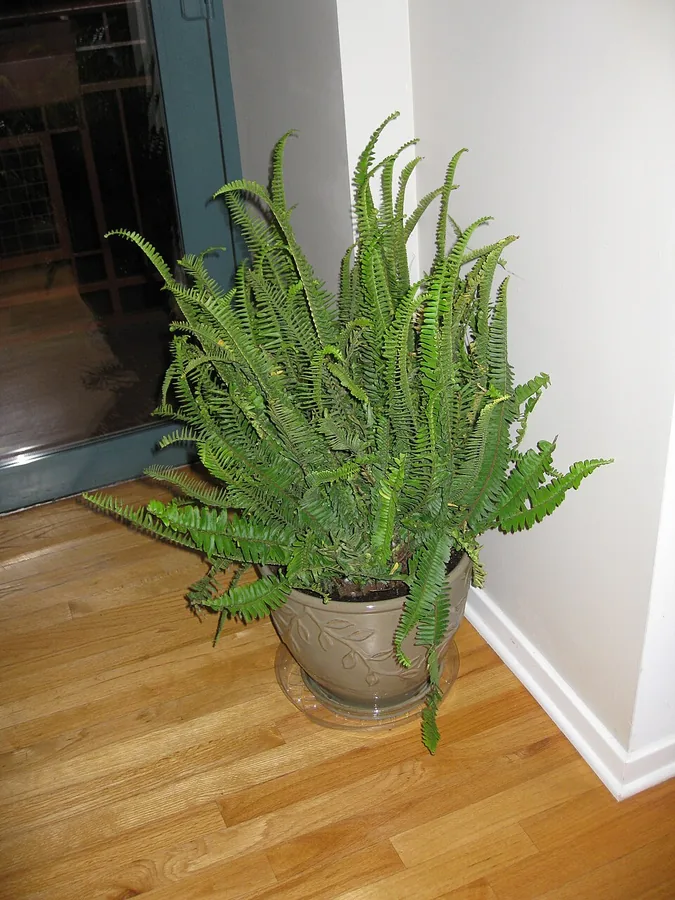
The Kimberly Queen fern is an Australian sword fern that has quietly become a decorator's favorite, and it earns its place. Where the familiar Boston fern spills and sheds, this one holds its fronds stiff and upright, so it reads as a clean, sculptural form rather than a tangle. That composure is what makes it feel at home in a considered room.
Standing a comfortable 2 to 3 feet (60 to 90 cm) tall with a spread to match, it settles a bare corner, anchors a plant stand, or softens the end of a hallway without overwhelming the space. Its moderate pace and long, perennial life mean it becomes a fixture, a green constant you build the rest of the room around.
Placed well, it slots easily into a daily routine: it wants light it can bask in but not bake under, soil that stays evenly damp, and air that isn't parched. Give it a bright, humid spot such as a well-lit bathroom or a kitchen counter and it stays lush and full. Let the setting run dry, and brown tips are the first hint the corner needs a rethink.
Care
The short version: bright indirect light, soil kept evenly moist but never soggy, and humidity on the higher side keep it looking its best. Feed it monthly through the growing season and clip spent fronds at the base to hold that polished silhouette.
Light
Set it in bright indirect light, the soft glow beside an east window or a few steps back from a brighter one. It tolerates partial shade and a little gentle sun, which makes it flexible for placement, but keep it clear of harsh midday glare that scorches the fronds.
Water
Keep the rootball evenly moist, watering once the top inch or so of soil feels dry, which tends to fall every 3 to 7 days. Soak the whole rootball each time and let it drain rather than sit waterlogged, and ease off a little through winter.
Soil
Pot it in a rich, humusy potting mix that drains freely, a peat-based blend worked through with organic matter. It leans slightly acidic, happiest around a pH of 5.5 to 6.5.
Temperature
Ordinary room warmth suits it, ideally between 61°F and 75°F (16°C to 24°C). Keep it away from cold drafts and hot air vents, both of which dry and stress the fronds and take the shine off the display.
Humidity
This fern favors high humidity, around 40% to 70%, more than most rooms hold in winter. A pebble tray, a cluster of plants, or a humidifier keeps the tips from crisping, which is why a bright bathroom often shows it off so well.
Feeding
Feed it monthly from spring to early fall with a balanced liquid houseplant fertilizer at half strength. Let it rest through winter as growth slows, and flush the pot now and then so salts do not build up.
Pruning
No hard pruning is called for. Simply clip away dead, browned, or yellowed fronds at the base as they appear, which keeps the silhouette crisp and makes room for fresh growth.
Repotting
Move it into a slightly larger pot every 1 to 2 years, or sooner if roots circle inside or press out the drainage holes. A spring repot is also the natural moment to divide an overgrown plant.
Size & spacing
Indoors it reaches about 2 to 3 feet (60 to 90 cm) tall with a spread of 2 to 4 feet (60 to 120 cm). Leave breathing room on every side so the upright fronds can arch out and read as a full, graceful shape rather than a plant pressed to a wall.
Troubleshooting
Nearly every complaint this fern has shows up first in the fronds, and most of it comes down to water or air that has run too dry for the setting. Read the cues early and the remedy is a small one. Match what you see below, then adjust the corner before the whole plant loses its looks.
Fronds yellowing as the plant loses its shine
When the fronds turn yellow and the whole plant loses its poise, the trouble is usually soggy soil and root rot from a heavy hand with the watering can. Too little light steers it the same way. Let the surface dry before the next drink, make sure the pot drains, and give it a brighter place to stand.
Fix:
- Let the top of the soil dry slightly and ensure the pot drains freely
- Move to a brighter spot with bright indirect light
- Remove rotted roots and repot into fresh, well-draining mix if rot is present
Sticky sheen, fine webbing, or small bumps on the fronds
Warm, dry rooms tend to draw in spider mites, which leave a fine webbing and a faint stippling across the foliage. A sticky sheen or little brown and white bumps point instead to scale or mealybugs settling in. Rinse the fronds, lift the humidity, and set the plant apart on its own while you wipe the pests away.
Fix:
- Rinse the foliage and raise humidity to discourage mites
- Wipe scale and mealybugs off or dab with insecticidal soap
- Isolate the plant until the infestation is controlled
Brown, crisp tips spoiling the frond edges
Those crisp brown tips are the plant telling you the air has gone too dry, or the rootball ran short of water between drinks. A quiet buildup of fertilizer salts can singe the edges as well. Lift the humidity, settle into a steadier watering rhythm, and rinse the pot through from time to time so the salts move on.
Fix:
- Raise humidity with a pebble tray, grouping plants, or a humidifier
- Keep the rootball evenly moist and water more consistently
- Flush the pot occasionally to leach out accumulated fertilizer salts
- Trim off badly browned fronds at the base
Toxicity
A reassuring note for households with animals: this is a true fern with nothing toxic in it. The ASPCA lists Nephrolepis ferns as non-toxic to cats and dogs, and the same holds for other household pets. The worst a curious animal risks from a mouthful of the fibrous fronds is a brief, mild stomach upset, which leaves it free to sit anywhere in the home.
Safe for
People · Cats · Dogs · Horses · Rabbits · Livestock · Birds
Cats None
A cat can share the room with this fern in complete comfort. Should one nibble a frond out of curiosity, there is no poisoning to fear, and even a generous fibrous mouthful tends to bring only a little drooling or a hairball-style upset that clears on its own.
Dogs None
With no toxins in play, a dog can investigate a frond without any harm. A big helping of the stringy foliage might loosen the stomach for a short while, but it settles quietly without treatment.
Horses Safe
This true fern holds nothing that would poison a horse, so a passing graze is simply nothing to trouble over.
Rabbits Safe
A rabbit may nibble the fronds in safety. Since they are hardly a staple, keep it to the occasional taste alongside the usual hay and greens.
Livestock Safe
Goats, sheep, and cattle take no poisoning from this fern, whether they reach a container specimen indoors or one grown outdoors.
Birds Safe
Pet birds can perch among and pick at the fronds without risk, an easy grace note in a home shared with parrots or finches.
People Safe
This fern is safe to handle and grow around adults and children alike. It is not raised for the table, so there is no edible part to seek out, only a plant that is harmless to live with.
Although non-toxic, the fibrous fronds can cause mild, temporary stomach upset if a pet eats a large amount.
Varieties
This fern arrives as a single named selection rather than a spread of cultivars, so there is just the one to know when you are choosing a plant for a room.
'Kimberly Queen'
This single clonal selection of Nephrolepis obliterata fills the benches of nearly every garden center, favored for the stiff, upright sword-shaped fronds that keep their poise and leave far less litter behind than the arching Boston fern.
How to propagate
Adding more Kimberly Queen ferns to a home costs nothing and takes little effort, since the plant divides cleanly and spreads on its own by runners.
DivisionEasy
Spring to early summer, ideally at repotting · 4 to 8 weeks
The most elegant way to gather more of these ferns is by division, timed to spring or early summer when a repot is due anyway. Ease the rootball into sections that each carry a share of roots and several fronds, pot them up on their own, and let them settle over 4 to 8 weeks. Left to their own devices, sword ferns also send out runners and quietly widen their reach.
Myths
Kimberly Queen fern is poisonous to cats and dogs.
The ASPCA lists Nephrolepis ferns as non-toxic to both cats and dogs. The plant carries no poisoning risk at all, and the most a pet meets after a large bite of frond is a brief, harmless spell of stomach upset.
Like any fern, it belongs in a dark, shady corner.
Sword ferns in this group welcome far more light than the Boston fern does. A bright morning window or a spot of dappled sun flatters them, so long as they are spared the harsh midday glare that scorches the fronds.