Houseplant · Acanthaceae
Nerve Plant
Fittonia albivenis
Keep it warm, humid, and evenly moist, and the nerve plant rewards a room with leaves stitched in living color.
Bright indirect
Every 3–4 days
61–75°F · 16–24°C
USDA 11–12
Overview
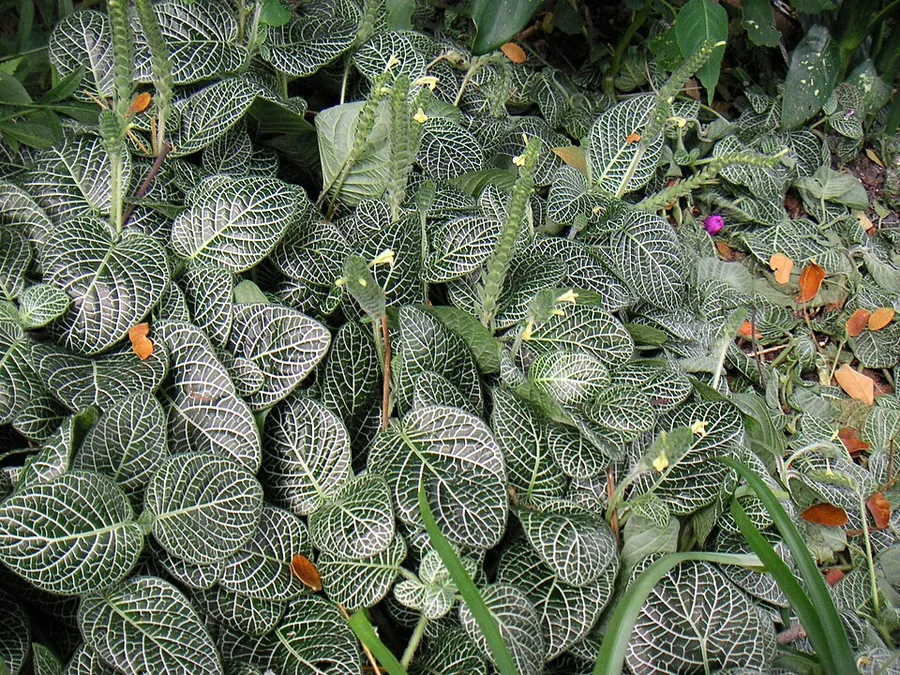
The nerve plant makes its case at close quarters, a low cushion of foliage laced with veins of white, pink, or red over deep green. A member of the acanthus family, it hails from the rainforest floor of Colombia and Peru, and that heritage shapes the kind of corner it likes to call home. It keeps to a small scale, creeping rather than climbing and rising to just 3 to 8 inches (8 to 20 cm), which suits a tabletop, a shelf, or the front of a planted arrangement.
It has a flair for the theatrical that becomes part of its charm in a room. Should the soil dry too far, the whole plant wilts and faints, foliage sinking as if the day has undone it. A drink revives it within hours, composure restored. That habit gives the plant a personality most greenery lacks, and it also sets the rhythm of caring for one, built on steady moisture and humid air.
It asks for little space and gives a room a great deal of quiet character. The slow, low growth belongs in a glass terrarium on a side table, on a humid bathroom shelf, or gathered with other plants that enjoy the same damp air and share a daily misting. Settle the light and water and it fills its container with a soft, patterned carpet that anchors a considered corner.
Care
The short version: bright indirect light, soil kept evenly moist but never soggy, and humid air around 16°C to 24°C (61°F to 75°F). Feed monthly through the growing season and give it a place well away from direct sun and cold drafts.
Light
Set the nerve plant in bright but indirect light, the soft glow near a north- or east-facing window. It accepts medium light and a little shade, though direct sun scorches the thin leaves, so keep the rays off it and let a sheer or a bright wall carry the light.
Water
Keep the compost evenly moist but never waterlogged, which lands at watering about twice a week. Let it dry too far and it faints, though a drink soon restores it. Ease well back in winter, since sodden soil brings on yellowing and root rot.
Soil
Give it a moisture-retentive yet well-drained mix, a peaty blend or a soil-based compost. The soil should hold water without ever staying sodden, so drainage matters as much as moisture to the look of the plant.
Temperature
Ordinary room warmth suits it, ideally 61°F to 75°F (16°C to 24°C). Keep it above that lower mark and clear of cold drafts, which it will not forgive.
Humidity
This is a rainforest plant that wants high humidity, and dry air is its most common undoing. Gather it with other plants, stand it on a pebble tray, or house it in a terrarium, where the moist air keeps the leaves from crisping.
Feeding
Feed monthly through spring and summer with a balanced liquid houseplant fertilizer, often at half strength. Ease off or stop over winter, when growth quiets and the plant asks for less.
Pruning
Pinch back the stem tips now and again to keep the plant bushy and compact rather than leggy, which holds its tidy shape on a shelf. Remove any faded or damaged leaves as you go.
Repotting
Slow to grow, the nerve plant sits happily in the same pot for several years before it needs moving. Repot only every few years, or sooner if roots begin circling the pot, growth stalls, or the soil dries out unusually fast.
Size & spacing
Expect a low, spreading plant just 3 to 8 inches (8 to 20 cm) tall but 6 to 18 inches (15 to 46 cm) across. That trailing habit makes it a fine groundcover beneath taller houseplants or a soft carpet across the floor of a terrarium.
Troubleshooting
Almost every complaint a nerve plant raises comes back to water, humidity, or light. The foliage tells the story, so a glance usually names the cause. Find the match below and adjust the setting before a small lapse settles into a lasting one.
Stems and roots turn soft and dark
Soft, darkened roots in a waterlogged, sour-smelling pot are the signature of root rot, the price of overwatering or drainage that fails. Ease back on the water and open up the drainage without delay. Where the trouble has taken hold, move the plant into fresh well-drained mix and trim away every soft root before returning it to its place.
Fix:
- Reduce watering and improve drainage
- Repot into fresh well-drained mix, trimming rotted roots
Leaves crisp at the edges and shed
Browning, brittle leaves usually announce that the room has turned too dry for a plant with rainforest roots. Cold drafts and direct sun only hurry the decline. The remedy is a more considered setting: raise the humidity with a pebble tray, a terrarium, or a gathering of plants, and give it a steady spot well out of the sun.
Fix:
- Raise humidity (terrarium, pebble tray, or grouping plants)
- Move away from drafts and direct sun
A yellow cast creeps across the leaves
A yellow cast most often traces back to overwatering, where sodden soil leaves the roots with no air to breathe. A corner that has slipped into shadow can dull the color too. Let the mix drain, water with a lighter hand, and give the plant a brighter indirect spot if its setting has grown dim.
Fix:
- Allow soil to drain and reduce watering frequency
- Move to a brighter spot with bright indirect light
The plant swoons and drops all at once
That sudden swoon is the nerve plant's signature thirst cue, prompted when the soil runs dry, and it reads far more theatrical than it is. A thorough watering brings the leaves back to attention within hours. Keep it away from drafts and direct sun while it settles, and the display passes as quickly as it arrived.
Fix:
- Water thoroughly until evenly moist
- Move out of drafts and away from direct sun
Bleached, sun-struck patches on the leaves
Direct sun bleaches these fine leaves, and the mark lands squarely on the side that faces the window. The fix is a gentler placement: draw the plant back into bright but indirect light beside a north- or east-facing window, where the glow reaches it and the harsh rays never do.
Fix:
- Move to bright indirect light near a north- or east-facing window
Toxicity
A welcome note for homes with pets and children alike. The nerve plant carries no known toxins, so it takes its place safely among cats, dogs, and small children. The most a determined chewer risks is a brief, mild stomach upset from tasting any plant.
Safe for
People · Cats · Dogs · Horses · Rabbits · Livestock · Birds
Cats None
A household cat can share the room with ease, as the ASPCA lists the nerve plant as non-toxic to cats and a stray nibble asks for no concern. Should one overindulge on any houseplant, the most to expect is a brief, passing upset stomach.
Dogs None
Dogs settle in just as comfortably, with the ASPCA finding no toxins in this plant. A curious chewer risks little beyond a moment of mild digestive fuss.
Horses None
The ASPCA counts horses among the animals it lists as safe in the company of Fittonia.
Rabbits None
A rabbit shares the space without hazard, since neither leaves nor stems hold anything harmful. A few incidental bites leave no mark.
Livestock None
A small indoor plant like this rarely enters the world of grazing animals, and it carries no toxin that would trouble them in any case.
Birds None
Pet birds may share the room or perch close by in perfect safety, the foliage holding nothing toxic.
People None
NC State tags the nerve plant as non-toxic to people, which makes it a graceful, worry-free choice for a home that includes small children.
Varieties
Nerve plants divide into two main groups by the color of their veins. The choice comes down to the palette you want a room to wear.
Argyroneura Group
These cultivars thread bright white veins over deep green leaves, the cool, luminous look that lent the plant its silver nerve name.
Verschaffeltii Group
This group turns the veins red or pink, lending the leaves a warmer, more romantic tone.
How to propagate
The nerve plant multiplies with ease, and its creeping stems quietly do part of the work. A few cuttings or the division of a crowded clump are all it takes to fill another pot.
Stem cuttingsEasy
Spring and summer · A few weeks to root in a humid environment
Stem cuttings offer the simplest way to expand a collection, and spring or summer is the season to begin. Take a piece about 2 inches (5 cm) long just below a pair of leaves, then settle it into moist compost within a humid propagator or a sealed bag, where it takes hold over a few weeks. The creeping stems oblige further, rooting wherever they rest against the soil.
DivisionEasy
Spring · Establishes quickly once potted
A full, crowded clump lends itself to division in spring. Ease the rootball into sections, leaving three or more stems on each, and pot them up on their own. Divided plants find their footing and resume growth without delay.
Myths
A nerve plant that has collapsed and fainted from dryness is dead and should be thrown out.
There is no need to part with it, since that dramatic swoon is only the plant asking for water, not a farewell. Offer it a good drink and the leaves usually firm right back up within hours. Few houseplants stage a recovery quite so gracious or so forgiving.
Fittonia is toxic to cats and dogs like so many tropical houseplants.
The nerve plant sits apart from that worry. The ASPCA lists it as non-toxic to dogs, cats, and horses, so it belongs easily in a home shared with pets.