Houseplant · Acanthaceae
Zebra Plant
Aphelandra squarrosa
Graphic striped foliage and a golden bloom, a statement plant that asks only for the warm, humid air it favors.
Bright indirect
64–81°F · 18–27°C
USDA 11–12
4–6 ft · 1.2–1.8 m
Overview
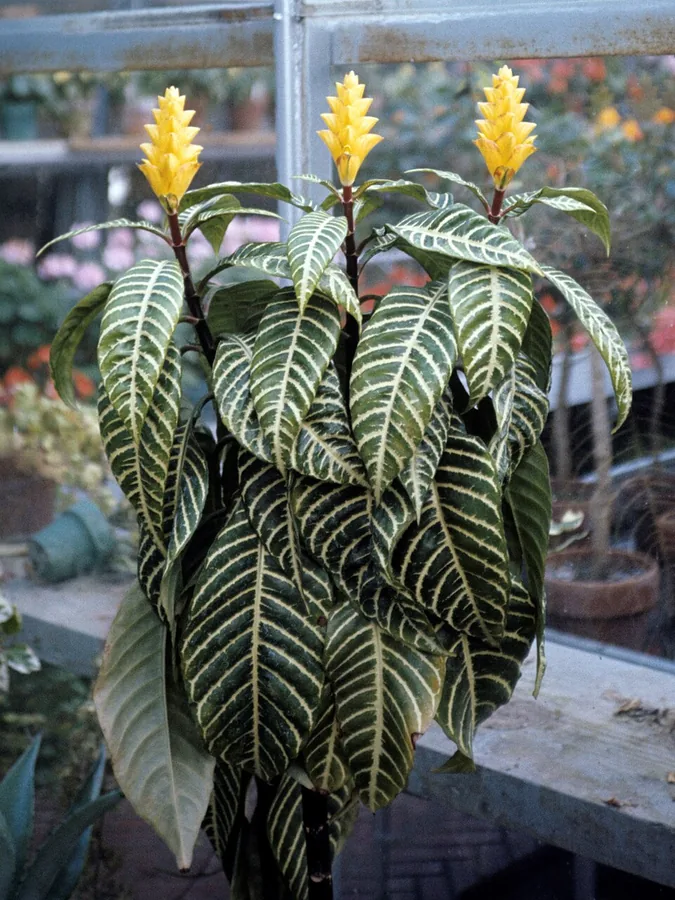
Few houseplants make a statement as effortlessly as this one. The dark, striped foliage carries a graphic, almost designed quality that anchors a shelf or a side table before it ever blooms. When it does flower, a tall golden spike rises from the center and holds court for weeks, a natural focal point in any room.
That drama comes from an origin worth remembering when you place it. This is a plant of the warm, humid Brazilian forest floor, and it looks for that same moist, humid air in the home, which is why the setting matters as much as the plant. Sited in dry air, or watered on an uneven rhythm, it sheds its lower leaves and loses its poise.
Give it the right corner and it rewards the attention, though it is a plant for the committed rather than the casual. Slow-growing and short-lived, it wears its demanding label openly. Many who love the look keep a few cuttings coming along, so the display carries on once the original begins to fade.
Care
The short version: bright indirect light, a warm room above 65°F (18°C), and humidity kept high. Hold the soil evenly moist all year without soaking or drying it, and feed lightly through the growing season.
Light
Position it where bright indirect light falls, a step back from a sunny window rather than in the glare. It will hold up in a shadier corner, yet the striping stays most striking, and the plant most presentable, where soft daylight lingers through the day.
Water
A plant this expressive asks for a steady watering rhythm, the soil kept evenly moist the year through, never parched and never sodden. Once the bloom has passed and it settles into its rest, scale back a little without stopping. Let the routine lapse in either direction and the lower leaves brown, dulling the display.
Soil
Set it in a peaty, free-draining mix with plenty of organic matter, the kind of foundation that keeps it looking its best. It prefers a gentle acidity, a pH at or below 6.0, so a blend intended for acid-loving plants is the tasteful choice.
Temperature
Keep the room comfortable, between 64°F and 81°F (18°C to 27°C), and never below 65°F (18°C). Think of it as a warm-room resident, since a chilly hallway or a draughty threshold quickly costs it leaves.
Humidity
Humidity is where this plant earns its diva reputation, and where its placement really counts. It wants high humidity, more than a heated living room offers, so a bathroom or a kitchen suits it, or a tray of wet pebbles beneath the pot to lift the moisture around it.
Feeding
Through the growing season, from late winter on, offer a dilute liquid feed every couple of weeks. A light, regular touch keeps the foliage looking rich, where an occasional heavy dose does more harm than good.
Pruning
After the yellow spike fades, cut the plant back to around 12 to 18 inches (30 to 46 cm), leaving about two rows of leaves. The trim looks bold on the day, but it keeps the plant shapely rather than leggy, and full where it counts.
Repotting
Refresh its pot once a year to keep it thriving as a centerpiece. Roots circling the container, soil that dries faster than before, and growth that stalls are its way of asking for a larger home.
Size & spacing
In time it can reach 4 to 6 feet (122 to 183 cm) tall and 4 to 5 feet (122 to 152 cm) across, though its slow pace and a regular trim usually keep it a more manageable statement piece. Give it a little breathing room so the shape reads cleanly in the space.
Troubleshooting
Most of the time a zebra plant that looks off is telling you the room is too dry or too cold for it. The foliage shows it first, at the leaf tips and along the base. Match what you see below, then adjust the setting before the display suffers further.
Lower leaves browning and falling from the base
When the bottom leaves brown and drop, dry air is usually the reason, as this forest-floor plant struggles in the parched warmth of a heated room. A cold draught or soil left fully dry will thin the base as well. Raise the humidity, keep the room above 65°F (18°C), and water before the mix dries out to keep it looking full.
Fix:
- Raise humidity by setting the pot on a tray of wet pebbles or moving it to a bathroom
- Keep temperatures above 65°F (18°C) and away from cold drafts
- Maintain consistent soil moisture without letting it fully dry or waterlog
Brown, crisp tips on otherwise handsome leaves
When only the tips and edges brown while the plant is otherwise in good form, the air around it has gone too dry. A tray of wet pebbles beneath the pot, or a move to a humid room such as a bathroom, settles the problem, and the fresh growth comes in unmarked.
Fix:
- Increase humidity around the plant with a pebble tray or humid room
Leaves scorching beside a vent or doorway
Streams of hot or cold air draw moisture from the leaves faster than the plant can recover, leaving a scorched edge that spoils the display. Move it clear of vents, doorways, and draughty corners, and give it a settled, humid spot where it can look its best.
Fix:
- Relocate away from heating/cooling drafts to a humid, stable spot
Toxicity
For a home shared with animals, this is an easy one to live with. The ASPCA lists the zebra plant as non-toxic to cats, dogs, and horses, and no known toxins put the other animals or people at risk. A stray nibble does no harm, though it earns its keep as something to look at rather than taste.
Safe for
People · Cats · Dogs · Horses · Rabbits · Livestock · Birds
Cats None
Cats can share a room with it safely. The ASPCA lists the zebra plant as non-toxic to them, so a curious nibble is no cause for concern.
Dogs None
A dog that mouths a leaf comes to no harm, as the ASPCA rates the plant non-toxic for them.
Horses None
Horses are equally in the clear, the ASPCA including the zebra plant on its non-toxic list for them.
Rabbits None
With no toxin in its leaves, a rabbit that takes a taste should be fine, though it is a decorative plant rather than a snack for one.
Livestock None
Grazing animals face no poisoning risk from this houseplant, which in practice rarely finds its way near them.
Birds None
A pet bird can perch among the leaves or peck at them with no toxic effect.
People None
It holds no known toxins, so a child who tastes a leaf is safe, even though this is a plant to display rather than to eat.
Varieties
The zebra plant styled in most homes is simply the straight species, and that is the one you will come across when shopping.
Aphelandra squarrosa
Its dark green leaves are marked with bold white veins that give the whole plant its zebra-striped look, and in bloom a long-lasting spike of yellow bracts rises above the foliage.
How to propagate
Because this beauty does not linger for years, taking a cutting is part of keeping the look alive. Handily, it roots from the very stems you remove when you prune.
Stem cuttingsModerate
Use cuttings taken from stems pruned after flowering · Several weeks to root in warm, humid conditions
The stems removed after flowering are just what you root, and given warmth and steady humidity they take over several weeks. It is a habit worth keeping, since the plant grows slowly and is short-lived, so a cutting or two keeps a fresh specimen ready to step into the display as the original fades.
Myths
The zebra plant must go through a strict winter dormancy or it will not survive.
There is no dormant season it is obliged to keep. After flowering it simply prefers a quiet rest, which amounts to easing off the watering for a spell. Ease back, never stop, or the roots dry out and the lower leaves drop, taking the shape with them.