Ornamental · Aristolochiaceae
Wild Ginger
Asarum canadense
The understated groundcover that turns a shaded corner into a scene of cool woodland calm.
Full shade
Every 3–7 days
USDA 4–6
6–12 in · 15–30 cm
Overview
Wild ginger belongs to the shaded, restful parts of a garden, the corners a home relaxes into rather than shows off. A low native of eastern woodlands, it lays down a smooth green carpet of heart-shaped leaves that reads as calm underfoot and quiet to the eye. Its name nods to a faint ginger scent in the root, though it sits in the birthwort family and keeps no company with the kitchen spice. Staying under 6 to 12 inches (15 to 30 cm), it settles low and never competes for attention.
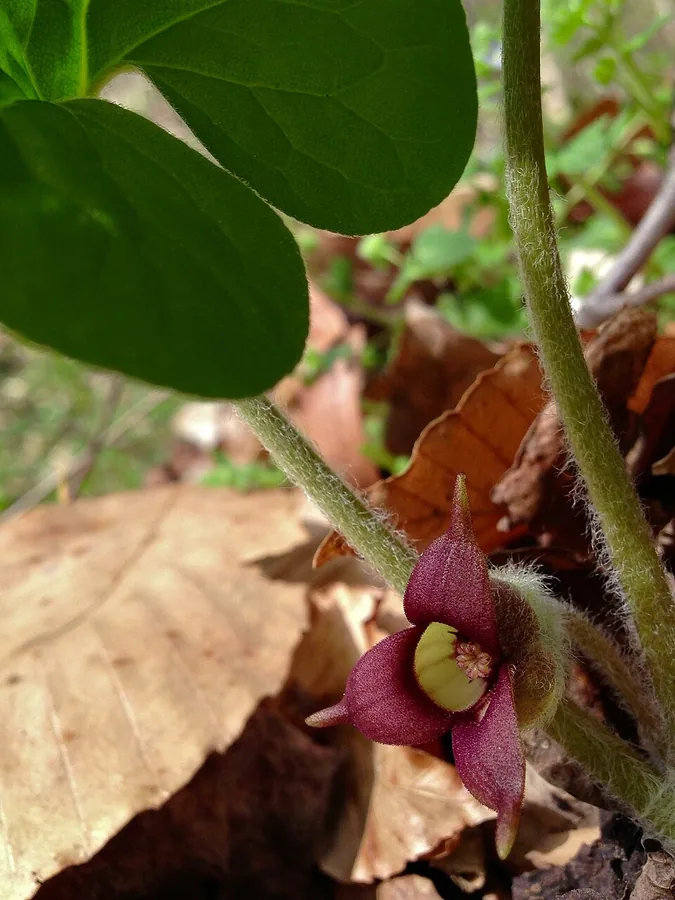
There is a subtle spring moment to it, a scattering of brownish-purple, bell-shaped flowers held at soil level and half-hidden beneath the leaves, the kind of detail a slow walk rewards. Ants see to the seeds, carrying them off so the planting broadens on its own. Given a season or two, a single patch drifts into a wide, unbroken sweep that grounds the whole composition.
Style it as a living green floor beneath trees and taller shade plantings, the layer that pulls a woodland border together. Give it the damp, rich, dappled spot where lawn looks tired and most flowers lose interest, and it earns its keep as steady, low-maintenance texture. One note sits apart from all the styling: for all the old habit of drying the root for flavoring, no part of wild ginger is safe to eat.
Care
The short version: set it in full to part shade with rich, humusy soil and steady moisture all season, since this is a plant that will not sit through a drought.
Light
Wild ginger is a plant for the shaded rooms of a garden, at home in full to part shade under a leafy canopy. A little morning or partial sun suits it where the soil stays moist, but strong sun dries it out and the display suffers, so keep it to the cooler, dimmer corners.
Water
This is one plant that asks for constant moisture, as it has little patience for drought. Water it through dry spells so the ground never bakes, roughly every 3 to 7 days depending on heat and shade, and fold that into a regular garden round. It takes an occasional wet patch in stride.
Soil
Give it the rich, humusy ground of a woodland floor, moisture-holding yet still draining, and it settles in beautifully. It is easy about acidity too, content anywhere from a pH of 4.5 to 7.0, which suits most established shade beds.
Temperature
A dependable plant for demanding climates, it holds through winters down to about -29°F (-34°C) and summers up to 84°F (29°C). The deciduous leaves bow out in fall and return each spring, a quiet seasonal rhythm rather than a chore.
Humidity
There is no humidity figure to fuss over, since ordinary outdoor air suits it. What sets the mood is steady moisture at the roots and the cool, sheltered feel of a shaded bed, the very conditions this plant makes its own.
Feeding
Feeding barely enters the routine when the soil is decent. A single spring top-dress of leaf mold or compost is all it asks, feeding the ground slowly and echoing the leaf litter of its native woodland setting.
Pruning
Upkeep stays light. Lift away any tattered or damaged leaves when they spoil the look, and let the rest fade on its own through fall, since the foliage is deciduous by nature.
Repotting
As a groundcover grown in the earth rather than a container, it sidesteps repotting altogether. Every few years an established colony can be lifted and divided if it crowds itself or thins through the middle, a good moment to refresh the planting.
Size & spacing
It keeps to a low 6 to 12 inches (15 to 30 cm) in height, with each plant reaching 6 to 18 inches (15 to 45 cm) across. Space with that spread in mind and the plants close ranks over time into an unbroken green floor.
When to plant
The planting rhythm is an easy one to build into a garden year. Divisions go in during spring or fall while the soil stays cool and damp, it holds through zones 4 to 6, and its discreet flowers arrive at ground level in early to mid spring.
Northern hemisphere
Southern hemisphere
Typical months for a temperate climate: start earlier in warm zones, later where spring frosts linger.
- Plant: Spring or fall
- Harvest: Brownish-purple bell-shaped flowers in early to mid spring (April-May), hidden at ground level beneath the foliage.
Hardiness
USDA hardiness zones: 4–6
Temperature: down to -34°C
Troubleshooting
Wild ginger keeps a low profile, and its problems are few. Most trace back to slugs drawn by the damp shade or to soil left too dry, and each announces itself plainly enough to catch early.
A planting that wilts, yellows, and loses its luster
With its poor drought tolerance, wild ginger points first to dry soil when it starts to fade. Short of water, it flags and browns along the leaf edges, always worse in the sunnier, drier corners of a bed. A deep watering brings it back, a leaf-mold mulch keeps the moisture close, and a move to a shadier, damper spot settles the matter for good.
Fix:
- Water deeply to restore even soil moisture
- Mulch with leaf mold or compost to retain moisture
- Relocate to a shadier, moister site if needed
Ragged holes spoiling the look of the leaves
The culprits are slugs and snails, most active in damp shade and after rain. Their slime trails give them away, and a night check under the leaves finds them at rest. Gather them by hand in the evening, clear the leaf litter that shelters them, and reach for iron-phosphate bait when the damage begins to mar the planting.
Fix:
- Hand-pick slugs and snails in the evening
- Remove leaf litter and debris that shelter them
- Use iron-phosphate slug bait if damage is heavy
A rash after handling the foliage bare-handed
Some gardeners find their skin reacts with contact dermatitis after brushing the foliage, showing as redness or itching where it touched, and it eases once the contact ends. A wash with soap and water clears it, and a pair of gloves keeps the next handling or division comfortable.
Fix:
- Wash the affected skin with soap and water
- Wear gloves when handling or dividing the plant
Toxicity
For all its gentle presence in a border, this is a plant to admire and never taste. Every part carries aristolochic acid, a compound that harms the kidneys and is a known carcinogen, so the old habit of seasoning food with the root has no place in the garden today. Keep it clear of people, pets, and grazing animals, and reach for gloves before handling the leaves, which can leave skin irritated.
Toxic to
Cats · Dogs · Horses · Rabbits · Livestock · Birds · People
Cats Caution
A cat that chews the leaves or roots may drool and suffer an upset stomach. The real concern lies deeper, in the aristolochic acid every part carries, which damages the kidneys, so a curious cat is best kept well away.
Dogs Caution
For a dog, a mouthful usually means mouth irritation and a queasy stomach. Because the plant holds aristolochic acid, a known kidney toxin, any genuine mouthful is reason enough to call the vet.
Horses Caution
Horses seldom seek it out in the shade it favors, yet the aristolochic acid in its leaves and roots is hard on the kidneys. It has no place turning up in pasture or hay.
Rabbits Caution
This is not a green to set before a rabbit. The aristolochic acid running through every part is a kidney poison, and even a small nibble is worth avoiding.
Livestock Caution
Cattle, goats, and sheep take in the same kidney-damaging aristolochic acid should they browse it. Fence it away from grazing animals and keep it out of cut forage.
Birds Caution
Poultry and other birds should never pick at the leaves or rhizomes, which carry the carcinogenic, kidney-toxic aristolochic acid. No part of it is safe for them to eat.
People Caution
For all the old habit of using it as a seasoning, no part of wild ginger belongs on a plate. The aristolochic acid within harms the kidneys and is a known human carcinogen, and even handling the leaves can irritate the skin.
Wear gloves when handling, dividing, or pruning to avoid skin irritation, and keep the plant and its roots from being eaten by people or pets.
Helpline numbers

United States
ASPCA Animal Poison Control: (888) 426-4435 (fee applies)
Poison Control: (800) 222-1222



Canada
Poison Centres: 1-844-764-7669
Varieties
There is a pleasing simplicity to the choice here, since wild ginger is grown as the straight species and offers just one plant to know.
Asarum canadense (species)
This is the native deciduous species offered to gardeners, recognized by its hairy, heart-shaped leaves and a brownish-purple, three-lobed bell flower resting hidden at ground level.
Companions
Wild ginger pairs naturally with the other plants of the shaded woodland floor, the trilliums, violets, and ferns that want the same damp, rich, dappled ground.
Plant near
Trillium grandiflorum: Shares the same moist, shady woodland niche and naturalizes well alongside wild ginger as a groundcover.
Viola pubescens: A native woodland companion that thrives in the same part-to-full shade and rich soil conditions.
Ferns and woodland wildflowers: Combine well in shade and woodland gardens where wild ginger forms a low groundcover layer.
How to propagate
Expanding a planting is an unhurried pleasure, helped along by the plant itself, which does much of its own spreading through creeping rhizomes.
DivisionEasy
Spring or fall · One to two growing seasons
Division is the most graceful and reliable way to widen a planting. Lift an established clump in spring or fall, then part the rhizomes so each section keeps a few growth buds. Returned to the ground, the divisions settle and fill out over the next one to two growing seasons.
LayeringModerate
Growing season · One growing season once rooted
Much of this the plant manages on its own. Its creeping rhizomes root as they travel across the ground through the growing season, drawing the planting into ever-wider colonies. Once a length has rooted, usually within a single season, it can be cut free and lifted as a new plant.
SeedDemanding
Sow fresh seed in summer to fall · Several years to reach groundcover size
Seed is the patient gardener's route, slow but quietly rewarding. Sow it fresh from summer into fall, since the seeds carry an oily elaiosome that ants gather and scatter in the wild. Count on several years before a sown patch fills in thickly enough to read as groundcover.
Myths
Wild ginger makes an elegant wild substitute for culinary ginger because the root shares its scent and taste.
The resemblance is only skin deep: Asarum canadense is no relation to true ginger and carries aristolochic acid, a documented kidney toxin and known carcinogen. That the root was once dried as a seasoning is a matter of history, not of safety. No part of the plant should be eaten.