Houseplant · Strelitziaceae
Bird of Paradise
Strelitzia reginae
Hand it all the sun you can spare and a few patient years, and the crane flower answers with one of the most arresting blooms a room can hold.
Full sun
50–81°F · 10–27°C
USDA 10–12
3–5 ft · 0.9–1.5 m
Overview
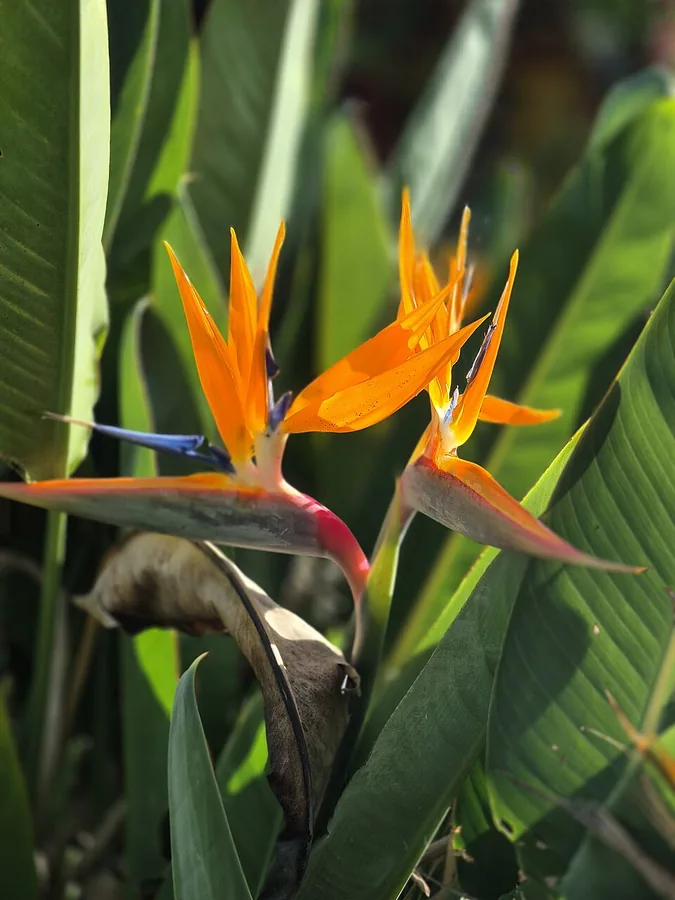
The bird of paradise lives up to its name the instant it opens, when an orange-and-blue bloom emerges from a beak-shaped bract that genuinely reads as a crane in flight. A clump-forming perennial out of South Africa, it is grown across the globe for those bold flowers and its sweeping, banana-like leaves. It settles in best as a houseplant, yet a frost-free garden suits it just as well.
Light and time are the price of entry. This is a plant that craves as much sun as a room can offer, and a shadowy corner will leave it bloomless no matter how careful the watering. It also keeps its own pace. A young specimen may spend several years filling out before it flowers, so the payoff belongs to whoever is willing to wait.
Once it has found its footing, the routine is easy to keep. Even warmth, moist air, and a pot it has all but outgrown keep it content, while a waterlogged mix and poor light are the two real pitfalls. Manage those, and the plant largely looks after itself.
Care
The short version: set it in the brightest spot in the house, keep the soil moist yet never sodden through the growing season and drier come winter, hold the air humid, and let it stay a little pot-bound to draw out the blooms.
Light
Offer this plant as much direct sun as a room allows, ideally a south-facing window or the brightest corner of the garden. It will sit in partial shade, but light is what sets the flowers in motion, and a dim spot leaves you with handsome leaves and no blooms at all.
Water
All through the warm growing season, water generously and hold the mix moist yet never sodden. Indoors, let the surface of the potting mix dry a touch between drinks, and ease right back in winter. A waterlogged pot that rots the roots is the surest way to lose it.
Soil
Set it in a fertile, well-drained loamy mix carrying plenty of organic matter. Here drainage outranks everything else, since lingering moisture is exactly what brings on root rot.
Temperature
It feels most at home between 50°F and 81°F (10°C to 27°C) and has no tolerance for frost. Move container plants inside before the cold sets in, and keep it from sitting below about 50°F (10°C) if you want it to carry on growing.
Humidity
This plant favors moist air, around 50% to 60%. In dry indoor rooms, winter most of all, mist it or rest the pot on a tray of damp gravel to spare the leaf edges from browning.
Feeding
Feed only across spring and summer with a water-soluble houseplant fertilizer, every two weeks in spring and as often as weekly in summer. Pause through fall and winter, and keep a light hand, since heavy feeding favors leaves over flowers.
Pruning
Pruning stays minimal. Take off spent flower stalks and any dead or badly shredded leaves, and wipe the foliage clean with a soft cloth. Pass on leaf-shine products, which can coat and clog the leaves.
Repotting
Repot only when there is no choice, because this plant flowers better when pot-bound and an oversized container simply postpones the blooms. Refresh the top few centimeters of soil each year, and step it up only in early spring once roots have filled or cracked the pot.
Size & spacing
Indoors it climbs to roughly 3 to 5 feet (90 to 150 cm) tall and fans out about 2 to 4 feet (60 to 120 cm) wide, so leave a mature clump enough room for its broad leaves to arch into the space.
Troubleshooting
Nearly every bird of paradise problem comes back to light, water, or cold. The leaves are the first to flag it, so match your symptom below and step in before a minor lapse turns into a setback.
Limp, yellowing leaves above sodden soil
A plant that sags in a mix that never seems to dry usually points to root rot, the result of a heavy soil or one too many waterings. Lift it from the pot, trim off anything brown and soft, and settle it into fresh, free-draining mix. After that, wait until the surface of the mix has dried before watering, and keep it on the lean side through the cooler months.
Fix:
- Remove from pot and cut away rotted roots
- Repot into fresh, fast-draining mix
- Water only after the mix has dried slightly and ensure good drainage
Darkened, drooping foliage after a chill
Frost is something this plant cannot take at all, and leaves caught near freezing go black, water-soaked, and slack. Carry containers inside ahead of the first frost, then cut away the spoiled leaves once the chill has lifted. For steady growth, keep it from sitting below roughly 50°F (10°C).
Fix:
- Bring container plants indoors before first frost
- Remove damaged foliage once danger of frost has passed
No flowers, year after year
The reason is nearly always too little light, because a grown plant wants something close to full sun before it will lift those crane-shaped blooms. The other answer is simply time: a seedling or a recent division needs years to reach blooming size. Hold off on moving it to a bigger pot, since it performs best left slightly pot-bound, and pull back on feeding if all you are getting is leaf after leaf.
Fix:
- Move to the brightest possible spot with several hours of direct sun
- Allow the plant to mature and become pot-bound rather than repotting
- Replace only the top layer of soil yearly instead of up-potting
- Reduce fertilizer if foliage is lush but flowers are absent
Webbing, pale fuzz, or dark bumps across the leaves
Grown inside, this plant attracts the familiar sap feeders. Faint webbing with speckled leaves signals spider mites, cottony white tufts give away mealybugs, and little brown bumps along the stems and leaves mean scale. Give the leaves a wipe, follow with insecticidal soap or horticultural oil, and set the plant aside from the rest until things settle.
Fix:
- Wipe leaves with a soft cloth
- Treat with insecticidal soap or horticultural oil
- Isolate affected plants and repeat treatment as needed
Brown, crispy edges along the leaves
Parched indoor air is the usual reason, and it shows up worst in winter once the heating kicks on. Uneven watering that allows the mix to dry right out only adds to it. Push the humidity toward 60% with a light misting or a tray of damp gravel, settle into a regular watering rhythm, and keep up the feeding while the plant is in growth.
Fix:
- Raise humidity by misting or standing the pot on a tray of damp gravel
- Water consistently so the mix does not dry out completely
- Feed regularly during the growing season
Big leaves tearing along the veins
There is nothing wrong here. The broad paddle leaves tear along their veins by design, letting a gust slip through rather than fighting it like a sail. The plant is perfectly fine. Should you prefer the leaves to stay intact, give an outdoor plant a more sheltered position.
Fix:
- No treatment needed - splitting is a natural response
- Move outdoor plants to a more sheltered spot if intact foliage is desired
Toxicity
This plant is mildly toxic, with the irritating compounds gathered in the fruit and seeds. A curious pet that takes a bite is far more likely to end up with a sour stomach than anything serious, but the flowering stalks and any fallen seeds are still best kept out of reach. Take care not to mistake it for the far more poisonous shrub that goes by the same common name.
Toxic to
Cats · Dogs · Horses · Rabbits · Livestock · Birds · People
Cats Mild
A cat that samples the fruit or seeds may start drooling, bring it back up, and grow listless. The episode tends to clear on its own, though a vet call is wise if it lingers.
Dogs Mild
Look for a touch of nausea, a little vomiting, and a generally tired dog. Because the irritants sit in the fruit and seeds, a chewed leaf matters much less.
Horses Mild
A horse that finds the fruit or seeds may turn queasy and flat. Keep the flowering stalks well out of reach in any grazing area.
Rabbits Caution
Those gut irritants that trouble cats and dogs are no kinder to a rabbit. Keep it from grazing on the plant, and sweep away any seeds that fall.
Livestock Caution
The fruit and seeds can leave goats, sheep, and cattle with an unsettled stomach. A passing nibble is seldom grave, yet the plant is no kind of forage.
Birds Caution
Keep pet birds away from the seeds and fruit entirely. Treat the whole plant as off-limits and put out safe greens in its place.
People Caution
Nothing on this plant is meant for the table, and the fruit and seeds can turn the stomach. Make sure small children do not slip the seeds into their mouths.
Toxic principles are concentrated mainly in the fruit and seeds
Helpline numbers

United States
ASPCA Animal Poison Control: (888) 426-4435 (fee applies)
Poison Control: (800) 222-1222



Canada
Poison Centres: 1-844-764-7669
Varieties
Most homes grow the plain orange species, though one named selection deserves a mention.
'Mandela's Gold'
A striking choice that swaps the everyday orange for yellow and purple flowers lifting from a grey-and-pink spathe.
How to propagate
Two methods will give you more plants, and they pull in opposite directions: one moves quickly, the other rewards a patient hand.
DivisionModerate
Early spring, when the clump is root-bound · Divisions can flower within a year or two
Splitting the rhizome clump is the shortcut to flowers. Take it on in early spring after the plant has filled its pot, parting the clump so each piece holds a fan of leaves and its own share of root. A sound division can bloom within a year or two, well ahead of anything grown from seed.
SeedDemanding
Fresh seed, germinated warm (75-90°F) · Germinates in 6-12 weeks; 4-10 years from seed to first flower
Seed is the route for the unhurried. Sow fresh seed and hold it warm, around 75°F to 90°F (24°C to 32°C), and even so it needs 6 to 12 weeks merely to sprout. After that comes a wait of 4 to 10 years for the first flower, which is why dividing wins out for most growers.
Myths
The crane flower and the shrub sold as bird of paradise amount to a single plant of equal danger.
A shared common name is all they have in common. The crane flower is Strelitzia reginae, which the ASPCA rates as only mildly toxic, good for a bit of stomach upset and little more. The shrub sold under the same name is the unrelated Caesalpinia gilliesii, and that one is far more poisonous. The ASPCA warns outright not to mix up the two.
Frayed, torn foliage is a red flag for a struggling plant.
Those tears are perfectly normal. The wide paddle leaves split along their veins on purpose so wind can pass straight through, and it shows up most outdoors or in a draft. None of it does the plant any harm, and the only way to keep the foliage whole is to shelter it from wind.
Sources
- NC State Extension Gardener Plant Toolbox
- University of Wisconsin-Madison Division of Extension
- Clemson Cooperative Extension HGIC
- Royal Horticultural Society (RHS)
- UF/IFAS Gardening Solutions
- Missouri Botanical Garden Plant Finder
- NC State Extension Gardener Plant Toolbox
- ASPCA Animal Poison Control
- Plants of the World Online, Royal Botanic Gardens Kew