Houseplant · Urticaceae
Chinese Money Plant
Pilea peperomioides
A quiet centerpiece for the desk, the shelf, or the bright corner you keep coming back to.
Bright indirect
55–75°F · 13–24°C
USDA 9–11
8–12 in · 20–30 cm
Overview
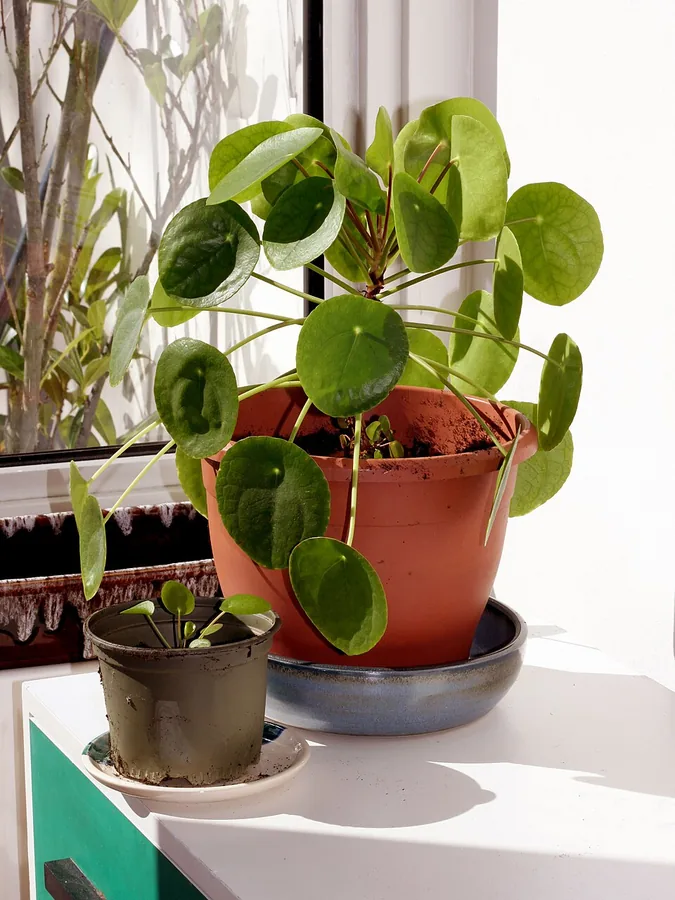
There is a reason the Chinese Money Plant keeps turning up in styled rooms and on quiet desks. Its round, coin-shaped leaves on slender stalks read as sculptural without trying, and the long list of affectionate nicknames, pancake plant, UFO plant, friendship plant, missionary plant, tells you it has been welcomed into a lot of homes.
A small evergreen perennial from the mountains of Yunnan, southwest China, it grows quickly and stays neatly compact, reaching about 8 to 12 inches (20 to 30 cm) tall and the same wide across. That tidy footprint is what makes it so adaptable: it suits a desk, a windowsill, a shelf, or a bright corner without crowding the surfaces around it.
Part of the family Urticaceae, it has built its reputation as an easy houseplant that asks for steady habits rather than constant attention. Set it somewhere with good light, fold its watering into your week, and it settles into the background of daily life while still drawing the eye.
Care
The short version: the Chinese Money Plant earns its place in a room with very little fuss. Give it bright indirect light, let the top half of the soil dry before you water again, and keep it in normal room warmth of 55°F to 75°F (13°C to 24°C). Feed monthly through spring and summer, repot every 1 to 2 years, and rotate the pot so it grows evenly toward you rather than leaning at the window.
Light
Position it where it receives bright indirect light, the kind that fills a room near a window without striking the leaves directly. It will accept partial shade and medium indirect light, though too little will cause the stems to stretch, the leaves to space wider apart, and the whole plant to lean toward the glass. Rotate the pot on a regular schedule so it grows balanced rather than reaching in one direction.
Water
Let the top half of the soil dry between drinks, then water thoroughly and allow the excess to drain away completely. This plant dislikes sitting wet and is susceptible to root rot when overwatered, so a free-draining pot and an unhurried rhythm serve it far better than frequent splashes.
Soil
A well-drained houseplant potting mix is all it needs. NC State lists loam or sand with good drainage as suitable, and it tolerates a pH of 6.0 to 8.0, giving you room to work with most standard mixes. What it will not forgive is anything that stays soggy.
Temperature
Ordinary room warmth keeps it content, somewhere in the range of 55°F to 75°F (13°C to 24°C). Keep it clear of cold drafts and hot radiators, since both swing the temperature more sharply than it likes.
Humidity
Average household humidity suits it well, with no number to chase. Excess moisture in the air can actually invite bacterial leaf spot, so good air circulation matters more than misting when you are deciding where to set it.
Feeding
Through spring and summer, while it is in active growth, offer a balanced houseplant fertilizer once a month. As the darker months arrive and growth slows, ease off and let it rest.
Pruning
Upkeep is minimal. Remove damaged or leaf-spotted leaves promptly to keep the plant looking clean and to improve air circulation around the foliage. You can also pinch or remove pups at the base to tidy the parent, or to set some aside for sharing.
Repotting
Plan to repot every 1 to 2 years in spring or early summer, or sooner if it becomes rootbound. Watch for the usual signs: roots emerging from the drainage holes, a pot crowded and filling with pups, and soil that dries out faster between waterings.
Size & spacing
Expect a compact, well-proportioned plant, about 8 to 12 inches (20 to 30 cm) tall and the same wide across. That even, contained shape is what lets it hold a spot on a desk, windowsill, shelf, or bright corner without overwhelming the things beside it.
Troubleshooting
Even an easygoing plant gives off signals when something in its routine is off. Read the leaves and stems before reaching for a remedy: most issues here trace back to light or water, and each one below pairs the symptom with a calm, practical fix.
Wilting With Mushy Stems
Wilting, soft stems, and collapse despite wet soil indicate root rot from overwatering, with roots turning brown, soft, and mushy rather than firm and white. Stop watering, then repot into fresh well-drained mix, trimming away the rotted roots and moving it into a draining pot.
Fix:
- Stop watering and allow soil to dry
- Repot into fresh, well-drained mix, trimming away soft, rotted roots
- Ensure the container drains freely
Fine Webbing And Stippling
Fine webbing, stippling, and speckled or bronzed leaves are the work of spider mites, which thrive in warm, dry air. Rinse and wipe the foliage, treat with insecticidal soap or horticultural oil and repeat the treatment, and isolate the plant from its neighbors.
Fix:
- Rinse foliage and wipe leaves to dislodge mites
- Treat with insecticidal soap or horticultural oil, repeating as needed
- Isolate the plant from other houseplants until controlled
Dark Mushy Leaf Spots
Brown to black mushy spots on the leaves are a sign of bacterial leaf spot, brought on by too-humid air and wet leaves. Remove and bin the marked leaves, cut the humidity, improve air circulation around the plant, and water at the soil rather than over the foliage.
Fix:
- Remove and dispose of affected leaves promptly
- Decrease humidity and increase air circulation
- Avoid wetting the foliage when watering
Leggy, Stretched Growth
Elongated stems, fewer leaves, and a plant leaning toward the light point to light starvation. The remedy is brighter placement: move it into bright indirect light, soften a strong window with a sheer curtain, and rotate the pot weekly so it fills out evenly.
Fix:
- Move to a spot with bright, indirect light
- Filter strong light through a sheer curtain rather than placing in deep shade
- Rotate the pot periodically so all sides receive even light
Curling Or Cupping Leaves
Leaves that curl, cup, or distort usually reflect light or water stress. Bring it out of direct sun into bright indirect light and keep your watering steady, and check the leaf undersides for pests while you are there. New growth flattens out once the plant settles in.
Fix:
- Move out of direct sun to bright, indirect light
- Keep watering even, avoiding both drying out and waterlogging
- Maintain stable temperatures away from drafts and heat sources
Yellowing Lower Leaves
Yellowing of the lower, older leaves is often simply old age and nothing to worry about. If those lower leaves yellow alongside soggy soil, though, it signals overwatering in a poorly draining mix: let the top of the soil dry before watering, make sure the pot drains freely, and remove the spent leaves.
Fix:
- Allow the top of the soil to dry before watering again
- Ensure the pot has drainage and uses a well-drained mix
- Remove yellowed leaves
Toxicity
If your home includes pets or small children, this is an effortless plant to live alongside. NC State Extension lists it as safe for pets and children, fully non-toxic, so it can sit on an open shelf or a low table without worry.
Safe for
People · Cats · Dogs · Horses · Rabbits · Livestock · Birds
Cats None
Cats can share a room with this plant freely; it is listed as safe, and a curious nibble may bring nothing worse than a passing tummy upset.
Dogs None
Dogs are equally in the clear. The plant is non-toxic to dogs, so an inquisitive sniff or taste poses no real danger.
Horses None
Horses are covered as well, with the plant rated safe for them and no poisoning to fear from a stray mouthful.
Rabbits None
Rabbits fall under the same all-clear: this is a safe plant around them, harmless beyond an occasional fleeting stomach upset.
Livestock None
Livestock, including cattle, goats, and sheep, are listed as safe here, with nothing in the plant that poisons.
Birds None
Birds share the same reassurance; the plant is safe for them, presenting no toxic threat.
People None
People are on the safe list too. NC State Extension marks it safe for children, so a passing nibble may unsettle a stomach the way any plant matter can, but nothing here is poisonous.
No special handling precautions documented by approved sources
How to propagate
Few plants make sharing this easy, which is part of its charm in a home. The Chinese Money Plant multiplies from pups at its base, and passing those offsets along is the very habit that earned it the names friendship plant and missionary plant.
Offsets & pupsEasy
Spring to summer · Several weeks
The pups are the easiest and most reliable method by far. These baby offsets rise from the base and rhizome, and you simply lift them out and pot them on their own, where they take several weeks to establish. This is the free sharing that gave the plant its names friendship plant and missionary plant.
DivisionEasy
Spring at repotting · Several weeks
Division suits a crowded clump at spring repotting. Split the clump so each piece keeps its own roots, then pot the divisions separately and allow several weeks for them to settle in.
Stem cuttingsModerate
Spring to summer · Several weeks to root
Stem and leaf cuttings are a moderate, dependable backup when no pups are available. Take them from spring through summer, and expect several weeks for them to root.
Myths
Leaf cuttings are the only way to propagate a Chinese money plant.
The easiest and most reliable route is through the pups, the offsets that form at the base and rhizome, which you lift and pot on their own. Stem and leaf cuttings do work, but they are harder. Sharing pups is exactly why it is known as the friendship plant and missionary plant.
It needs very high humidity to thrive indoors.
It does prefer moderate humidity, yet NC State notes it does perfectly well in ordinary household air. Pushing the humidity too high actually invites bacterial leaf spot, which is why air circulation matters more than misting.