Ornamental · Polemoniaceae
Garden Phlox
Phlox paniculata
Give it sun, room to breathe, and steady moisture, and garden phlox crowns the border with color from midsummer on.
Full sun
Every 3–7 days
USDA 4–8
2–4 ft · 0.6–1.2 m
Overview
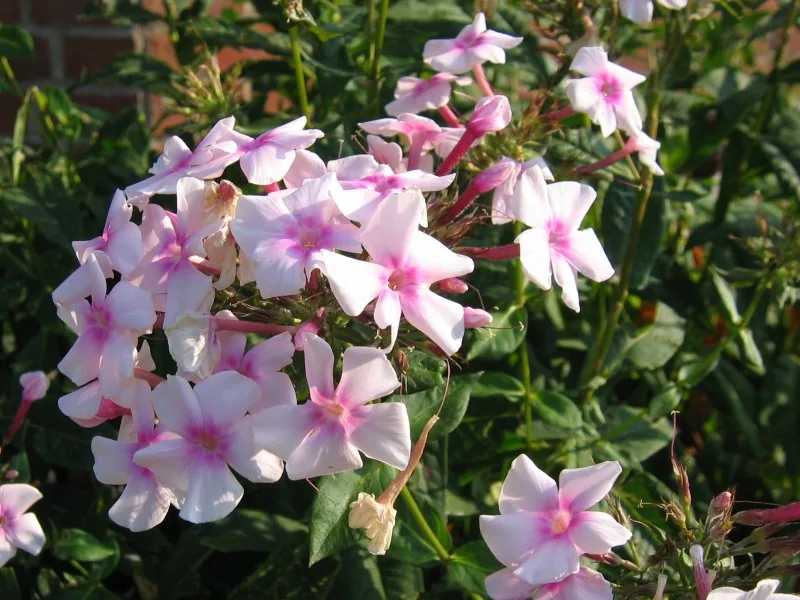
Garden phlox earns its place at the back of the summer border, where its tall stems and generous flower heads set the tone for the whole planting. A hardy perennial from the eastern United States, it returns fuller with each passing season once it feels settled. The bloom arrives in pink, white, lavender, and red, and it keeps butterflies and other pollinators drifting through the garden for weeks.
The real gift of phlox is its sense of timing. It comes into its own in midsummer to fall, taking over just as the early perennials bow out, and holds the display for a long stretch. Each clump widens slowly at the edges, so one plant grows into a lush, full-bodied stand that reads beautifully from across a lawn or terrace.
The single thing to plan around is powdery mildew, which thrives in the same close, still air that a crowded bed creates. Space each plant well, aim the water at the roots rather than the foliage, and it mostly keeps its distance. Reach for a mildew-resistant variety and the concern all but disappears from your routine.
Care
The short version: set it in full sun to part shade, in rich, moist, well-drained soil, and keep the water coming through dry spells. Leave each clump room for the air to move, water at the base, and divide it every few years to keep the flowering at its best.
Light
Garden phlox gives its best bloom in full sun, and takes both partial shade and partial sun without complaint. Push it into deeper shade and the flowering thins, the growth turns leggy, and mildew moves in more easily.
Water
Keep the ground evenly moist, watering every 3 to 7 days and stepping that up through a dry summer. Drought is not something phlox forgives, so a blanket of mulch to hold moisture and cool the roots earns its keep. Direct the water to the base rather than the leaves to keep powdery mildew at arm's length.
Soil
Set it in moist, fertile, well-drained ground with plenty of organic matter, be that loam or a denser clay. It works happily across a broad pH span of 6.0 to 8.0, so most garden soil suits it once you fold in a little compost.
Temperature
Garden phlox is thoroughly hardy, riding out winter lows to -29°F (-34°C) and summer highs to 95°F (35°C). That kind of range spans a great many climates, which is what makes it such a reliable fixture in the border.
Humidity
Ordinary outdoor humidity suits it, so there is no target to chase. Moving air counts for far more than the moisture around the plant, since the close, crowded stillness is precisely the setting powdery mildew waits for.
Feeding
Feed once in spring with a balanced fertilizer or a generous turn of compost into the soil. A single seasonal feeding on already-rich ground carries the plant right through its long run of bloom.
Pruning
Deadhead the faded flower heads to keep fresh bloom coming and to stop unwanted self-seeding. Thin the crowded stems early for the sake of airflow, then cut the whole plant to the ground come winter and sweep away the debris so disease finds nowhere to overwinter.
Repotting
Garden phlox lives in the border rather than a container, but dividing is part of the routine. Lift and split each clump every 2 to 4 years in spring or fall; a congested center with smaller blooms and weaker stems is the plant asking to be done.
Size & spacing
Expect it to stand 2 to 4 feet (61 to 122 cm) tall and settle into clumps 2 to 3 feet (61 to 91 cm) across. Allow every plant that whole spread of room so air travels freely and mildew loses its footing.
When to plant
Garden phlox is a perennial that comes back on its own, so the planting is a one-time affair handled in spring after the last frost or in early fall. After that it keeps to the calendar with little prompting, breaking into fresh growth in spring and flowering from midsummer through fall.
Northern hemisphere
Southern hemisphere
Typical months for a temperate climate: start earlier in warm zones, later where spring frosts linger.
- Sow: Late winter to early spring (species seed; cultivars do not come true from seed)
- Plant: Spring after last frost or early fall
- Harvest: Mid-summer to mid-fall (July to September)
Hardiness
USDA hardiness zones: 4–8
Temperature: down to -34°C
Troubleshooting
Nearly every issue garden phlox runs into plays out on the leaves, and powdery mildew tops the list by a comfortable stretch. Notice the first signs and you can head off the worst before it dulls the show. Find the match below, then step in while it still counts.
Stems folding over from a soft, rotting base
Soil that never dries out invites crown and root rot, and the base of the plant slowly turns brown and soft. The tell is a clump that droops while the ground around it stays wet. A plant this far gone is past rescue, so lift it out, sort out the drainage, and pull back on the watering before neighboring plants follow.
Fix:
- Remove and destroy severely affected plants
- Improve soil drainage
- Avoid overwatering and waterlogged sites
A pale, powdery haze settling over the foliage
You are looking at powdery mildew, the recurring guest at any phlox planting, and it arrives when the air goes still and the leaves stay damp. Open the clump up by thinning the stems, redirect your watering to the base of the plant, and clear away the worst-hit leaves. A better route is to design the problem out from the start with a resistant name like David or Jeana.
Fix:
- Thin stems to improve air circulation
- Avoid overhead watering and water at the base
- Remove and destroy infected foliage
- Cut plants to the ground in winter and clear debris
A dusty, bronzed cast to the leaves during a heat wave
Spider mites settle in when the weather turns hot and dry, working the undersides of the foliage until the whole plant takes on a tired, bronzed look. A firm jet of water sends them packing, and steady soil moisture keeps the plant from ever running thirsty. For a stubborn population, insecticidal soap or horticultural oil finishes the job.
Fix:
- Spray foliage with a strong stream of water to dislodge mites
- Keep plants well watered during heat
- Apply insecticidal soap or horticultural oil if needed
Toxicity
Garden phlox is a plant the whole household can live alongside. The ASPCA lists it as non-toxic, with no harmful compounds anywhere in it, so pets, livestock, and children can share the garden with it without a second thought. A passing nibble of leaf or flower does no harm.
Safe for
People · Cats · Dogs · Horses · Rabbits · Livestock · Birds
Cats None
Cats are welcome in any border that features garden phlox, since the ASPCA records no toxic principles in it. A curious taste of leaf or bloom leaves them none the worse.
Dogs None
A garden of phlox is perfectly at home with dogs underfoot. Should one make off with a stem or a flower, nothing in it will trouble them.
Horses Safe
Nothing in phlox unsettles horses, so a stray grazing mouthful passes without incident.
Rabbits Safe
Rabbits are known to browse the foliage, and it treats them kindly. There is no toxin in the plant to work against them.
Livestock Safe
Cattle, goats, and sheep can graze near a stand of garden phlox in safety, as no part of it is poisonous.
Birds Safe
Phlox holds nothing that endangers birds; the blooms invite pollinators in rather than pose a threat to any visitor.
People Safe
There is no poisoning risk to people from garden phlox, children included, even when small hands reach for the bright flowers.
Safe to grow where pets have access; no special handling required for toxicity.
Varieties
Hundreds of garden phlox cultivars are out there, bred for color, scent, and a stand against mildew. Here are a few worth knowing by name.
David
A perennial-border classic prized for crisp white panicles and a long-standing name for turning away powdery mildew.
Jeana
Sets tight heads of lavender-pink bloom, stands up to mildew with ease, and draws pollinators like few others in its class.
Eva Cullum
Presents clean pink flowers marked by a deeper red eye at the heart of every bloom.
Companions
Garden phlox pairs well with other sun-loving perennials that share its taste for moist, fertile soil and add their own form to the summer border.
How to propagate
Garden phlox takes readily to being multiplied, and the method follows your goal. Division and cuttings reproduce a named variety faithfully, while seed brings you the wild species and an open mix of colors.
DivisionEasy
Spring or fall · One growing season
Division is the easiest route to more plants and better health at the same time. Ease a settled clump out of the ground in spring or fall, break it into sections, and set them back in; each piece finds its feet over a single growing season. Repeating this every 2 to 4 years also keeps the middle of the clump from thinning out.
Stem cuttingsModerate
Late spring to summer · Several weeks to root
Softwood cuttings reproduce a named cultivar down to the detail, something seed can never promise. Take them from fresh growth in late spring or summer; they need several weeks to root before you move them into pots.
SeedModerate
Late winter to spring · One season or more to flowering
The wild species grows readily from seed started in late winter or spring, though a season or more passes before it flowers. Named cultivars break their color this way, so sow seed only when the surprise of whatever appears suits you.
Myths
All phlox is poisonous to cats and dogs.
On the ASPCA's own record, phlox is non-toxic to cats and dogs alike, with no harmful compounds noted. Any pet that samples a leaf or a bloom should come away perfectly fine.
Garden phlox cultivars grow true from seed.
Seed saved from a named cultivar rarely gives you the parent again, so the offspring drift off in their own direction. Clip the spent panicles to curb stray self-seeding, and hold onto the varieties you love through division or cuttings instead.