Vegetable · Brassicaceae
Kale
Brassica oleracea Acephala Group
Handsome in the bed and generous at the table, kale offers tender leaves from spring right through winter.
Full sun
Every 3–7 days
55–75 days
USDA 2–11
Overview
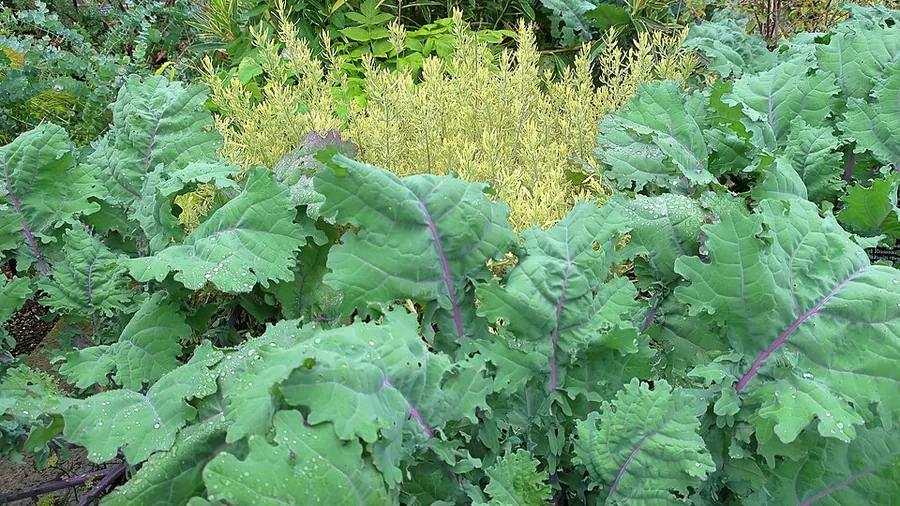
Kale is the open, leafy member of the cabbage family, gathered into a loose rosette rather than a tight head, and it reads as much as an ornamental as a crop. Its range of forms suits any planting mood, from the ruffled blue-green curls of the everyday types to the long, puckered straps of the Italian heirlooms. For a first vegetable bed it is a gentle, forgiving place to begin.
This is a cool-season plant at heart, most at ease in the soft light of spring and fall, and it holds its poise through frost that would end a tomato. The cold turns to its advantage rather than against it, coaxing the leaves sweeter and milder just as the rest of the garden winds down.
Set in full sun with steady water and rich soil, a single planting keeps a kitchen supplied for months on end. Because you gather the outer leaves and leave the center to grow, kale settles neatly into a daily routine, giving a handful at a time rather than one overwhelming harvest.
Care
The short version: kale wants full sun and rich, evenly moist soil with about an inch to an inch and a half of water each week. Feed it across the season, plant it once for spring and again for fall, and gather the lower leaves as the meals ask for them.
Light
Kale looks and grows its best in full sun, at least 6 hours a day to fill out into a leafy plant. It will settle for partial shade, a help where summer heat is strong, though deep shade leaves you thin, slow plants with sparse leaves.
Water
Keep the soil evenly moist, around 1 to 1.5 inches of water a week. That steady moisture is what gives you tender, mild leaves rather than tough, bitter ones, so a layer of mulch to hold it in earns its keep.
Soil
Give kale fertile, well-drained loam enriched with plenty of organic matter. A pH of 6.0 to 7.5 suits it, and lifting acidic soil toward the top of that range also helps hold clubroot at bay.
Temperature
This cool-season plant is content from 10°F to 81°F (-12°C to 27°C). It carries hard frost with grace, and the cold sweetens the leaves, while genuine summer heat is what turns them bitter and sends the plant to bolt.
Humidity
Kale asks nothing particular of humidity, so there is no figure to reach for. Good airflow counts for far more, since crowded, damp leaves are what invite the aphids and diseases that trouble brassicas.
Feeding
Work a balanced fertilizer into the bed at planting, guided by a soil test, then side-dress with nitrogen about 4 to 6 weeks on to keep the leaves coming. Ease off the nitrogen, though, or the soft, lush growth simply draws aphids.
Pruning
Kale needs no real pruning. Harvest the lower, outer leaves once they are large but still tender, leave the central growing point untouched so the plant keeps producing, and remove any leaf that yellows or gets chewed.
Size & spacing
Plants reach 1 to 3 feet (30 to 100 cm) tall and spread nearly as wide, so plan the bed with room in mind. Set them 12 to 18 inches (30 to 45 cm) apart to let air move freely and give each one space to fill out.
When to plant
Kale keeps to the rhythm of the cool months and a long, unhurried season. Sow it in early spring for an early summer cutting, then sow again in midsummer for a fall and winter crop that only turns sweeter as the cold draws in.
Northern hemisphere
Southern hemisphere
Typical months for a temperate climate: start earlier in warm zones, later where spring frosts linger.
- Sow: Start seed indoors 6-8 weeks before the last spring frost; for a fall crop, start in mid-summer
- Plant: Set transplants out 3-4 weeks before the last spring frost, or direct sow as soon as soil is workable; sow again in mid- to late summer for fall harvest
- Harvest: Harvest spring sowings in late spring to early summer before heat turns leaves bitter; harvest fall crops into winter - flavor sweetens after light frosts
Hardiness
USDA hardiness zones: 2–11
Temperature: down to -46°C
Troubleshooting
Nearly all of kale's troubles surface on the leaves, where the chewing pests and sap-suckers keep to plain view. A regular glance beneath the foliage catches them while they are still small. Find the symptom below, then step in before it touches the harvest.
Plants wilting and stunted with swollen, distorted roots
A plant that flags in the afternoon sun, yellows, and refuses to fill out is asking to be lifted for a look at its roots. Thick, club-shaped galls are clubroot, a soilborne disease that no measure will cure once it has settled the ground, while tunneled roots holding small white grubs are the work of cabbage root maggot instead. Lift and destroy anything affected rather than composting it, give the brassicas fresh ground next season, and lime the tired bed toward pH 7.0 or above.
Fix:
- Remove and destroy infected plants; do not compost them
- There is no cure in infested soil - grow brassicas elsewhere
Ragged holes chewed through the leaves
When the leaves come to the kitchen looking lace-edged and there are green droppings beneath, the culprits are cabbageworms and cabbage loopers, sometimes with diamondback moth larvae joining in. A pass over the plants to pick the caterpillars off keeps the harvest presentable, and Bt or spinosad settles a persistent run. The most graceful measure is a floating row cover set over the bed at transplanting, which quietly keeps the moths from ever laying their eggs.
Fix:
- Handpick caterpillars
- Apply Bacillus thuringiensis (Bt) or spinosad according to label directions
Curled, sticky leaves with clusters of small insects
Leaves that arrive curled, tacky, and dulled by waxy gray-green clusters in the folds have picked up cabbage aphids. A firm jet of water clears most of them, and insecticidal soap worked over the undersides tidies up the rest. The reward for tolerating the lady beetles and parasitic wasps that patrol the bed is that they keep the next wave from ever taking hold.
Fix:
- Dislodge with a strong spray of water
- Apply insecticidal soap, covering leaf undersides thoroughly
- Encourage natural enemies such as lady beetles and parasitic wasps
Tiny shothole pits peppering young leaves
A stipple of small round pits across the youngest leaves is the mark of flea beetles, glossy black specks that scatter the instant a hand comes near. They mostly bother seedlings during warm, dry spring spells and rarely dim a plant that is already growing well. Keeping the young plants under row cover and moving fast lets them grow past the blemishes before the crop matters.
Fix:
- Protect young plants with row cover
- Apply a labeled insecticide if damage is severe on seedlings
Toxicity
Kale is a food crop through and through, welcome around a household and safe for the animals near the garden. Nothing in it is toxic, and the single note is one of moderation: very large amounts of the raw brassica foliage, fed day after day, act as a mild goitrogen for grazing livestock.
Safe for
People · Cats · Dogs · Horses · Rabbits · Livestock · Birds
Cats None
A cat that wanders through the bed and samples a leaf comes to no harm, since kale holds no toxin for them. Should one make a meal of the raw leaves, expect at most a little gas or a soft stool.
Dogs None
Kale sits happily in the family dog's bowl and turns up in plenty of home-cooked meals. Keep the portions modest, as a sudden heap of the raw leaves can leave a dog gassy or briefly out of sorts.
Horses Safe
For horses kale carries no poisoning risk, so an occasional handful fits into the routine. Offer it as a treat rather than a fixture, since a steady diet of brassica greens works as a mild goitrogen over time.
Rabbits Safe
Kale earns a place among the leafy greens a rabbit is offered through the week. Bring it in gently and keep the helpings small so it never edges out the hay their day is built around.
Livestock Safe
Cattle, goats, and sheep graze kale without trouble, and it is grown on purpose as a forage crop. Fed as the whole ration day after day the foliage acts as a goitrogen, so let it share the trough with other feed.
Birds Safe
Chickens and other birds take to kale with real enthusiasm, leaves and stalk together. It makes a wholesome green treat with nothing toxic to work around.
People Safe
On the table kale is an everyday pleasure, at ease raw in a salad or gently cooked. A quick rinse under the tap is all it asks, as with any leaf brought in from the garden.
Like other brassicas, kale contains goitrogenic compounds; very large quantities of raw kale fed routinely could affect thyroid function or cause digestive gas in pets and livestock - a moderation note, not a poisoning risk.
Varieties
Kale runs to dozens of cultivars, but a handful recur in gardens and on extension lists for their looks as much as their table quality. These are the ones worth knowing as you plan a bed.
Lacinato (Tuscan, Dinosaur)
An Italian heirloom whose narrow, dark blue-green, deeply puckered straps lend a sculptural note to the bed, and one UF/IFAS names for Florida gardens.
Winterbor
A very cold-hardy hybrid that stands tall and productive through the season, dressed in finely curled blue-green leaves.
Redbor
A deep red-purple curly hybrid handsome enough to hold its own in an ornamental border, with color that deepens as the weather cools.
Red Russian
One of the sweetest types for the kitchen, carrying tender, flat, toothed gray-green leaves veined and stemmed in purple.
Vates Dwarf Blue Curled
A compact, low-growing curly standard that resists bolting and has long held a place on extension lists.
Companions
Kale grows best beside aromatic herbs and alliums that throw pests off the scent, and worst beside its brassica cousins, which trade the same diseases and pests back and forth.
Plant near
Dill: Aromatic herb whose flowers attract parasitic wasps and other beneficial insects that prey on cabbageworm and aphid pests of brassicas
Onion: Aromatic allium interplanted with brassicas may help confuse or deter common insect pests and competes little for space
Beet: Compatible cool-season root crop that occupies a different root zone and shares similar growing conditions without hosting brassica pests
Keep apart
Cabbage and other brassicas: Crops in the same family share pests and diseases (cabbageworms, aphids, clubroot, black rot); grouping them in the same bed and skipping rotation lets problems build up
Strawberry: Traditionally listed as a poor neighbor for brassicas; the perennial bed also conflicts with the crop rotation brassicas need
How to propagate
Kale asks very little to get started, rising readily from seed sown straight into the ground or raised as transplants for the garden.
SeedEasy
Direct sow in early spring as soon as soil can be worked and again in mid- to late summer for a fall crop, or start indoors 6-8 weeks before the last spring frost · Seed germinates in about 5-10 days; transplants reach setting-out size in 4-6 weeks and plants mature in roughly 55-75 days
Kale slips into the garden calendar with ease, grown from seed sown straight into the bed or raised as transplants. Sow the first round in early spring the moment the soil can be worked, sow again in mid- to late summer for a fall crop, or begin indoors 6 to 8 weeks before the last frost. Set the seed 1/4 to 3/4 inch deep and give plants 12 to 18 inches apart to spread. Seedlings appear in about 5 to 10 days, are ready to set out in 4 to 6 weeks, and mature in roughly 55 to 75 days.
Myths
Frost ruins kale, so the crop has to be done before cold weather arrives.
Kale is one of the sturdiest vegetables in the plot, unbothered by frost and light freezes that flatten tender crops. Cold turns the plant's starches to sugar, so the flavor deepens after a frost rather than fading. Fall and winter are when kale is at its most delicious.
The whole kale plant has to come up to harvest it.
Take the large lower leaves and leave the central growing point in place, and the plant keeps offering fresh ones. That habit turns a single plant into weeks or months of unhurried picking rather than one final cut.