Houseplant · Davalliaceae
Rabbit's Foot Fern
Davallia fejeensis
A soft, trailing fern with furry paws that spill over the pot, made for a bright shelf or a hanging corner.
Bright indirect
Every 5–10 days
55–75°F · 13–24°C
USDA 10–12
Overview
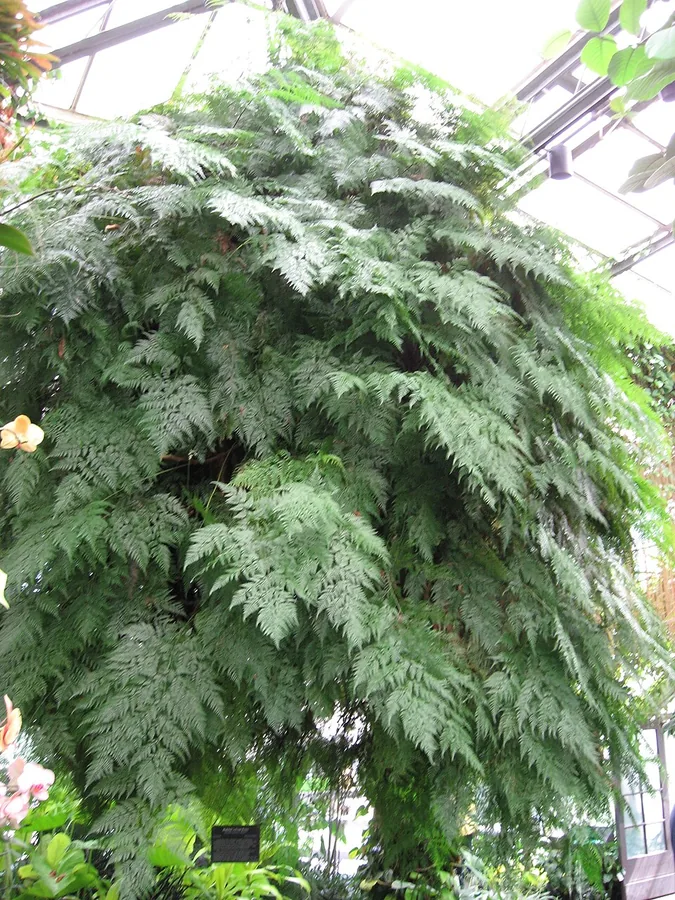
The rabbit's foot fern brings a soft, informal note to a room, the kind of green that reads relaxed rather than styled. It is a true fern from Fiji, prized indoors as much for its easy, tumbling shape as for the furry rhizomes that give it its name. On a shelf or a plant stand, it settles a space the way a well-worn textile does.
Because it spreads wider than it grows tall, it earns its keep in spots where height would feel wrong: a low bookshelf, a bathroom ledge, the corner of a console. Let it sit up high or hang it, and the paws creep over the rim and trail down, softening a hard edge. It is a plant that fills a corner without crowding it, which makes it a quiet anchor for a reading nook or a bright kitchen.
It fits best in a home that already runs a little humid and softly lit, so a bathroom, a shaded kitchen window, or a room grouped with other greenery suits its mood. Give it those conditions and it becomes a low-effort, long-term companion, holding its look for years. It pairs naturally with woven baskets, ceramic pots, and other ferns for a layered, gathered feel.
Care
The short version: set it in bright indirect light, keep the mix evenly moist but never parched, hold the air humid at 50% to 70%, and let the furry rhizomes rest on top of the soil as part of the look.
Light
Give it bright, indirect light, the kind that fills a room near a window without a hard beam of midday sun crossing it. It will live with partial shade or medium light, but a brighter, filtered spot keeps the fronds full and the plant looking its best. Direct sun scorches the foliage, so an east-facing ledge or a sheer-curtained window is ideal.
Water
Keep the mix evenly moist but never waterlogged, watering about every 5 to 10 days once the top half-inch feels dry. Ease off from fall through late winter as the plant slows. Good drainage protects the surface rhizomes, which sulk and rot if left sitting wet.
Soil
A peat-based, organic-rich mix that drains freely gives it the footing it wants, ideally at a slightly acidic pH of 5.5 to 6.5. A loose, airy blend keeps the pot from staying heavy and wet, which matters as much for the look as for the health of the plant.
Temperature
Ordinary living-room warmth suits it, roughly 55°F to 75°F (13°C to 24°C). Keep it clear of cold drafts by the door and hot air from a nearby vent, both of which leave the fine fronds looking tired.
Humidity
Humidity is where this fern is particular, and it shapes where you place it. Aim for 50% to 70%, higher than most rooms sit, which is why a bathroom, a kitchen, or a cluster of plants and a pebble tray suits it so well. Let the air dry out and the frond tips crisp first.
Feeding
Feed it monthly through spring and summer with a balanced liquid fertilizer at half strength to keep the fronds coming. Let it rest through the cooler months with no feeding, in step with its natural rhythm.
Pruning
Grooming, not pruning, is all it asks. Trim any dead, browned, or damaged fronds at the base to keep the silhouette clean and make room for fresh growth to fill in.
Repotting
Plan on repotting just every 2 to 3 years, when the rhizomes crowd the surface or the mix dries out too quickly. Move up a single pot size, choose a vessel that flatters the trailing habit, and leave the furry rhizomes resting on top rather than buried.
Size & spacing
It reaches about 12 to 35 inches (30 to 90 cm) tall and spreads wider still, from 1 to 4 feet (30 to 120 cm), so it reads as a soft, low sweep rather than an upright accent. Give it a wide surface to spread across, or hang it where the paws can trail into the room.
Troubleshooting
This fern telegraphs its needs, and reading them is half of keeping it looking good. Crisp frond tips are usually a sign the room has gone dry, while soft, browning paws mean the watering has gone heavy. Catch either early and the plant stays camera-ready.
Furry paws turning soft and brown
When the furry paws that drape over the pot go soft and brown, the plant has slipped into rhizome rot, usually from a mix that stays too wet or from rhizomes that have been buried. Lift them back onto the surface where they belong, trim away the mushy parts, and let the soil dry to the right level before watering again. Better drainage keeps the look intact next time.
Fix:
- Uncover the rhizomes and rest them on the mix surface
- Let the medium dry to the recommended level
- Improve drainage and remove any rotted rhizome sections
Sticky film or small bumps on the fronds
A sticky sheen, fine speckling, or little raised bumps mean pests have settled in, most often scale insects, with spider mites or mealybugs turning up now and then. Check the fronds and rhizomes for brown scales, faint webbing, or white cottony tufts, then wipe them off and keep the plant away from the rest of your collection. Treat with a fern-safe horticultural soap or oil until the foliage looks clean again.
Fix:
- Wipe off pests and isolate the plant
- Treat with horticultural soap or oil suited to ferns
- Repeat treatments until clear
Crisp brown edges on the fronds
Browning that clings to the tips and edges while the paws stay firm is the room talking, not rot; it points to dry air or a thirsty plant. Move it somewhere more humid, set it on a pebble tray or near a humidifier, keep the mix evenly moist, and steer it away from vents that parch the fronds. The tips are the first thing guests notice, so it is worth staying ahead of.
Fix:
- Raise ambient humidity with a pebble tray or humidifier
- Keep the mix evenly moist
- Move away from heating/cooling vents
Toxicity
For a home with pets, it earns its spot on an open shelf: this is a non-toxic true fern, listed by the ASPCA as safe for cats, dogs, and horses. That means it can live at floor level or trail from a stand without becoming a hazard in the room. A pet that makes a meal of the fronds might get a passing stomach upset, nothing more.
Safe for
People · Cats · Dogs · Horses · Rabbits · Livestock · Birds
Cats None
On the ASPCA's non-toxic list, this fern can share a shelf with a curious cat and cause no harm. A big mouthful of foliage might unsettle a delicate stomach briefly, as any plant would.
Dogs None
It can live at a dog's eye level without concern, since the fronds and furry paws are safe. A dog that eats a lot of leaf may drool or bring it back up, which is a mess rather than a danger.
Horses None
Nothing in the plant troubles horses, and it carries no warning aimed their way.
Rabbits Safe
A rabbit is safe in its company, as true ferns of this kind hold nothing harmful, so a nibbled frond is no cause for concern.
Livestock Safe
Grazing animals such as goats, sheep, and cattle come to no harm from it, since it lacks the toxins found in some wild ferns.
Birds Safe
It sits comfortably in a room with pet birds, and a stray peck at a frond does no harm.
People Safe
It is a safe choice for a family home and is not grown to be eaten. A quick hand-wash after tending the soil is all the caution it calls for.
No special handling precautions are required; the plant is non-toxic, though the furry surface rhizomes should be left exposed on the mix rather than buried.
Varieties
A couple of named forms turn up in shops, each offering a slightly different texture for the same relaxed, trailing effect.
'Plumosa'
A feathery form whose narrow, finely divided segments lend an even softer, lacier presence to a shelf.
'Dwarf Ripple'
A compact selection that stays around 6 to 18 inches (15 to 45 cm) tall, ideal for a small ledge or a crowded plant grouping.
How to propagate
Multiplying it is refreshingly low-drama, and a divided plant or two is an easy way to carry the same soft look into another room.
DivisionModerate
Spring · 4-8 weeks
Division in spring is the graceful way to make more and to spread the look around the house. Take rhizome tip cuttings about 2 to 3 inches long, each with a frond or two, settle them onto moist mix so the rhizome stays in contact, and keep them warm and humid while they root over roughly 4 to 8 weeks. Spores are an option, but the slow, unreliable route rarely rewards the wait.
Myths
The furry rhizomes draped over the pot are roots that ought to be buried.
Those furry paws are surface rhizomes, not roots, and their whole charm is that they creep over the top of the mix and spill past the rim. Bury them out of a tidy instinct and they rot. Let them show; they are part of what makes the plant worth displaying.